Bestelltes Bild

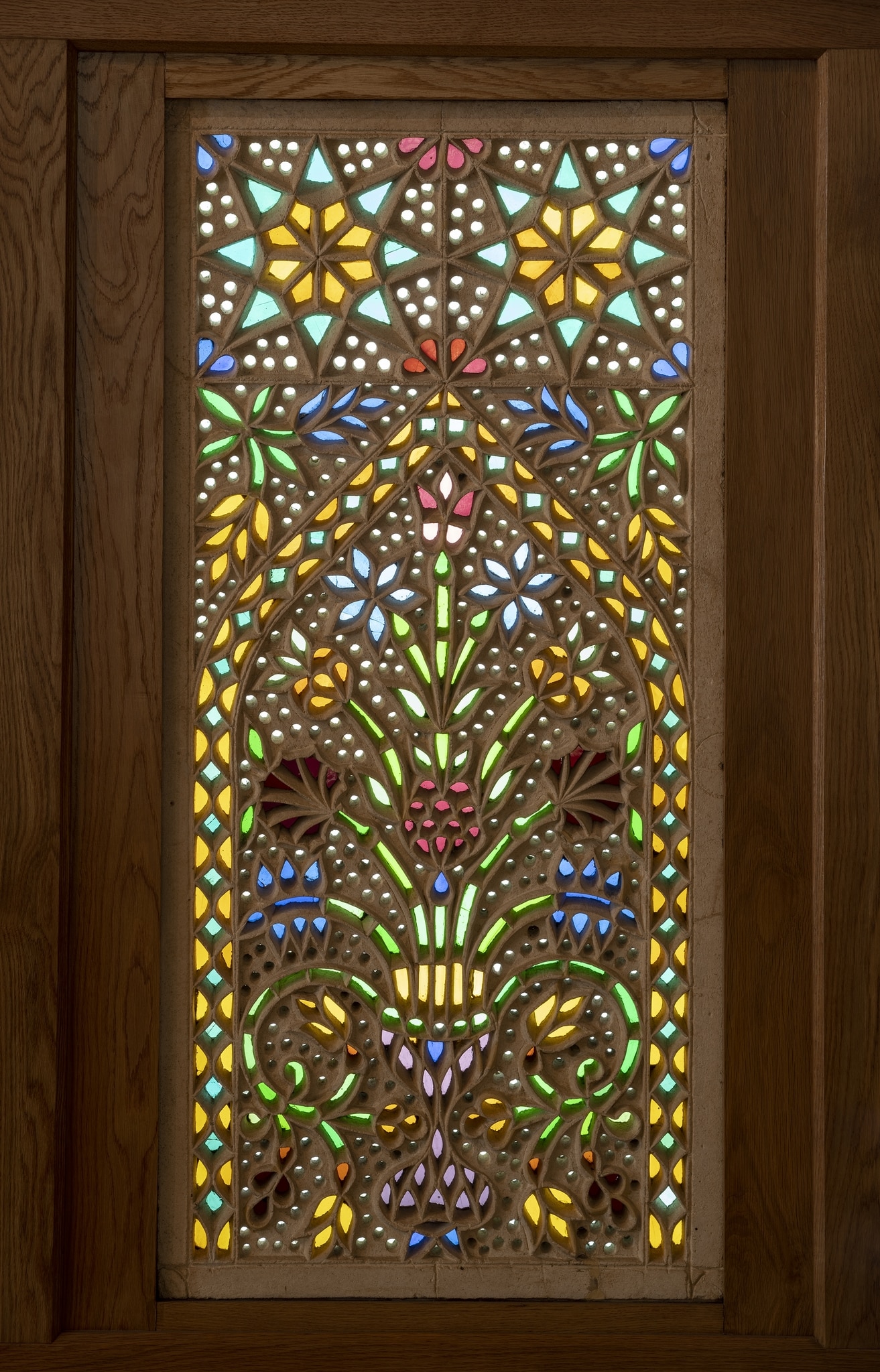
IG_356: qamarīya with flowers in a vase in xy arch, topped by a ornamental frieze with star ornament
(GRC_Athens_BenakiMuseumOfIslamicArt_IG_356)

Kontaktdaten

Bitte geben Sie Ihren Vornamen ein.
Bitte geben Sie Ihren Namen ein.
Bitte geben Sie Ihre E-Mail-Adresse ein.
Die E-Mail-Adresse ist ungültig.

Bitte machen Sie so viele Angaben wie möglich (Titel der Publikation, Datenbank, Herausgeber, Auflage, Erscheinungsjahr, usw.)

Das Vitrocentre Romont kann Ihnen nur eigene Bilder zur Verfügung stellen. Bilder von Dritten können wir Ihnen leider nicht überlassen. Betrifft Ihre Bestellung Fotografien von Drittparteien, senden wir Ihnen die Kontaktadresse, über welche die Bilder bezogen werden können.

Die von Ihnen in diesem Formular angegebenen Personendaten werden vom Vitrocentre Romont ausschliesslich für die Bearbeitung Ihrer Bildbestellung verwendet. Die Korrespondenz zur Bestellung wird zur internen Nachvollziehbarkeit archiviert. Die Daten werden weder für andere als die hier aufgelisteten Zwecke verwendet noch an Dritte weitergegeben. Durch das Absenden des Bestellformulars erklären Sie sich mit dieser Nutzung Ihrer Personendaten einverstanden.

Bei Fragen können Sie gerne eine E-Mail an info@vitrosearch.ch senden.

Titel

Bipartite stucco and glass window with flowers in a vase and star motif

Art des Objekts
Masse
119.5 x 56.5 x 4.5 cm (with frame)
Künstler:in / Hersteller:in
Herstellungsort
Datierung
late 13th–first half of 14th centuries AH / late 19th–early 20th centuries CE
Standort
Inventarnummer
11052
Forschungsprojekt
Autor:in und Datum des Eintrags
Francine Giese, Sophie Wolf 2025

Ikonografie

Beschreibung

Rectangular stucco and glass window divided horizontally into two rectangular fields of unequal size. The larger field, which takes up about 4/5 of the area, shows a purple vase with flowers arranged symmetrically along the central axis. Some of the flower species – roses, lilies, tulips, carnations – can be easily identified. Contrary to the usual representation of the the flower-and-vase motif, the two lowest stems with four flowers each, spiral downwards instead of pointing upwards. The vase of flowers is framed by an ogival arch composed of a diamond-shaped and semicircular light-blue and yellow pieces of glass. Each of the spandrels above the arch is decorated with a flower with two blossoms springing from the upper corner. The smaller field, above the flower and vase motif, is composed of two stars that are each inscribed in a square. The stars consist of an inner yellow and an outer turquoise green eight-pointed star. Floral elements are set into the four corners of the squares.

The motifs of both zones are worked out in relief against a perforated background that lies 7–10mm below the surface of the stucco panel.

Iconclass Code
25G41 · Blumen
25G41(CARNATION) · Blumen: Nelke
25G41(LILY) · Blumen: Lilie
25G41(ROSE) · Blumen: Rose
25G41(TULIP) · Blumen: Tulpe
41A6711 · Blumen in einer Vase
48A981 · Ornament aus geometrischen Motiven
48A9815 · sternförmiges Ornament
Iconclass Stichworte
abstrakte Kunst · Blume · Blumenstrauss · Geometrie · Lilie · Nelke · Rose · Stern · Tulpe · Vase

Materialien, Technik und Erhaltungszustand

Materialien

Coarse-grained gypsum plaster; colourless glass (with a slightly greenish tint); coloured glass (three shades of green, turquoise, two shades of blue, three shades of yellow, orange, three shades of purple); red flashed glass (ruby red). Some of the blue glass is slightly streaky.

Technik

Latticework carved into a rectangular stucco panel and inlaid with colourless and coloured sheet glass. The pieces of glass are fixed on the back of the lattice with a thin layer of gypsum plaster. The average thickness of the stucco panel is approximately 22mm. The stucco panel was cast in a wooden frame.

The design of the latticework has two levels: the main motif (level 0) has been carved out of the stucco panel with sharp, knife-like tools following a template incised in the surface of the panel. Traces of the incisions are still visible in some places on the front. The second level (level –1), which lies 7–10mm below level 0, shows irregularly spaced, conical perforations. The holes were pierced with a metal or wooden pin in the stucco before it was fully set. They are 12–20mm in diameter and slightly tapered towards the back. The distance between the holes is 3–8mm. All holes are backed with colourless glass.

The main design and the perforations have been worked in such a way that the incident light is directed downwards into the room.

The coloured glass is coloured in the mass, except for the red pieces, which are made from red flashed glass. Elongated parallel bubbles indicate that the glass sheets were mouth-blown (most probably cylinder-blown).

Erhaltungszustand und Restaurierungen

The window is well preserved and was thoroughly restored in 2003. During this intervention, earlier repairs were largely removed. Restoration measures included cleaning the dirty and weathered surface of the stucco lattice (laser cleaning, density: 1.5 J/cm2 at 1064nm), bonding cracks with acrylic resin, and filling lacunae in the stucco lattice with acrylic filler. The repairs were retouched with pigmented acrylic emulsion. In addition, fragile areas were strengthened with gauze and acrylic resin. The original wooden frame was cleaned with solvent and reinforced by adding an aluminium frame. At the time of restoration, nearly all the original pieces of glass were preserved. Missing pieces were replaced with new ones, which were attached with cellulose nitrate.

Entstehungsgeschichte

Forschung

The flower-and-vase motif of this stucco and glass window is a late version of one of the standard motifs of qamariyya widespread in Egypt during the Ottoman period. The way in which the two lowest flowers with their curved stems are depicted differs from most of the examples of this type of window studied. A comparable, but less elaborate example is the Cairene window held at the Victoria and Albert Museum in London (MES.LOST.22). We have, however, no direct comparison for the flowers in the spandrels, which are much more elaborate than the floral motifs of most of the other windows.

The representation of flowers in a vase is a widespread motif in Islamic arts. It can be found in numerous other media, such as ceramics, wood panelling, wall paintings, and textiles, over a long period of time, and in both sacred and profane contexts. Depending on the quality of the design, the type of flower cannot always be identified. Among the most sophisticated examples of stucco and glass windows with the vase motif are those in the apartments of the Crown Prince at the Topkapı Sarayı (early 17th century CE, date of the windows uncertain) and those in the Sultan's Lodge (Hünkâr Kasrı) of the Yeni Cami (1661–1663 CE, date of the windows uncertain), both in Istanbul. Windows with this motif can also be found in several of the collections studied (see for instance IG_7, IG_166, IG_178, IG_255).

The motif aroused the interest of Western artists and architects, as is attested by a significant number of book illustrations, sketches, and paintings (see for instance IG_43, IG_118, IG_149, IG_153, IG_437, IG_443, IG_461), as well as by the replicas of such windows installed in Arab-style interiors across Europe (IG_54IG_59, IG_64, IG_91, IG_431).

Windows IG_350 and IG_352 from the same museum collection have a comparable bipartite composition, but the panel with the stars is positioned below the main motif instead of above it, as in the window discussed here.

From a technical point of view, it can be assumed that the window was made in an Egyptian workshop. Although the rear of the window was not accessible during our examination, it can be concluded from the restoration report of 2004 that the window was made according to the traditional technique used in the manufacture of qamariyyāt in North Africa to this day (see Technique).

According to the museum records, the window dates to the 16th or 17th century. However, there are some indications that speak against this early date. On the one hand, the outline of the framing arch as well as the way in which the two lowest stems of the flower bouquet spiral downwards, suggest a later dating. On the other hand, the window was in a relatively good state of preservation before restoration in 2003, despite the poor weather resistance of the stucco lattice. If the window had been installed in a building in the 16th or 17th century and been exposed to the weather for two or three centuries, we would have expected it to be more heavily weathered before its restoration in 2003. Moreover, the pieces of glass show the characteristics of cylinder-blown sheet glass, a technique that was uncommon in the Islamic world at that time and more commonly used in Europe. Interestingly, the Hungarian architect Max Herz (1856–1819) states in 1902 that sheet glass was imported to Egypt from Europe from the 19th century, because local sheet-glass production had come to a standstill (Herz, 1902, p. 53).

The Cairo-based, Cypriot art and antique dealer Phokion Tanos (1898–1972) donated this window – along with 12 other qamariyyāt (11049–11059, 20969, 20960, see IG_336–359) – to the Benaki Museum in Athens, probably in the 1940s.

Datierung
late 13th–first half of 14th centuries AH / late 19th–early 20th centuries CE
Zeitraum
1880 – 1920
Frühere Standorte
Herstellungsort

Provenienz

Eigentümer:in
Seit 1940 (ca.): Benaki Museum of Islamic Art, Inventar-Nr.: 11052, Athen (Griechenland), Schenkung
Vorbesitzer:in
Von [Eingangsjahr unbekannt] bis 1940 (ca.):

Bibliografie und Quellen

Literatur

Ballian, Anna (ed.) (2006): Benaki Museum. A Guide to the Museum of Islamic Art, Athens, Benaki Museum, pp. 136–137.

Herz, M. (1902). Le musée national du Caire. Gazette des Beaux-Arts, 3. Pér. 28, 45–59, 497–505.

Ausstellungen

since 2004: Room III of the premanent exhibition of the Benaki Museum of Islamic Art, Athens

Bildinformationen

Name des Bildes
GRC_Athens_BenakiMuseumOfIslamicArt_IG_356
Fotonachweise
© 2023 by Benaki Museum Athens

Zitiervorschlag

Giese, F., & Wolf, S. (2025). Bipartite stucco and glass window with flowers in a vase and star motif. In Vitrosearch. Aufgerufen am 5. Dezember 2025 von https://www.vitrosearch.ch/objects/2713200.

Informationen zum Datensatz

Referenznummer
IG_356