Image commandée

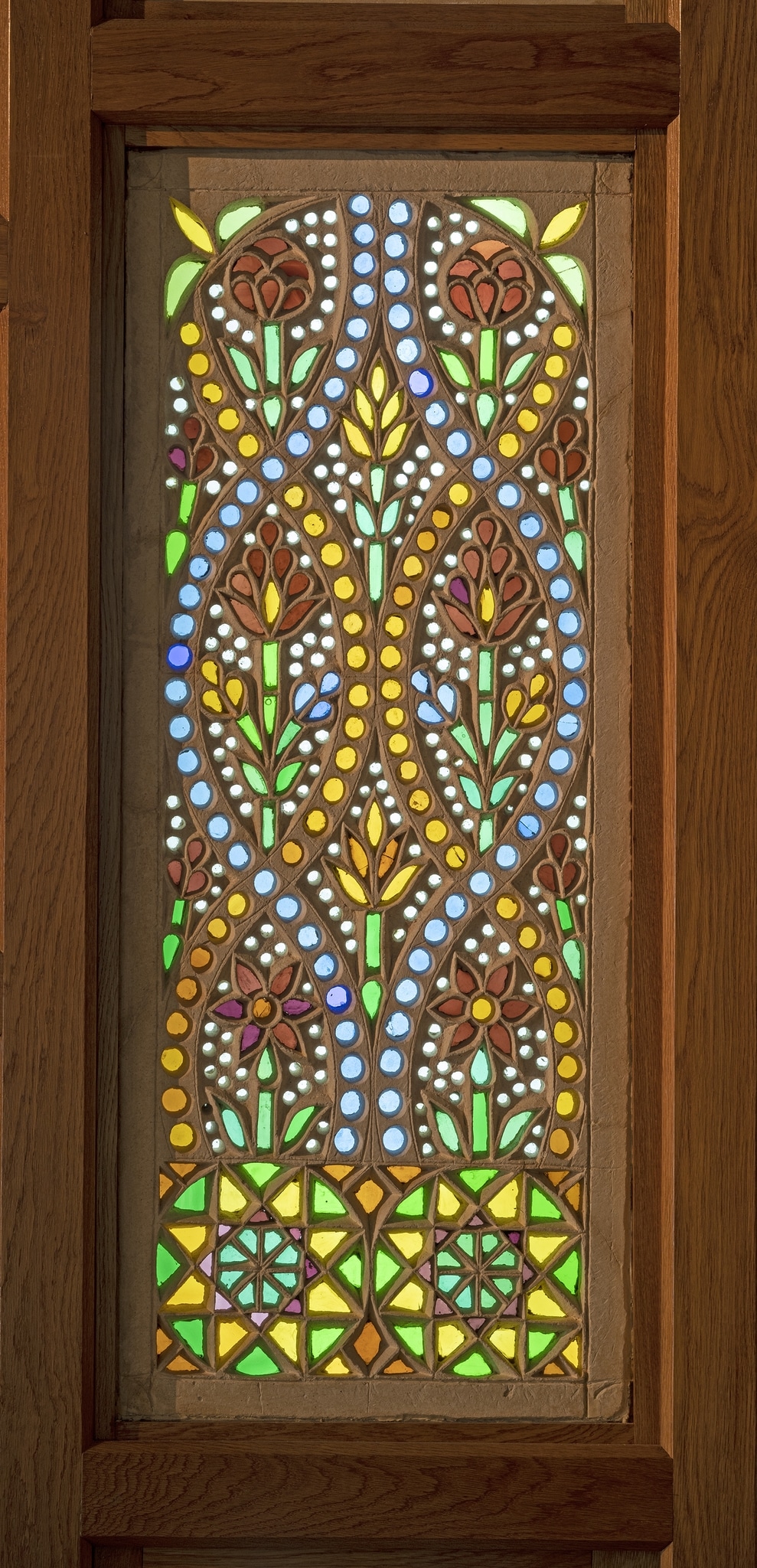
IG_352: qamarīya composed of a geometric bottom zone with star ornament at the bottom of the window and a floral ornamentation composed of thee types of flowers with intertwined band
(GRC_Athens_BenakiMuseumOfIslamicArt_IG_352)

Coordonnées

Prière de compléter le champ "Prénom".
Prière de compléter le champ "Nom".
Prière de compléter le champ "E-Mail".
Votre adresse e-mail n'est pas valide.

Veuillez s’il vous plaît indiquer autant d’informations que possible (titre de la publication, base de données, éditeur, nombre d’exemplaires, année de parution, etc.)

Le Vitrocentre Romont ne peut mettre à votre disposition que ses propres images. Nous ne pouvons malheureusement pas vous fournir des images de tiers. Si votre commande concerne des photographies de tiers, nous vous enverrons volontiers l'adresse de contact où vous pourrez obtenir les images.

Les données personnelles que vous avez indiquées dans ce formulaire sont utilisées par le Vitrocentre Romont exclusivement pour le traitement de votre commande d'images. La correspondance relative à la commande est archivée à des fins de traçabilité interne. Les données ne seront utilisées à aucune autre fin que celles énumérées ici, ni transmises à des tiers. En envoyant un formulaire de commande, vous acceptez tacitement cette utilisation de vos données personnelles.

Pour toute question complémentaire, veuillez contacter info@vitrosearch.ch.

Titre

Bipartite stucco and glass window with floral ornamentation and flower and star motif

Type d'objet
Dimensions
109 x 44.5 cm (without frame); 120 x 53.8 x 3.3 cm (with frame)
Artiste
Lieu de production
Datation
early 13th–early 14th centuries AH / 19th century CE (?)
Lieu
Numéro d'inventaire
11056
Projet de recherche
Auteur·e et date de la notice
Francine Giese, Sophie Wolf 2025

Iconographie

Description

Rectangular stucco and glass window divided horizontally into two rectangular fields of unequal size. The larger field, which takes up about 4/5 of the area, shows floral ornamentation vertically divided by curved blue and yellow laces. The spaces between the intertwined laces are filled with red flowers of different sizes and kinds, including roses. The motif is worked out in relief against a perforated background that lies approximately 6mm below the surface of the stucco panel. At the top, the ornament is surrounded by a round arch; the spandrels are decorated with three-petalled flowers.

The smaller field, below the flower ornament, is composed of two adjacent eight-pointed stars; the colourful stars have a green flower at their centre and are each inscribed in a circle. The spandrels between the circles and the rectangular field are filled with triangular and diamond-shaped, orange-coloured pieces of glass.

Code Iconclass
25G41(ROSE) · fleurs : rose
48A981 · ornement ~ motifs géométriques
48A9815 · ornement ~ formes étoilées
48A983 · ornement dérivé de formes végétales
48A9833 · fleurs ~ ornement
Mot-clés Iconclass

Matériaux, technique et état de conservation

Matériaux

Coarse-grained gypsum plaster; colourless glass; coloured glass (two shades of green, three shades of blue, several shades of yellow, including lighter and darker tones of yellow, orange or amber, several shades of red including a brownish red, a purplish red and pink)

Technique

Latticework carved into a rectangular stucco panel and inlaid with colourless and coloured sheet glass. The pieces of glass are fixed on the back of the lattice with a thin layer of gypsum plaster. The average thickness of the stucco panel is 18–25mm. The stucco panel was cast in a wooden frame.

The design of the latticework has two levels: the main motif (level 0) has been carved out of the stucco panel with sharp, knife-like tools following a template incised in the surface of the panel. Traces of the incisions are still visible in some places on the front. The second level (level –1), which lies approximately 6mm below level 0, shows irregularly spaced, conical perforations. The holes were pierced with a metal or wooden pin in the stucco before it was fully set. They are 12–15mm in diameter and slightly tapered towards the back. The distance between the holes is 4–10mm. All holes are backed with colourless glass. The main design and the perforations have been worked in such a way that the incident light is directed downwards into the room. The glass is either colourless or coloured in the mass; some of the red tones may consist of red flashed glass. Elongated parallel bubbles indicate that the glass sheets were mouth-blown, possibly using the broad-sheet method.

Etat de conservation et restaurations

The window is well preserved and was thoroughly restored in 2003. During this intervention, earlier repairs were largely removed. Among other things, the 2–3mm thick coat of paint on the front of the stucco grille was removed with a scalpel. The restoration measures included cleaning the surface of the stucco lattice (laser cleaning, density: 1.5 J/cm2 at 1064nm), bonding cracks with acrylic resin, and filling lacunae in the stucco lattice with acrylic filler. The repairs were retouched with pigmented acrylic emulsion. In addition, fragile areas were strengthened with gauze and acrylic resin. The original wooden frame was cleaned with solvent and reinforced by adding an aluminium frame.

At the time of restoration, around 85% of the original pieces of glass were preserved. Missing pieces were replaced with new ones, which were attached with cellulose nitrate.

Historique de l'oeuvre

Recherche

Apart from the depiction of a closely related window made by the British architect James William Wild (1814–1892) during his stay in Cairo in the years 1844–1847 (IG_445), this type of floral ornamentation is not represented in other museum collections studied within the project. The window has a nearly identical counterpart in IG_350, which is also part of the Benaki collection. Apart from small differences in the disposition of the coloured pieces of glass, both windows show the same design and have very similar dimensions. It seems therefore likely that they were made in the same workshop. A third window in the Benaki collection (IG_351) shows a variation of this floral ornamentation with laces and flowers.

From a technical point of view, it can be assumed that the window was made in an Egyptian workshop. Although the rear of the window was not accessible during our examination, it can be concluded from the restoration report of 2004 that the window was made according to the traditional technique used in the manufacture of qamariyyāt in North Africa to this day (see Technique).

According to the museum records, the window dates to the 16th or 17th century. However, its relatively good state of preservation suggests that it was made later. If the window had been installed in a building in the 16th or 17th century and been exposed to the weather for two or three centuries, we would have expected it to be more heavily weathered before its restoration in 2003. Another criterion in favour of a later date of manufacture is the fact that pieces of glass show the characteristics of cylinder-blown sheet glass, a technique that was uncommon in the Islamic world at that time and more commonly used in Europe. Interestingly, the Hungarian architect Max Herz (1856–1819) states in 1902 that sheet glass was imported to Egypt from Europe from the 19th century, because local sheet-glass production had come to a standstill (Herz, 1902, p. 53).

The Cairo-based, Cypriot art and antique dealer Phokion Tanos (1898–1972) donated this window – along with 12 other qamariyyāt (11049–11059, 20969, 20960, see IG_336–359) – to the Benaki Museum in Athens, probably in the 1940s.

Datation
early 13th–early 14th centuries AH / 19th century CE (?)
Période
1800 – 1899
Sites antérieures
Lieu de production

Provenance

Propriétaire
Dès 1940 (ca.): Benaki Museum of Islamic Art, Numéro d'inventaire: 11056, Athènes (Grèce), Donation
Propriétaire précédent·e
De [année de réception inconnue] jusque 1940 (ca.): Tanos, Phokion J.

Bibliographie et sources

Bibliographie

Ballian, Anna (ed.) (2006): Benaki Museum. A Guide to the Museum of Islamic Art, Athens, Benaki Museum, pp. 136–137.

Herz, M. (1902). Le musée national du Caire. Gazette des Beaux-Arts, 3. Pér. 28, 45–59, 497–505.

Expositions

since 2004: Room III of the premanent exhibition of the Benaki Museum of Islamic Art, Athens

Informations sur l'image

Nom de l'image
GRC_Athens_BenakiMuseumOfIslamicArt_IG_352
Crédits photographiques
© 2023 by Benaki Museum Athens

Proposition de citation

Giese, F., & Wolf, S. (2025). Bipartite stucco and glass window with floral ornamentation and flower and star motif. Dans Vitrosearch. Consulté le 5 décembre 2025 de https://www.vitrosearch.ch/objects/2713196.

Informations sur l’enregistrement

Numéro de référence
IG_352