Bestelltes Bild

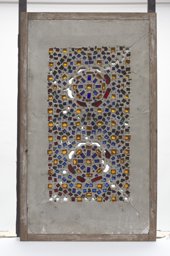
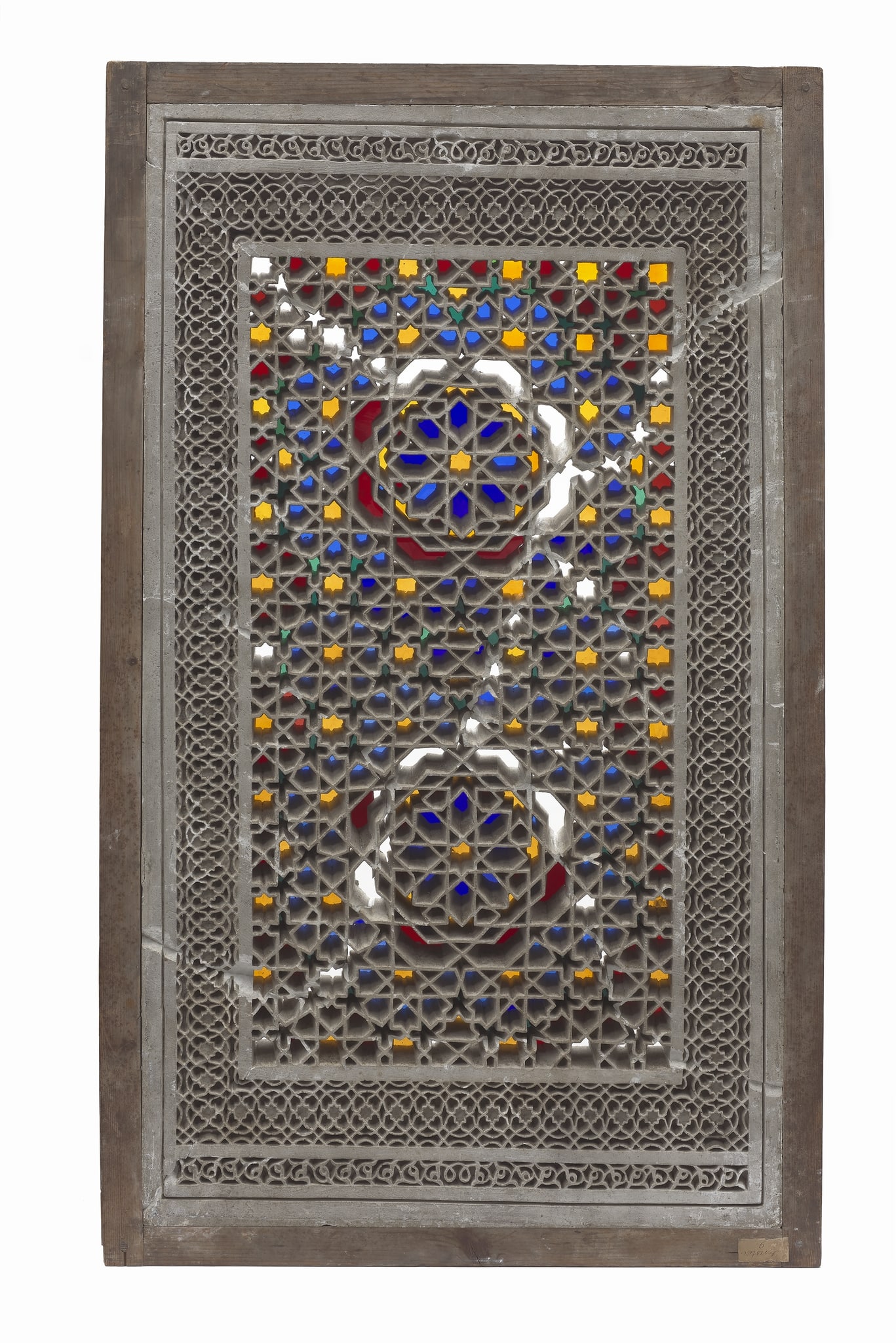
IG_367: Stucco and glass window
(AUT_Wien_MAK_IG_367_1)

Kontaktdaten

Bitte geben Sie Ihren Vornamen ein.
Bitte geben Sie Ihren Namen ein.
Bitte geben Sie Ihre E-Mail-Adresse ein.
Die E-Mail-Adresse ist ungültig.

Bitte machen Sie so viele Angaben wie möglich (Titel der Publikation, Datenbank, Herausgeber, Auflage, Erscheinungsjahr, usw.)

Das Vitrocentre Romont kann Ihnen nur eigene Bilder zur Verfügung stellen. Bilder von Dritten können wir Ihnen leider nicht überlassen. Betrifft Ihre Bestellung Fotografien von Drittparteien, senden wir Ihnen die Kontaktadresse, über welche die Bilder bezogen werden können.

Die von Ihnen in diesem Formular angegebenen Personendaten werden vom Vitrocentre Romont ausschliesslich für die Bearbeitung Ihrer Bildbestellung verwendet. Die Korrespondenz zur Bestellung wird zur internen Nachvollziehbarkeit archiviert. Die Daten werden weder für andere als die hier aufgelisteten Zwecke verwendet noch an Dritte weitergegeben. Durch das Absenden des Bestellformulars erklären Sie sich mit dieser Nutzung Ihrer Personendaten einverstanden.

Bei Fragen können Sie gerne eine E-Mail an info@vitrosearch.ch senden.

Titel

Replica of a stucco and glass window with interlaced star ornamentation

Art des Objekts
Masse
114 x 68 x 4 cm (with frame, approximate thickness of the window); 106.5 x 60.5 x 4 cm (without frame, approximate thickness of the window)
Künstler:in / Hersteller:in
Herstellungsort
Datierung
late 13th–early 14th centuries AH / second half of 19th century CE
Standort
Inventarnummer
OR 3614
Forschungsprojekt
Autor:in und Datum des Eintrags
Francine Giese, Sophie Wolf 2025

Ikonografie

Beschreibung

Rectangular stucco and glass window with geometric ornamentation composed of eight-pointed stars. The stars are symmetrically arranged and form a continuous, interlaced grid. The main field is surrounded by a broad frame with interlaced ribbon ornament. In addition, there are two narrow bands with floral decoration at the top and bottom of this frame. The area framing the star pattern is not perforated and therefore not backed with coloured glass.

The stucco panel is held in a wooden frame composed of four slats held together by nails at the corners.

Iconclass Code
48A981 · Ornament aus geometrischen Motiven
48A9815 · sternförmiges Ornament
48A983 · Ornamente, die von pflanzlichen Formen abgeleitet sind
48A9878 · Flechtwerk (Ornament)
Iconclass Stichworte
Inschrift

Paper label bottom right (written upside down): Fenster 9
Materialien, Technik und Erhaltungszustand

Materialien

Gypsum plaster; colourless glass (some with a greenish tint); coloured glass (two shades of green, two shades of blue, three shades of orange, yellow, two shades of red flashed glass); wood, metal

Technik

The stucco lattice of this window is probably a cast of the latticework of window IG_366. As with the original, coloured pieces of glass were placed on the back of the openings in the stucco lattice and embedded in a thin (2–3mm) layer of stucco. In contrast to IG_366, there are no signs that the pieces of glass were fixed onto the lattice with an adhesive before embedding. To improve the adhesion of the thin layer of stucco on the latticework, the back of the stucco panel was roughened with a serrated tool. The thickness of the stucco panel is c.40mm and held in a wooden frame of the same thickness.

The coloured glass is 3–4mm thick, slightly thicker than the colourless glass (1–2mm). Some of the pieces of glass show elongated bubbles, suggesting that the glass sheets from which the pieces were cut were mouth-blown. The pieces of glass were cut roughly according to the design of the latticework using a glass-cutter. Scratch marks along the edges of several pieces of glass bear witness to this process.

Erhaltungszustand und Restaurierungen

The front of the window shows continuous, diagonal cracks and losses in the latticework. On the back, there are defects in the thin stucco layer and glass losses along the fissures. The window shows no signs of previous restorations.

Entstehungsgeschichte

Forschung

The window discussed here has the same design as and dimensions almost identical to those of the stucco and glass window IG_366 held in the same collection. Also, the colours and the layout of the pieces of glass are very similar. We therefore assume that this window is a cast replica of IG_366. Several observations support this hypothesis: the traces of the tools used to cut the stucco lattice that we observed in window IG_366 are absent here. The surfaces of this window are smooth and show characteristics similar to those of other windows that were probably cast (see for instance IG_360, IG_361, IG_365, IG_368). In addition, the frame of the window does not have the diagonal reinforcements on the back that we observed on window IG_366 and on other windows of possible Tunisian origin. Due to the technical differences, we assume that the window was manufactured in Europe, possibly in Austria. The results of the glass analyses provide evidence to support this: one of the yellow pieces of glass is not coloured in the mass, as is usually the case with stucco and glass windows, but painted with silver stain. This silver-based colour has been used in European stained glass since the Middle Ages to colour colourless glass locally in tones ranging from dark orange to bright yellow.

Due to the lack of documentation, the exact origin of the window and the date from which it first entered a museum collection are unknown. So far, we only know that it formed part of the collection of the Orientalisches Museum in Vienna, founded in 1874 (from 1886 the k.k. Österreichisches Handels-Museum). In 1897, Arthur von Scala (1845–1909), the director of the Handels-Museum, left the museum to become the new director of the k.k. Österreichisches Museum für Kunst und Industrie (Wieninger, 2012). On his initiative, this and a few other stucco and glass windows were transferred to the k.k. Österreichisches Museum für Kunst und Industrie (today MAK – Museum für angewandte Kunst) in 1907.

Datierung
late 13th–early 14th centuries AH / second half of 19th century CE
Zeitraum
1850 – 1874
Frühere Standorte
Herstellungsort

Provenienz

Eigentümer:in
Seit 1907: MAK – Museum für angewandte Kunst, Inventar-Nr.: OR 3614, Wien (Österreich)
Vorbesitzer:in
bis 1886: Orientalisches Museum (Wien), Wien (Österreich). date of acquisition unknown

Bibliografie und Quellen

Literatur

Azzam, K. (ed.) (2021). Arts & Crafts of the Islamic Lands. Principles, Materials, Practice. London.

Broug, E. (2013). Islamic Geometric Design. London.

Wieninger, J. (2012). Das Orientalische Museum in Wien: 1874–1906. Austriaca, 37, 143–158.

Bildinformationen

Name des Bildes
AUT_Wien_MAK_IG_367_1
Fotonachweise
© MAK/Christian Mendez
Aufnahmedatum
2024

Weiteres Bildmaterial und verwandte Objekte

Verwandte Objekte
Stucco and glass window with interlaced star ornamentation
Zusätzliches Bildmaterial
Stucco and glass window, backside

Zitiervorschlag

Giese, F., & Wolf, S. (2025). Replica of a stucco and glass window with interlaced star ornamentation. In Vitrosearch. Aufgerufen am 5. Dezember 2025 von https://www.vitrosearch.ch/objects/2713211.

Informationen zum Datensatz

Referenznummer
IG_367