Bestelltes Bild

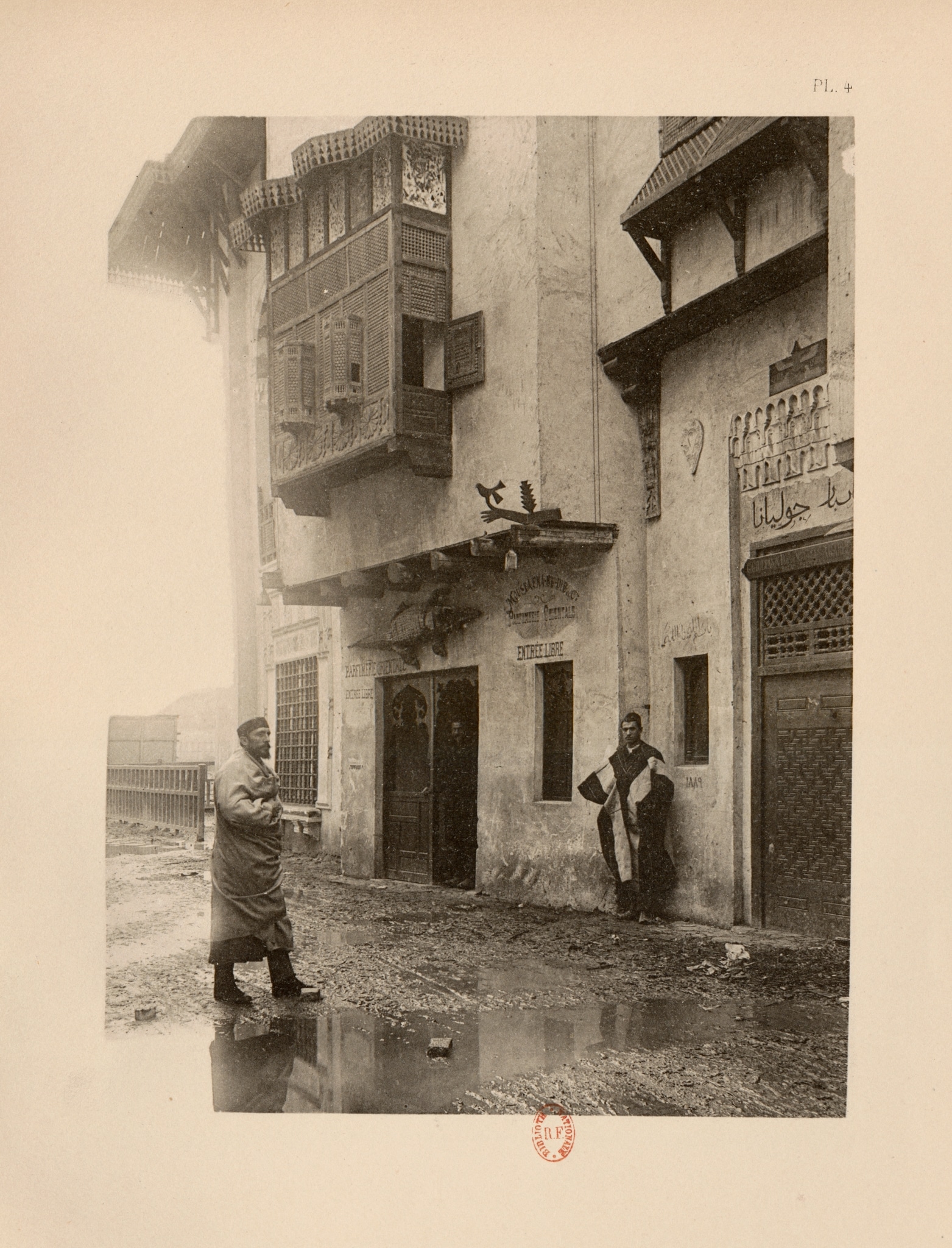
IG_269: Book illustration: Boiseries et belle moucharabieh anciennes
(MISC_IG_DelortdeGleon_IG_269)

Kontaktdaten

Bitte geben Sie Ihren Vornamen ein.
Bitte geben Sie Ihren Namen ein.
Bitte geben Sie Ihre E-Mail-Adresse ein.
Die E-Mail-Adresse ist ungültig.

Bitte machen Sie so viele Angaben wie möglich (Titel der Publikation, Datenbank, Herausgeber, Auflage, Erscheinungsjahr, usw.)

Das Vitrocentre Romont kann Ihnen nur eigene Bilder zur Verfügung stellen. Bilder von Dritten können wir Ihnen leider nicht überlassen. Betrifft Ihre Bestellung Fotografien von Drittparteien, senden wir Ihnen die Kontaktadresse, über welche die Bilder bezogen werden können.

Die von Ihnen in diesem Formular angegebenen Personendaten werden vom Vitrocentre Romont ausschliesslich für die Bearbeitung Ihrer Bildbestellung verwendet. Die Korrespondenz zur Bestellung wird zur internen Nachvollziehbarkeit archiviert. Die Daten werden weder für andere als die hier aufgelisteten Zwecke verwendet noch an Dritte weitergegeben. Durch das Absenden des Bestellformulars erklären Sie sich mit dieser Nutzung Ihrer Personendaten einverstanden.

Bei Fragen können Sie gerne eine E-Mail an info@vitrosearch.ch senden.

Titel

‘Boiseries et belle moucharabieh anciennes’

Art des Objekts
Masse
23.4 x 15.6 cm
Künstler:in / Hersteller:in
Datierung
1889
Forschungsprojekt
Autor:in und Datum des Eintrags
Sarah Keller 2025

Ikonografie

Beschreibung

Pl. 4 in Alphonse Delort de Gléon, L’Architecture arabe des khalifes d’Égypte à l’Exposition Universelle de Paris en 1889, la rue du Caire, 1889. Published in Paris by E. Plon, Nourrit et Cie.
This photograph shows the Rue du Caire at the 1889 world’s fair in Paris. The mashrabiyya (oriel) has a row of six stucco and glass windows on the front and one on each side.

Iconclass Code
41A33 · Fenster
41A382 · Erkerfenster, Erker
Iconclass Stichworte

Entstehungsgeschichte

Forschung

Delort de Gléon’s book consists of a short introduction and a picture section with twenty-eight plates. In the introduction, the engineer first discusses the origin and development of Arab art; this is followed by a summary description of Cairo’s architecture, which also mentions the mashrabiyya with their stucco and glass windows. To gain an impression of the richness of its decoration, Delort de Gléon recommends consulting the book by Jules Bourgoin (IG_88), who made preliminary drawings for the Rue du Caire at the world’s fair of 1889 in Paris (Volait, 2012, pp. 56–59). The author then goes on to discuss his Rue du Caire on the Champ de Mars, emphasizing that there is no such street left in Cairo itself owing to modernization.
Implemented in collaboration with an architect by the name of Lucien Gillet, the Rue du Caire included three monumental gates, two sanctuaries, a sabil-kuttab (school-fountain, a typical Cairo aedicule), stalls, houses, and cafés. The minaret was a direct quotation of the minaret of the Mosque-Mausoleum of Sultan Qaytbay (881 AH /1476 CE), albeit reduced by one storey. According to Delort de Gléon, the ornamental motifs used in the construction were mouldings taken in situ, while all the woodwork in the houses, including the mashrabiyya, was authentic and ancient, brought from Cairo. Their fate after the world’s fair is unknown. As Volait noted (2009, p. 134; 2017, p. 6), some parts of the Rue du Caire were apparently reused in a villa at Arromanches in Normandy that belonged to Delort de Gléon and his wife but which does not survive.
Delort de Gléon not only published the photographs of the book, but also commissioned the French architect and artist Joseph-René Binet to paint ten views of the Rue du Caire in watercolour at the fair (École nationale des Beaux-Arts, Paris, 2091–2100; Volait, 2009, p. 175; Dixon, 2022).

Datierung
1889
Verknüpfte Standorte
Herstellungsort

Bibliografie und Quellen

Literatur

Delort de Gléon, A. (1889). L'Architecture arabe des khalifes d'Égypte à l'Exposition universelle de Paris en 1889 : la rue du Caire. Paris: E. Plon, Nourrit et Cie.

Dixon, C. (2022). The Rue du Caire, Paris, 1889. In LACMA Unframed. Retrieved from https://unframed.lacma.org/2022/05/12/rue-du-caire-paris-1889.

Volait, M. (2005). La rue du Caire. In Bacha, M. (dir). Les Expositions Universelles à Paris, de 1855 à 1937 (pp.131-134). Paris : Action artistique de la Ville de Paris.

Volait, M. (2009). Fous du Caire. Excentriques, architectes & amateurs d’art en égypte 1863–1914. L’Archange Minotaure.

Volait, M. (2012). Bourgoin, architecte : la Rue du Caire (pp. 36–37). In Bidealut, M. (ed.). Jules Bourgoin (1838–1908): L’obsession du trait. Paris: Publications de l’Institut national d’histoire de l’art, 2012. Retrieved from http://books.openedition.org/inha/4581.

Volait, M. (2017). Le goût mamelouk au xixe siècle : d’une esthétique orientaliste à un style national générique. In: Volait, M., & Perrin, E. (Eds.), Dialogues artistiques avec les passés de l'Égypte: Une perspective transnationale et transmédiale. Paris: Publications de l’Institut national d’histoire de l’art. doi:10.4000/books.inha.7207

Ausstellungen

1889: Exposition Universelle, Paris

Bildinformationen

Name des Bildes
MISC_IG_DelortdeGleon_IG_269
Fotonachweise
Source gallica.bnf.fr / BnF

Zitiervorschlag

Keller, S. (2025). ‘Boiseries et belle moucharabieh anciennes’. In Vitrosearch. Aufgerufen am 5. Dezember 2025 von https://www.vitrosearch.ch/objects/2713113.

Informationen zum Datensatz

Referenznummer
IG_269