Bestelltes Bild

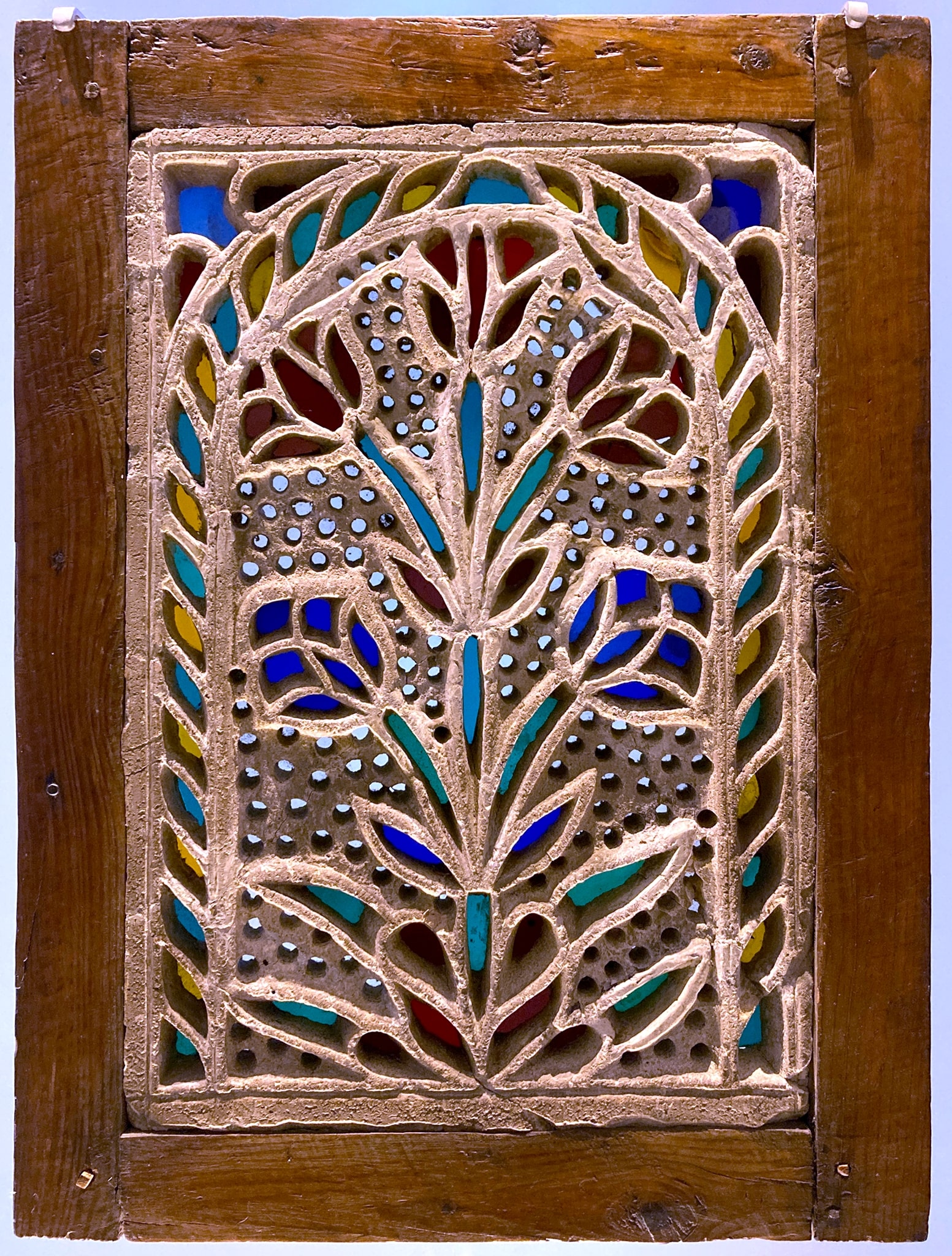
IG_190: Stucco and glass window with a flower stem
(FRA_Paris_InstitutDuMondeArabe_IG_190)

Kontaktdaten

Bitte geben Sie Ihren Vornamen ein.
Bitte geben Sie Ihren Namen ein.
Bitte geben Sie Ihre E-Mail-Adresse ein.
Die E-Mail-Adresse ist ungültig.

Bitte machen Sie so viele Angaben wie möglich (Titel der Publikation, Datenbank, Herausgeber, Auflage, Erscheinungsjahr, usw.)

Das Vitrocentre Romont kann Ihnen nur eigene Bilder zur Verfügung stellen. Bilder von Dritten können wir Ihnen leider nicht überlassen. Betrifft Ihre Bestellung Fotografien von Drittparteien, senden wir Ihnen die Kontaktadresse, über welche die Bilder bezogen werden können.

Die von Ihnen in diesem Formular angegebenen Personendaten werden vom Vitrocentre Romont ausschliesslich für die Bearbeitung Ihrer Bildbestellung verwendet. Die Korrespondenz zur Bestellung wird zur internen Nachvollziehbarkeit archiviert. Die Daten werden weder für andere als die hier aufgelisteten Zwecke verwendet noch an Dritte weitergegeben. Durch das Absenden des Bestellformulars erklären Sie sich mit dieser Nutzung Ihrer Personendaten einverstanden.

Bei Fragen können Sie gerne eine E-Mail an info@vitrosearch.ch senden.

Titel

Stucco and glass window with a flower stem

Art des Objekts
Masse
63.5 x 46.5 x 3.5 cm (with frame); 52.5 x 35.5 x 3 cm (without frame, approximate depth)
Künstler:in / Hersteller:in
Herstellungsort
Datierung
early 13th–early 14th centuries AH / 19th century CE
Standort
Inventarnummer
AI 09-01
Forschungsprojekt
Autor:in und Datum des Eintrags
Sarah Keller, Francine Giese, Sophie Wolf 2025

Ikonografie

Beschreibung

The motif of this stucco and glass window consists of a flower stem with five blossoms arranged symmetrically along a central axis. The blossoms can be identified as roses. The flower is enclosed within a semicircular arch in yellow and green. Two tear-shaped leaves are set in each of the spandrels above the arch. The flower stem, the framing arch, and the spandrels are worked out in relief against a perforated background that lies 5–10mm below the surface.

Iconclass Code
25G41(+32) · Blumen (+ Blumen, Blüten, blühende Pflanzen)
25G41(ROSE) · Blumen: Rose
Iconclass Stichworte
blühen · Blume · Blüte · Rose

Materialien, Technik und Erhaltungszustand

Materialien

Gypsum plaster; colourless glass; coloured glass (green, blue, yellow); red flashed glass

Technik

The window was made according to the traditional technique used in the manufacture of qamarīyāt in North Africa until today. Firstly, the rectangular stucco panel was produced by pouring gypsum plaster into a wooden frame. The average thickness of the stucco is c.30mm. Once the stucco had set, the latticework was carved out with sharp, knife-like tools. Then the openings were then covered with pieces of colourless and coloured sheet glass, which were fixed on the back of the lattice with a thin layer of gypsum plaster.

The design of the latticework has two levels. The main motif (level 0) is worked out in relief against the perforated background (level –1), which lies 5–10mm below level 0. The irregularly spaced, slightly conical perforations were pierced with a metal or wooden pin before the stucco was fully set. They are c.10mm in diameter. The distance between the holes is 7–10mm. All holes are backed with colourless glass. The main design and the perforations have been worked in such a way that the incident light is directed slightly downwards into the room.

The glass is either colourless or coloured in the mass. Small, elongated and parallel bubbles indicate that the glass sheets were mouth-blown, possibly using the broad-sheet method. The glass pieces were cut according to the design of the latticework. Scratch marks along the edges of some glass pieces testify to the use of a glass-cutter.

Erhaltungszustand und Restaurierungen

This stucco and glass window is in good condition. The plaster lattice is intact, and the glass does not show any losses or defects.

Since its acquistion by the Institut du monde arabe in 2009, the window has not been restored. There are, however, signs of earlier repairs on the front: small losses were filled with plaster whiter and finer than that of the stucco lattice. There are no signs of restoration on the back, as the stucco layer used for embedding the pieces of glass looks uniform.

Entstehungsgeschichte

Forschung

From a technical and iconographic point of view, this stucco and glass window corresponds to one of the standard types of qamariyya widespread in Egypt during the Ottoman period. However, the motif is much less frequent in the collections studied than, for example, flowers in a vase or the cypress tree. The Musée du Louvre in Paris holds two windows with the same motif (IG_3 and IG_168). In contrast to the window discussed here, the flower stems in the Louvre examples are set in medallion-like frames reminiscent of the Ottoman Baroque style.

According to the museum records, the window was acquired by the Institut du monde arabe (IMA) in 2009 from the Alexis Renard Art gallery in Paris. Neither the IMA nor the art gallery holds any information regarding the provenance and date of the window. However, the examination of the window has provided some clues: the motif and the manufacturing technique, on the one hand, suggest that the window was made in an Egyptian workshop (see Technique). The nature of the glass used in the manufacture of the window, on the other hand, provides indirect information on the age of the window: the pieces of glass show the characteristics of cylinder-blown sheet glass, a technique that was uncommon in the Islamic world at that time and more commonly used in Europe. According to the Hungarian architect Max Herz (1856–1819), sheet glass was imported to Egypt from Europe from the 19th century, because local sheet-glass production had come to a standstill (Herz, 1902, p. 53).

Datierung
early 13th–early 14th centuries AH / 19th century CE
Zeitraum
1800 – 1899
Frühere Standorte
Herstellungsort

Provenienz

Eigentümer:in
Seit 2009: Institut du monde arabe, Inventar-Nr.: AI 09-01, Paris (Frankreich)
Vorbesitzer:in

Bibliografie und Quellen

Literatur

Herz, M. (1902). Le musée national du Caire. Gazette des Beaux-Arts, 3. Pér. 28, 45–59, 497–505.

Bildinformationen

Name des Bildes
FRA_Paris_InstitutDuMondeArabe_IG_190
Fotonachweise
© Vitrocentre Romont / Sarah Keller

Zitiervorschlag

Keller, S., Giese, F., & Wolf, S. (2025). Stucco and glass window with a flower stem. In Vitrosearch. Aufgerufen am 5. Dezember 2025 von https://www.vitrosearch.ch/objects/2713034.

Informationen zum Datensatz

Referenznummer
IG_190