Bestelltes Bild

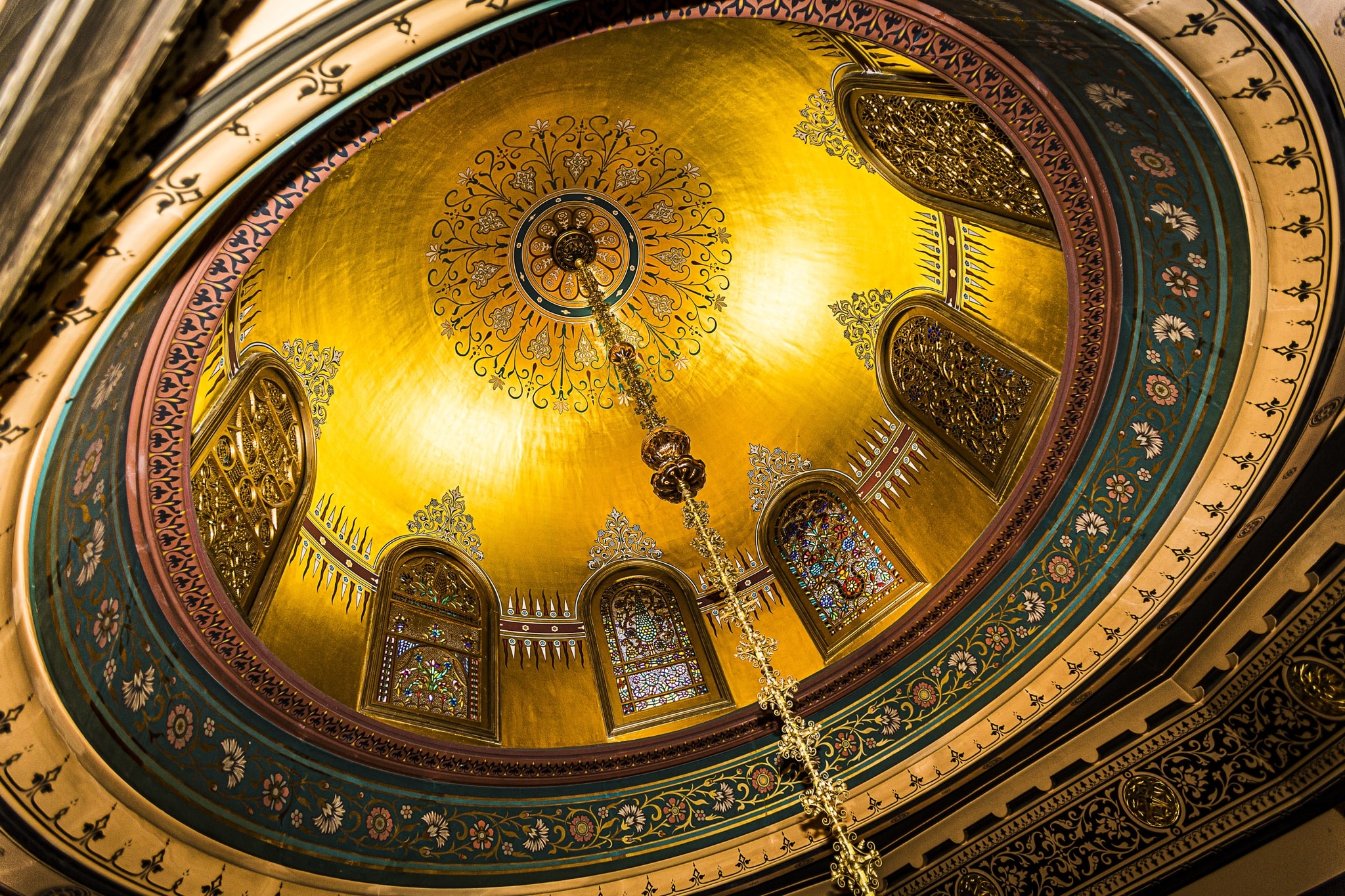
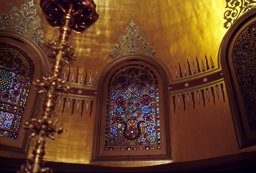
IG_57: Eight replicas of stucco and glass windows
(GBR_London_LeightonHouse_IG_57_1)

Kontaktdaten

Bitte geben Sie Ihren Vornamen ein.
Bitte geben Sie Ihren Namen ein.
Bitte geben Sie Ihre E-Mail-Adresse ein.
Die E-Mail-Adresse ist ungültig.

Bitte machen Sie so viele Angaben wie möglich (Titel der Publikation, Datenbank, Herausgeber, Auflage, Erscheinungsjahr, usw.)

Das Vitrocentre Romont kann Ihnen nur eigene Bilder zur Verfügung stellen. Bilder von Dritten können wir Ihnen leider nicht überlassen. Betrifft Ihre Bestellung Fotografien von Drittparteien, senden wir Ihnen die Kontaktadresse, über welche die Bilder bezogen werden können.

Die von Ihnen in diesem Formular angegebenen Personendaten werden vom Vitrocentre Romont ausschliesslich für die Bearbeitung Ihrer Bildbestellung verwendet. Die Korrespondenz zur Bestellung wird zur internen Nachvollziehbarkeit archiviert. Die Daten werden weder für andere als die hier aufgelisteten Zwecke verwendet noch an Dritte weitergegeben. Durch das Absenden des Bestellformulars erklären Sie sich mit dieser Nutzung Ihrer Personendaten einverstanden.

Bei Fragen können Sie gerne eine E-Mail an info@vitrosearch.ch senden.

Titel

Eight replicas of stucco and glass windows

Art des Objekts
Masse
132 x 81.3 cm
Künstler:in / Hersteller:in
Aitchison, George · design and execution
Datierung
1877–1880
Standort
Lage
cupola, window 1–8
Forschungsprojekt
Autor:in und Datum des Eintrags
Francine Giese, Sophie Wolf 2025

Ikonografie

Beschreibung

Eight replicas of stucco and glass windows located at the bottom of the cupola (W1–W8). The stucco panels are set in wooden frames and fitted into the semicircular window openings. The replicas have different designs. W1 is an unconventional combination of flowers (among them tulips), cypress tree, inscription, and geometric and floral ornamentation. W4, W5, and W8 show almost identical versions of the flowers-in-a-vase motif, represented in a highly abstract manner. W3 is a variation of the latter group, as the vase with flowers is set on a low base. W2 and W7 are composed of two panels, surrounded by floral borders. The upper panel consists of a cypress tree surrounded by flower tendrils and the lower panel of flower tendrils. The flowers of both panels are represented in a highly stylized way, and only carnations and tulips are recognizable. W6 shows an unusual design with two distinctive zones: the upper part of the window consists of a cypress tree, flanked by two flower tendrils, and the lower part shows flowers in a vase within an almost square panel, crowned by three flowers. The flower vase is framed by a semicircular arch. Geometric ornamentation is set in the spandrels and the borders on either side of the vase motif. The motifs of all eight windows are worked in relief against a perforated background, which is slightly recessed.

Iconclass Code
25G3(CYPRESS) · Bäume: Zypresse
41A6711 · Blumen in einer Vase
49L142 · arabische Schrift
49L8 · Inschrift, Aufschrift
Iconclass Stichworte

Materialien, Technik und Erhaltungszustand

Materialien

Gypsum plaster, coloured glass, wood, gold paint.

Technik

Stucco lattice backed with coloured pieces of glass. As the back of the windows was not accessible during our examination, it was not possible to check how the glass is fixed to the lattice. The front of the windows and the wooden frames are painted with gold paint.

Erhaltungszustand und Restaurierungen

The windows were repaired several times over the course of the 20th century. Only the restoration carried out in the second half of the 1980s is documented in more detail. According to a preliminary report of 10th February 1986 held in the archives of Leighton House (Wasley, 1986) and an article by David Wasley’s studio assistant Louise McKenzie (McKenzie, 1987), this restoration included removing the windows and cleaning the surfaces of the stucco latticework and the pieces of glass, the rebuilding of missing plasterwork, filling gaps, refixing loose pieces of glass, and replacing lost glass. The restorers also added two coats of gold paint and varnish. In the course of the latest restoration campaign of 2008–2010 (see Robbins, 2010, pp. 62–85; Vanoli, 2012), the windows were only cleaned (information provided by Daniel Robbins, 04.03.2025).

Entstehungsgeschichte

Forschung

The eight stucco and glass windows placed at the bottom of the dome represent some of the standard motifs of qamarīyāt widespread in Egypt during the Ottoman period: cypress trees, flowers in a vase, Arabic inscriptions, and flower tendrils. However, stylistically, the eight windows show clear differences from traditional qamarīyāt. It is therefore very likely that they were designed by a Western artist or architect. Given the close parallels with the three stucco and glass windows in the north, south, and west walls of the Arab Hall (especially W4, W5, W8, see IG_54–56), it can even be assumed that they were designed by the same artists and made in the same workshop.

As of the 1850s, Western replicas of stucco and glass windows were installed in Arab-style interiors across Europe (see for instance IG_64, IG_431, IG_484–487). One of these interiors is the Arab Hall of the studio-house of the British artist and collector Frederic Leighton (1830–1896) at 12 Holland Park Road in Kensington (London), where the replicas discussed here are located. Leighton House was constructed between 1865 and 1895 in five phases, after plans by one of Leighton’s close friends, the British architect George Aitchison (1825–1910). Work on the Arab Hall extension began in 1877 and continued until 1881. At the Royal Institute of British Architects (RIBA), various drawings by Aitchison of the Arab Hall are conserved (IG_50–53). Two drawings (IG_52, IG_53) showing the elevation of the east and west walls of the Arab Hall were exhibited at the Royal Academy in 1880. According to an anonymous report on Leighton House and the Arab Hall, published on 1 October 1880 in The Building News, the exhibited drawings by Aitchison showed ‘the decorations as completed’ (Anon., 1880, p. 384). We may therefore assume that the windows had already been installed in the Arab Hall in 1880.

Leighton House is one of the most famous 19th-century artist’s homes, combining living, working, and exhibition spaces, designed according to Leighton’s needs and aesthetic visions (Sweetman, 1988, pp. 189–192; Robbins/Suleman, 2005; Robbins, 2011; Anderson, 2011; Droth, 2011; Vanoli, 2012; Roberts, 2018; Gibson, 2020; Robbins, 2023). Leighton’s studio-house reflects the exotic taste of the time (Walkley, 1994, pp. 52–56), which finds close parallels in the now-lost studio of the British painter Frank Dillon (1832–1908). Dillon, who visited Cairo on several occasions in the 1850s – 1870s, recreated a Cairene interior with wall tiles, wooden furnishings, and two stucco and glass windows in his studio in Kensington (Conway, 1882, p. 196; Walkley, 1994, pp. 70), as attested by a wood engraving published in the second volume of Georg Ebers’s Aegypten in Bild und Wort (Ebers, 1880, p. 96, see IG_117).

The Arab Hall extension at Leighton House reflects the patron’s and the architect’s fascination for the East. As many orientalizing interiors, it is an amalgam of various Islamic styles, arranged around the central theme of the 12th-century Zisa Palace in Palermo. While Leighton became familiar with Islamic art and architecture through his travels to Sicily, Algeria, Turkey, Egypt, Syria, Spain, and Morocco, Aitchison was more acquainted with Cairo, among other Islamic cities, where he examined traditional houses. He shared his observations during the discussion following the paper on ‘Persian Architecture and Construction’ given by Caspar Purdon Clarke (1846–1911) and Thomas Hayter Lewis (1818–1898) at the Royal Institute of British Architects on 31 January 1881. On this occasion, Aitchison described the iconographic and technical characteristics of Egyptian qamarīyāt and their sparkling light effects and added that ‘many [were] executed for me in London’ (Purdon Clarke & Hayter Lewis, 1881, pp. 173–174) – most probably referring to the Leighton House replicas, which were probably made around that time. More than 20 years later, in 1904, Aitchison returned to the subject of stucco and glass windows in his essay ‘Coloured Glass’, where he compared Western stained glass with qamarīyāt and mentioned Leighton House with its ‘windows of pierced plaster’ as an example illustrating the Islamic tradition (Aitchison, 1904, p. 57, see IG_91).

The British architect William Burges (1827–1881), who was a long-time friend of Aitchison and Leighton, must have been aware of these replicas when he planned the windows of the Arab Room at Cardiff Castle in Wales (IG_484IG_487). However, Burges opted to execute the replicas at Cardiff Castle in glass, lead, and wood, whereas Aitchison stuck more closely to the Islamic prototypes – at least as far as the material was concerned. According to contemporary sources, Leighton acquired various stucco and glass windows during his travels to Cairo (1868) and Damascus (1873) (see for instance Anon., 1880; Wright, 1896; Rhys, 1900). Unfortunately, the Egyptian windows were heavily damaged during shipping (Rhys, 1900, p. 100). Such transport damage was apparently not uncommon (see for instance IG_43). As none of the latticeworks had survived the journey, the window openings were closed with ‘English imitations’ (Rhys, 1900, p. 100). Only part of the glass could be reused. These original pieces were used in the replica installed in the west wall of the Arab Hall (IG_56). The Reverend William Wright (1837–1899), who procured qamarīyāt ‘from a mosque in Damascus’ (Wright, 1896, p. 184) for Leighton during the latter’s visit to the city, adds that the Syrian stucco and glass windows ‘have also been supplemented and matched by coloured glass made in London’ (Wright, 1896, p. 184). In the case of the eight cupola windows discussed here, Virginia Butler speaks of glass (windows) made in England, ‘a fact of which the owner is very proud’ (Butler 1893, p. 466).

Datierung
1877–1880
Zeitraum
1877 – 1880
StifterIn
Frühere Standorte
Verknüpfte Standorte
Herstellungsort

Provenienz

Eigentümer:in

Bibliografie und Quellen

Literatur

Aitchison, G. (1904). Coloured Glass. The Architectural Journal, XI(3), pp. 53–65.

Anderson, A. (2011). The 'New Old School': Furnishing with Antiques in the Modern Interior–Frederic, Lord Leighton’s Studio-House and Its Collections. Journal of Design History, 24(4), pp. 315–338.

Anon. (1880, October 1). Artists' Homes, No. 7. Sir Frederick Leighton's House and Studio. The Building News, 1880, p. 384.

Barringer, T., & Prettejohn, E. (eds.) (1999). Frederic Leighton: Antiquity Renaissance Modernity (Studies in British Art, 5). New Haven & London: Yale University Press.

Butler, V. (1893, July–December). An Hour at Sir Frederick Leighton's. Lippincott's Monthly Magazine. A Popular Journal of General Literature, Science, and Politics, III, pp. 463–466.

Butler, V. (1893). An Hour at Sir Frederick Leighton's. Lippincott's Monthly Magazine. A Popular Journal of General Literature, Science, and Politics, III, July–December, pp. 463–466.

Clarke, C. P., & Hayter Lewis, T. (1881). Persian Architecture and Construction. Transactions of the Royal Institute of British Architects, Session 1880–1881 (pp. 161–174). London: Royal Institute of British Architects.

Conway, M. D. (1882). Travels in South Kensington with Notes on Decorative Art and Architecture in England. London: Trübner & Co.

Droth, M. (2011). Leighton's House: Art In and Beyond the Studio. Journal of Design History, 24(4), 339–358.

Ebers, G. (1880). Aegypten in Bild und Wort. Dargestellt von unseren ersten Künstlern, vol. 2. Stuttgart: Eduard Hallberger.

Edwards, J. (2010). The Lessons of Leighton House: Aesthetics, Politics, Erotics. In Rethinking the Interior, c. 1867–1896. Aestheticism and Arts and Crafts (pp. 85–110). Farnham: Ashgate.

Gibson, M. (2020). ‘An Oriental Kiosk’: The Building of the ‘Arab Hall’ at Leighton House in London. Orientations, 51(2), 2–15.

McKenzie, L. (spring 1987). The Arab Hall Windows: Leighton House. Stained Glass: The Magazine of the British Society of Master Glass-Painters, p. 8.

Rhys, E. (1900). Frederic Lord Leighton. An Illustrated Record of His Life and Work. London.

Robbins, D. (2011). Leighton House Museum. Holland Park Road, Kensington. The Royal Borough of Kensington and Chelsea.

Robbins, D. (2023). Leighton House. Step into a painter's world. The Royal Borough of Kensington and Chelsea.

Robbins, D. (ed.) (2010). Closer to Home. The Restoration of Leighton House and Catalogue of the Reopening Displays. The Royal Borough of Kensington and Chelsea, 2010.

Robbins, D., & Suleman, R. (2005). Leighton House Museum. Holland Park Road, Kensington. The Royal Borough of Kensington and Chelsea Museums and Arts Service.

Roberts, M. (2018). The Resistant Materiality of Frederic Leighton’s Arab Hall. British Art Studies 9. https://dx.doi.org/10.17658/issn.2058-5462/ issue-09/mroberts

Stone, J. H. (1905, October). Leighton House. The English Illustrated Magazine, 3–17.

Sweetman, J. (1988). The Oriental obsession. Islamic inspiration in British and American art and architecture 1500–1920. Cambridge: Cambridge University Press.

Vanoli, D. (2012). The Arab Hall, Leighton House Museum: Restoration and Conservation Works 2008–10. Journal of Architectural Conservation, 18(1), 27–46. https://doi.org/10.1080/13556207.2012.10785102.

Walkley, G. (1994). Artists' Houses in London 1764–1914. Aldershot: Scolar Press.

Wasley, D. (1986). Leighton House. Arab Hall windows, unpublished report, 10 February 1986. London, Leighton House, archives.

Wright, W. (1896). Lord Leighton at Damascus and After. The Bookman, March 1896, 183–185.

Bildinformationen

Name des Bildes
GBR_London_LeightonHouse_IG_57_1
Fotonachweise
Photograph by Kevin Moran, © Leighton House, the Royal Borough of Kensington and Chelsea.

Weiteres Bildmaterial und verwandte Objekte

Zusätzliches Bildmaterial
Eight replicas of stucco and glass windows

Zitiervorschlag

Giese, F., & Wolf, S. (2025). Eight replicas of stucco and glass windows. In Vitrosearch. Aufgerufen am 5. Dezember 2025 von https://www.vitrosearch.ch/objects/2712901.

Informationen zum Datensatz

Referenznummer
IG_57