Image commandée

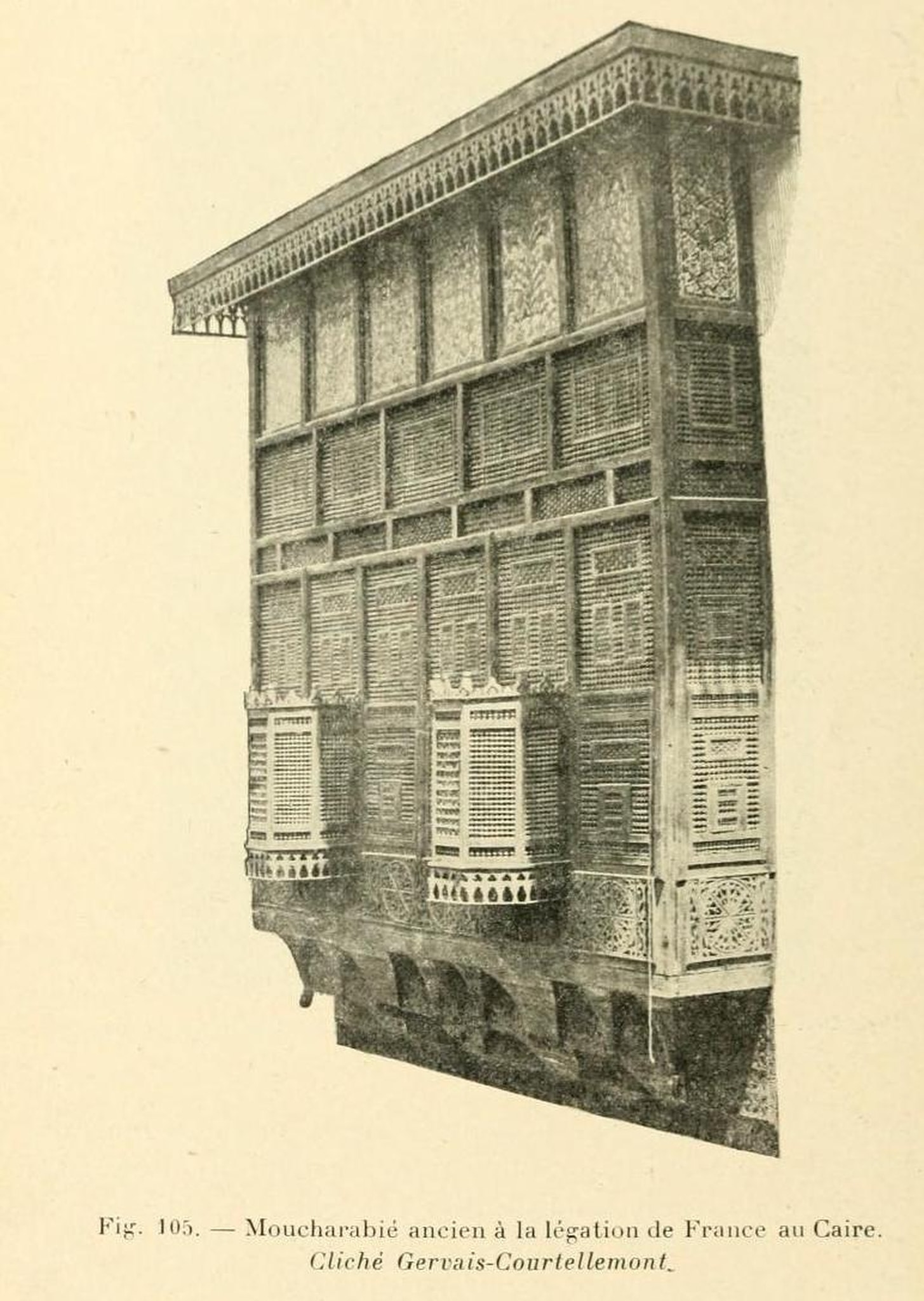
IG_87: Book illustration: Moucharabié ancien à là légation de France au Caire
(MISC_IG_Saladin_Migeon_1907_IG_87)

Coordonnées

Prière de compléter le champ "Prénom".
Prière de compléter le champ "Nom".
Prière de compléter le champ "E-Mail".
Votre adresse e-mail n'est pas valide.

Veuillez s’il vous plaît indiquer autant d’informations que possible (titre de la publication, base de données, éditeur, nombre d’exemplaires, année de parution, etc.)

Le Vitrocentre Romont ne peut mettre à votre disposition que ses propres images. Nous ne pouvons malheureusement pas vous fournir des images de tiers. Si votre commande concerne des photographies de tiers, nous vous enverrons volontiers l'adresse de contact où vous pourrez obtenir les images.

Les données personnelles que vous avez indiquées dans ce formulaire sont utilisées par le Vitrocentre Romont exclusivement pour le traitement de votre commande d'images. La correspondance relative à la commande est archivée à des fins de traçabilité interne. Les données ne seront utilisées à aucune autre fin que celles énumérées ici, ni transmises à des tiers. En envoyant un formulaire de commande, vous acceptez tacitement cette utilisation de vos données personnelles.

Pour toute question complémentaire, veuillez contacter info@vitrosearch.ch.

Titre

‘Moucharabié ancien à la légation de France au Caire’

Type d'objet
Dimensions
23.4 x 15.6 cm (page)
Artiste
Saladin, Henri · Author
Gervais-Courtellemont, Jules · Photographer
Datation
1907
Projet de recherche
Auteur·e et date de la notice
Sarah Keller 2025

Iconographie

Description

Fig. 105 in Henri Saladin and Gaston Migeon, Manuel d’art musulman, 1907, vol. 1, p. 156.
The photograph shows the oriel window with mashrabiyya in the mansion of Gaston de Saint-Maurice, which housed the French diplomatic mission in Cairo 1884–1937. In the upper part, a row of eight stucco and glass windows with floral motifs is displayed.

Code Iconclass
25G41 · fleurs
41A382 · fenêtre en saillie, fenêtre en oriel
Mot-clés Iconclass

Historique de l'oeuvre

Recherche

The French architect and specialist in Islamic architecture, Henri Saladin, wrote the section on architecture of the Manuel d’art musulman, published in 1907. He describes the stucco and glass windows of Damascus and Constantinople in brief and praises their ‘charme singulier’ (vol. 1, pp. 68–70, 168). An accompanying photograph, made by the French photographer Jules Gervais-Courtellemont (1863–1931), illustrates the description. It shows the oriel window with mashrabiyya in the mansion of Gaston de Saint-Maurice in Cairo, built in 1875–79, with a row of eight stucco and glass windows in the upper part.

The mansion of Saint-Maurice was built by reassembling older architectural elements for the interiors, among them marble-mosaic floors and walls, ivory-inlaid doors, polychrome wooden ceilings, and the mashrabiyya with its eight stucco and glass windows. In 1884, the French Ministry of Foreign Affairs bought the house for diplomatic use. In 1937, when the French embassy moved to new premises, the house was demolished, but some of its decor was dismantled and reassembled in the new chancellery (Volait, 2012, p. 171; Volait, 2021, chap. 1.2). There is still a niche there with a row of six stucco and glass windows, which seem to be the ones taken from the house of Saint-Maurice.
Some years before Saladin, the journalist and illustrator Charles Lallemand (1826–1904) published the same photograph of the mashrabiyya of Saint-Maurice in his book Le Caire (Lallemand, 1894, p. 19). The image is not cropped as in Saladin’s illustration but shows the façade of the house with the oriel window. Lallemand was the father-in-law of the photographer Gervais-Courtellemont, who had been married to Hélène Lallemand (1860–1922) since 1894 (Devos, 2013, p. 216).

As in the publications of Pascal Coste (IG_69) and Delort de Gléon (IG_269), in Saladin’s illustration the stucco and glass windows are shown from the outside in their original setting.

Datation
1907
Sites liées

Bibliographie et sources

Bibliographie

Devos, E. (2013). À travers Le Caire, l’œuvre de Gervais-Courtellemont en Égypte de 1894 à 1911. In M. Volait (éd.), Le Caire dessiné et photographié au XIXe siècle. Publications de l’Institut national d’histoire de l’art. https://doi.org/10.4000/books.inha.4886

Herz, M. (1895). Catalogue sommaire des monuments exposés dans le Musée national de l'art arabe. Cairo: G. Lekegian & Cie.

Lallemand, Ch. (1894). Le Caire. Alger: Gervais-Courtellemont et Cie.

Saladin, H. & Migeon, G. (1907). Manuel d’art musulman (Vols 1–2). Paris: A. Picard. Retrieved June 26, 2024, from: ark:/13960/t2f76hh6w

Volait, M. (2012). Maisons de France au Caire. Le remploi de grands décors mamelouks et ottomans dans une architecture moderne = Buyūt Faransā fi l-Qāhira. Al-Athār al-mamlūkiyya wa-l-ʿuthmāniyya fi l-ʿimāra al-hadītha (bilingual publication in French and Arabic). Cairo: Institut Français d'Archéologie Orientale.

Volait, M. (2021). Antique Dealing and Creative Reuse in Cairo and Damascus 1850–1890. Leiden: Brill.

Informations sur l'image

Nom de l'image
MISC_IG_Saladin_Migeon_1907_IG_87
Crédits photographiques
Saladin, & Migeon, 1907, vol. 1, fig. 105.

Proposition de citation

Keller, S. (2025). ‘Moucharabié ancien à la légation de France au Caire’. Dans Vitrosearch. Consulté le 5 décembre 2025 de https://www.vitrosearch.ch/objects/2712931.

Informations sur l’enregistrement

Numéro de référence
IG_87