Image commandée

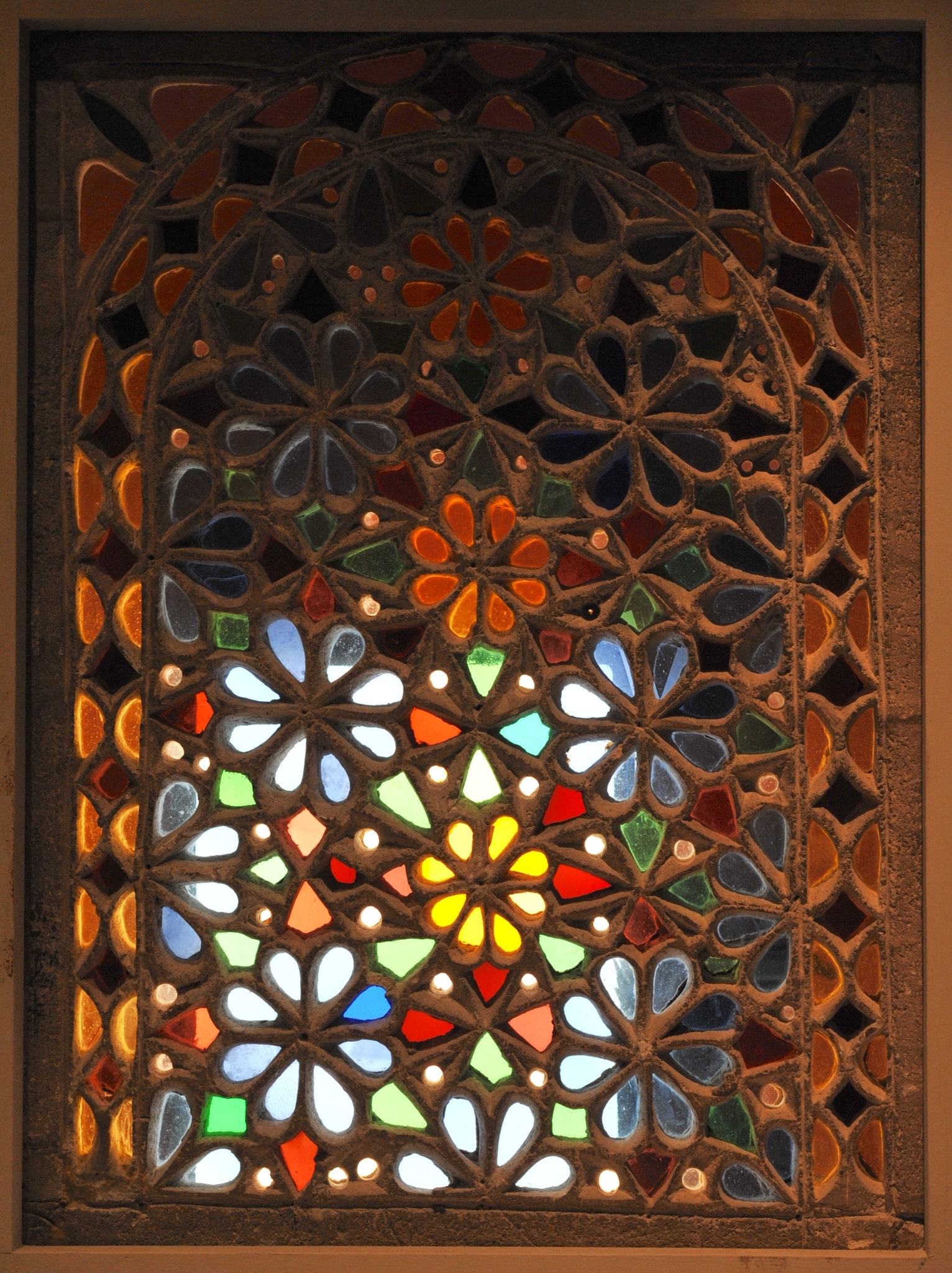
IG_171: Stucco and glass window with flower and star ornamentation
(USA_NewYork_MetropolitanMuseumOfArt_IG_171)

Coordonnées

Prière de compléter le champ "Prénom".
Prière de compléter le champ "Nom".
Prière de compléter le champ "E-Mail".
Votre adresse e-mail n'est pas valide.

Veuillez s’il vous plaît indiquer autant d’informations que possible (titre de la publication, base de données, éditeur, nombre d’exemplaires, année de parution, etc.)

Le Vitrocentre Romont ne peut mettre à votre disposition que ses propres images. Nous ne pouvons malheureusement pas vous fournir des images de tiers. Si votre commande concerne des photographies de tiers, nous vous enverrons volontiers l'adresse de contact où vous pourrez obtenir les images.

Les données personnelles que vous avez indiquées dans ce formulaire sont utilisées par le Vitrocentre Romont exclusivement pour le traitement de votre commande d'images. La correspondance relative à la commande est archivée à des fins de traçabilité interne. Les données ne seront utilisées à aucune autre fin que celles énumérées ici, ni transmises à des tiers. En envoyant un formulaire de commande, vous acceptez tacitement cette utilisation de vos données personnelles.

Pour toute question complémentaire, veuillez contacter info@vitrosearch.ch.

Titre

Stucco and glass window with flower and star ornamentation

Type d'objet
Dimensions
81.3 x 114.9 cm (framed with IG_172, MET, 93.26.16); 64.8 x 48.3 x 2 cm (without frame, approximate depth)
Artiste
Lieu de production
Datation
early 13th–early 14th centuries AH / 19th century CE
Lieu
Numéro d'inventaire
93.26.15
Projet de recherche
Auteur·e et date de la notice
Francine Giese, Sophie Wolf 2025

Iconographie

Description

Rectangular stucco and glass window with symmetrically arranged flower-and-star ornamentation set in semicircular arch. The motif consists of eight-pointed stars enclosing eight-petalled flowers. Small round openings adorn the spaces between the points of the stars. Three leaves decorate the spandrels above the arch.

Code Iconclass
48A981 · ornement ~ motifs géométriques
48A9815 · ornement ~ formes étoilées
48A983 · ornement dérivé de formes végétales
48A9833 · fleurs ~ ornement
Mot-clés Iconclass

Matériaux, technique et état de conservation

Matériaux

Gypsum plaster; colourless glass with a greyish-green tint; coloured glass (yellow, orange-coloured, three shades of blue, purple, two shades of green, two shades of red flashed glass); wooden frame

Technique

The latticework was carved into a rectangular stucco panel and inlaid with colourless and coloured sheet glass. The pieces of glass are fixed onto the back of the lattice with a thin layer (1.5–2mm) of gypsum plaster.

To prevent the pieces of glass from being displaced while pouring the embedding stucco, they were probably fixed to the latticework with an adhesive. Traces of this animal or vegetable glue are visible in the area around the openings. The thickness of the stucco panel is c.20mm. The stucco panel was cast in a wooden frame measuring of c.45 × 46 × 40mm. The wooden frame is stained dark brown.

The design of the latticework has two levels. The main motif (level 0) has been carved out of the stucco panel with sharp, knife-like tools following a template incised in the surface of the panel. Traces of the incisions are still visible in some places on the front. The second level (level –1), which lies 5–10mm below level 0, shows irregularly spaced, conical perforations. The holes were pierced with a metal or wooden pin in the stucco before it was fully set. They vary between 7 and 10mm in diameter and are slightly tapered towards the back. The distance between the holes is 6–10mm. All holes are backed with colourless glass. The main design and the perforations have been worked in such a way that the incident light is directed downwards into the room.

The pieces of glass were cut according to the design of the latticework using a glass-cutter. Scratch marks along the edges of some of the pieces of glass testify to this process. The glass sheets are most likely mouth-blown. Elongated parallel bubbles suggest that broad-sheet method was used to produce the sheet glass. The coloured glass (1.5–2mm) is slightly thicker than the colourless (1.5mm).

Etat de conservation et restaurations

The stucco latticework is intact. The front surface is rough and shows minor losses; in some places the lacunae are filled with resin or wax. There are also cracks and small losses in the thin plaster layer in which the pieces of glass are embedded, mainly along the edges of the panel. The thin plaster layer also shows areas with different coloration, particularly in a zone that runs diagonally from the top left to the lower right corner of the panel. They bear witness to repeated repairs, which involved filling losses in the top layer with various repair materials and replacing missing or broken glass. In some places, the colour of the replaced glass does not correspond with the motif.

Historique de l'oeuvre

Recherche

This stucco and glass window corresponds iconographically and technically to one of the standard types of qamariyya widespread in Egypt during the Ottoman period. Windows of this type aroused the interest of the British architect James William Wild (1814–1892), who produced schematic drawings of several of examples during his stay in Cairo in the years 1844–1847 (IG_436, IG_440, IG_448).

Symmetrically arranged flowers and stars are a recurring element of Islamic ornamentation across time and media. However, the insertion of a flower within a star is uncommon in the western Islamic world (al-Andalus and Maghreb), where star ornamentation is always restricted to purely geometric forms (IG_170, IG_363, IG_364, IG_366).

Several windows within the collection of the Musée du Louvre in Paris, which most likely were made in Cairo, show similar ornamentation (see for instance IG_12, IG_38, IG_40). The window discussed here, however, has a more sophisticated design than the Louvre ones, with the central field being composed of three parallel rows of flowers and stars being framed by a semicircular arch. One may therefore assume that the window from the MET, unlike the Louvre specimens, which were part of composite windows, was probably an independent qamariyya.

According to the museum records, the window dates to the 17th century. However, there are some indications that point to a later production date. Firstly, the good state of preservation of the stucco lattice, which would have shown clearer signs of weathering if it had been installed and exposed to the elements for a longer period of time, and secondly, the use of cylinder-blown flat glass (also called broad-sheet). In the Islamic world, sheet glass was usually produced using the crown-glass process, while in Europe, the broad sheet-method was the dominant technique to manufacture flat glass. The Hungarian architect Max Herz (1856–1819) states that sheet glass was imported to Egypt from Europe from the 19th century, because local production had come to a standstill (Herz, 1902, p. 53).

A hand-written letter dated 22 May 1893 to Luigi Palma di Cesnola (1832–1904), the then director of The Metropolitan Museum of Art in New York provides information on the provenance of the window. The author of this letter, the American architect William Robert Ware (1832–1915), writes that he had acquired this and various other windows in the spring of 1890 from several well-known art and antiquity dealers in Cairo. He mentions [Gaspare] Giuliana, [E. M.] Malluk, [Nicolas?] Tano, and [Panayotis] Kyticas (on their commercial activities see Volait, 2021, pp. 60–64). In his letter, Ware further states that he was told that the windows ‘had been taken from old houses’ and ‘from old mosques, that had been dismantled’, but that he was not able to get ‘any precise information as to their original places’ (Ware, 1893).

In 1893, Ware donated this window as part of a lot of 17 qamariyyāt (IG_169, IG_171–186) to The Metropolitan Museum of Art (Ware, 1893).

Mentioned in: Carboni, 2003, p. 76.

Illustrated in: Jenkins, 1986, back cover.

Datation
early 13th–early 14th centuries AH / 19th century CE
Période
1800 – 1899
Sites antérieures
Lieu de production

Provenance

Propriétaire
Dès 1893: The Metropolitan Museum of Art, Numéro d'inventaire: 93.26.15, collection (date d'accès: 6.12.2024), New York (États Unis), Donation
Propriétaire précédent·e
De 1890 jusque 1893: Ware, William Robert

Bibliographie et sources

Bibliographie

Barry, Mike, and Stuart Cary Welch. "L' art figuratif en Islam medieval et l'Enigme de Behzad de Herat (1465–1535)." In L'Art Figuratif en Islam Medieval. Paris: Flammarion, 2004. pp. 217–219, ill. (color).

Carboni, Stefano. "The Painted Glass Decoration of the Mausoleum of Ahmad ibn Sulayman al-Rifa'i in Cairo." Muqarnas vol. 20 (2003). pp. 61–83.

Herz, M. (1902). Le musée national du Caire. Gazette des Beaux-Arts, 3. Pér. 28, 45–59, 497–505.

Jenkins-Madina, Marilyn. "Islamic Glass: A Brief History." Metropolitan Museum of Art Bulletin vol. 44, no. 2 (Fall 1986).

Volait, M. (2021). Antique Dealing and Creative Reuse in Cairo and Damascus 1850–1890. Leiden: Brill.

Ware, W. R. (1893, May 22). [Letter to Luigi Palma di Cesnola]. MET Archives (W 229), New York City, NY, United States.

Informations sur l'image

Nom de l'image
USA_NewYork_MetropolitanMuseumOfArt_IG_171
Crédits photographiques
Vitrocentre Romont
Date de la photographie
2023
Copyright
Public Domain

Proposition de citation

Giese, F., & Wolf, S. (2025). Stucco and glass window with flower and star ornamentation. Dans Vitrosearch. Consulté le 5 décembre 2025 de https://www.vitrosearch.ch/objects/2713015.

Informations sur l’enregistrement

Numéro de référence
IG_171