
Image Ordered

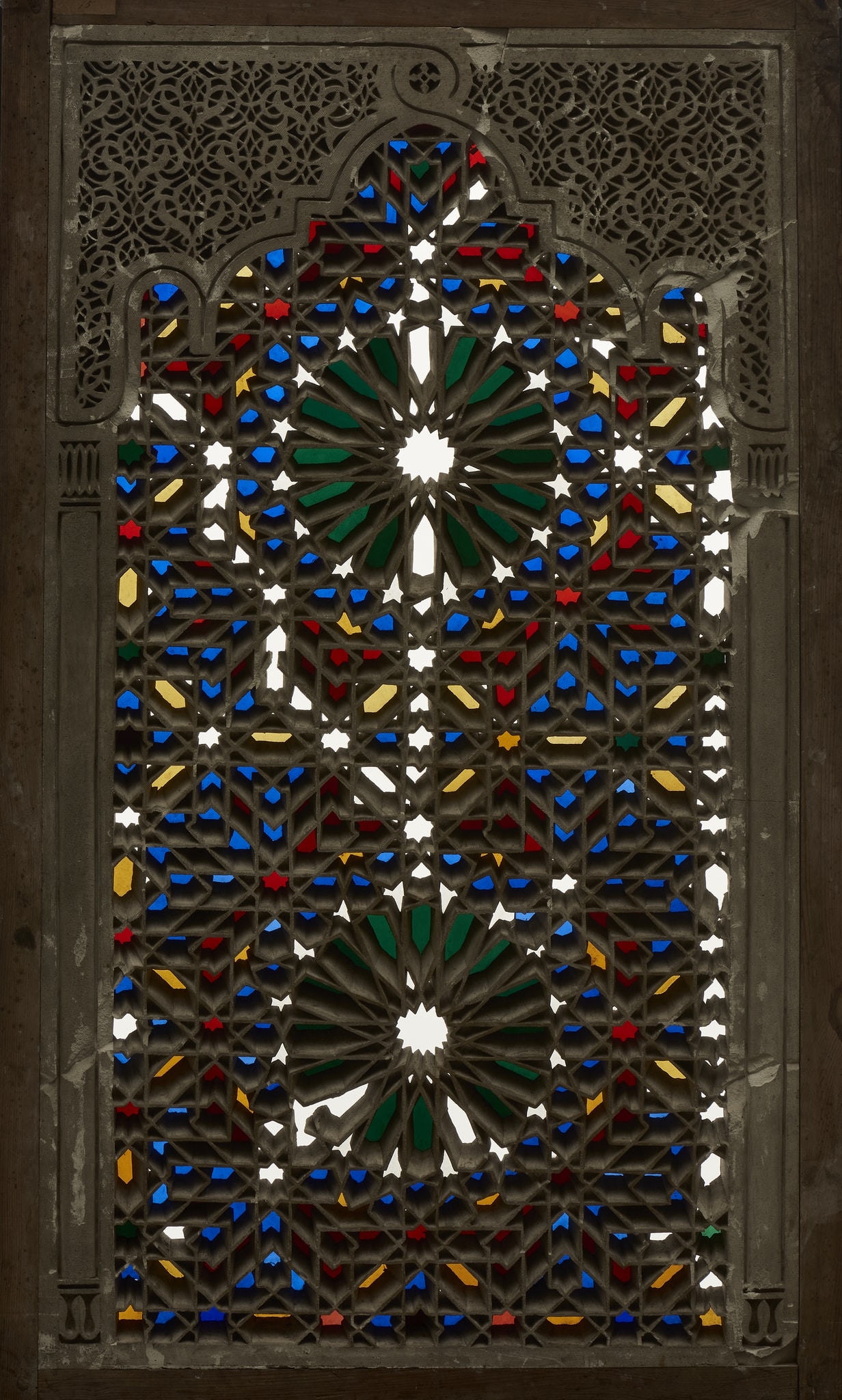
IG_368: Replica of a stucco and glass window with interlaced star ornamentation
(AUT_Wien_MAK_IG_368_1)

Contact Details

Please specify your first name.
Please specify your name.
Please specify your e-mail address.
The e-mail address is invalid.

Please provide as much information as possible (publication title, database, publisher, edition, year of publication, etc.).

The Vitrocentre Romont can only provide you with its own photographs. We regret that we cannot supply images from third parties to you. If your order concerns photographs from third parties, we will send you the contact address from which the images can be obtained.

The personal data you provide in this form will be used by Vitrocentre Romont exclusively for the processing of your image order. Correspondence regarding the order will be archived for internal reference. The data will not be used for purposes other than those listed here, nor will it be passed on to third parties. By sending the order form, you agree to this use of your personal data.

Should you have any questions, please send us an e-mail: info@vitrosearch.ch.

Title

Replica of a stucco and glass window with interlaced star ornamentation

Type of Object
Dimensions
114 x 67.5 x 4.2 cm (with frame, approximate thickness of the window); 106.5 x 60 x 4.2 cm (without frame, approximate thickness of the window)
Artist / Producer
Place of Manufacture
Dating
late 13th–early 14th centuries AH / second half of 19th century CE
Location
Inventory Number
OR 3620
Research Project
Author and Date of Entry
Francine Giese, Sophie Wolf 2025

Iconography

Description

Rectangular stucco and glass window with geometric ornamentation composed of regularly placed eight- and sixteen-pointed stars. The stars form an interlaced grid. The main field is framed by a lambrequin arch ending in a knot at its apex and supported by two columns. The spandrels above the arch are filled with a continuous floral ornament composed of stylized split palmettes. The columns, the arch, and the spandrels are – unlike the star pattern – not perforated and therefore not backed with coloured glass.

The window is held in a wooden frame composed of four slats fixed with nails at the corners.

Iconclass Code
48A981 · ornament ~ geometric motifs
48A9815 · ornament ~ starforms
48A983 · ornament derived from plant forms
48A9878 · interlace ~ ornament
Iconclass Keywords
Inscription

Paper label top left (written upside down): Fenster 15
Materials, Technique and State of Preservation

Materials

Gypsum plaster; colourless glass (some with a greenish tint); coloured glass (green, blue, two shades of orange, yellow, two shades of red flashed glass), wood, metal

Technique

The stucco lattice of this window is probably a cast of the latticework of window IG_364. As with the original, coloured pieces of glass were placed on the back of the openings in the stucco lattice and embedded in a thin (2–3mm) layer of stucco. In contrast to IG_364, there are no signs that the pieces of glass were fixed onto the lattice with an adhesive before embedding. To improve the adhesion of the thin layer of stucco on the latticework, the back of the stucco panel was roughened with a serrated tool. The stucco panel is c.42mm thick and held in a wooden frame of the same thickness. The front and back of the window were finished with a serrated tool.

With exception of the orange-coloured glass, which is very thick (6–7mm), the coloured glass is 2–3mm thick. The colourless glass is slightly thinner (1.5–2.5mm).

The orange pieces of glass show elongated bubbles as well as striations on the glass surface. The texture is similar to that observed on 19th- and 20th-century mouth-blown antique glass. The blue glass shows many round and elongated bubbles, which also suggest that the glass was mouth-blown. The pieces of glass were cut roughly according to the design of the latticework using a glass-cutter. Scratch marks along the edges of several pieces of glass bear witness to this process.

State of Preservations and Restorations

The front of the window shows continuous, diagonal cracks and losses in the latticework. On the back, there are two larger defects in the stucco panel as well as losses in the thin stucco layer. The pieces of glass are missing in these areas. The window shows no signs of previous restorations.

History

Research

The window discussed here has the same design as and dimensions almost identical to those of the stucco and glass window IG_364 held in the same collection. Also, the colours and the layout of the pieces of glass are very similar. We therefore assume that this window is a cast replica of IG_364. Several observations support this hypothesis: the traces of the tools used to cut the stucco lattice that we observed in window IG_364 are absent here. The surfaces of this window are smooth and show characteristics similar to those of other windows that were probably cast (see for instance IG_360, IG_361, IG_365, IG_367). In addition, the frame of the window does not have the diagonal reinforcements on the back that we observed on window IG_366 and on other windows of possible Tunisian origin. Due to the technical differences, we assume that the window was manufactured in Europe, possibly in Austria. This hypothesis is supported by the glass analyses carried out as part of the project. The two pieces of blue flashed glass shows relatively high levels of chromium and cadmium, as well as high lead concentrations. The use of chromium and cadmium in the production of coloured sheet glass was only known from the 19th century onwards.

Due to the lack of documentation, the exact origin of the window and the date from which it first entered a museum collection are unknown. So far, we only know that it formed part of the collection of the Orientalisches Museum in Vienna, founded in 1874 (from 1886 the k.k. Österreichisches Handels-Museum). In 1897, Arthur von Scala (1845–1909), the director of the Handels-Museum, left the museum to become the new director of the k.k. Österreichisches Museum für Kunst und Industrie (Wieninger, 2012). On his initiative, this and a few other stucco and glass windows were transferred to the k.k. Österreichisches Museum für Kunst und Industrie (today the MAK – Museum für angewandte Kunst) in 1907.

Dating
late 13th–early 14th centuries AH / second half of 19th century CE
Period
1850 – 1874
Previous Locations
Place of Manufacture

Provenance

Owner
Since 1907: MAK – Museum für angewandte Kunst, Inventory Number: OR 3620, Vienna (Austria)
Previous Owner
until 1886: Orientalisches Museum (Wien), Vienna (Austria). date of acquisition unknown

Bibliography and Sources

Literature

Azzam, K. (ed.) (2021). Arts & Crafts of the Islamic Lands. Principles, Materials, Practice. London.

Broug, E. (2013). Islamic Geometric Design. London.

Wieninger, J. (2012). Das Orientalische Museum in Wien: 1874–1906. Austriaca, 37, 143–158.

Image Information

Name of Image
AUT_Wien_MAK_IG_368_1
Credits
© MAK/Georg Mayer
Date
2024

Linked Objects and Images

Additional Images
Replica of a stucco and glass window with interlaced star ornamentation

Citation suggestion

Giese, F., & Wolf, S. (2025). Replica of a stucco and glass window with interlaced star ornamentation. In Vitrosearch. Retrieved December 5, 2025 from https://www.vitrosearch.ch/objects/2713212.

Record Information

Reference Number
IG_368