Bestelltes Bild

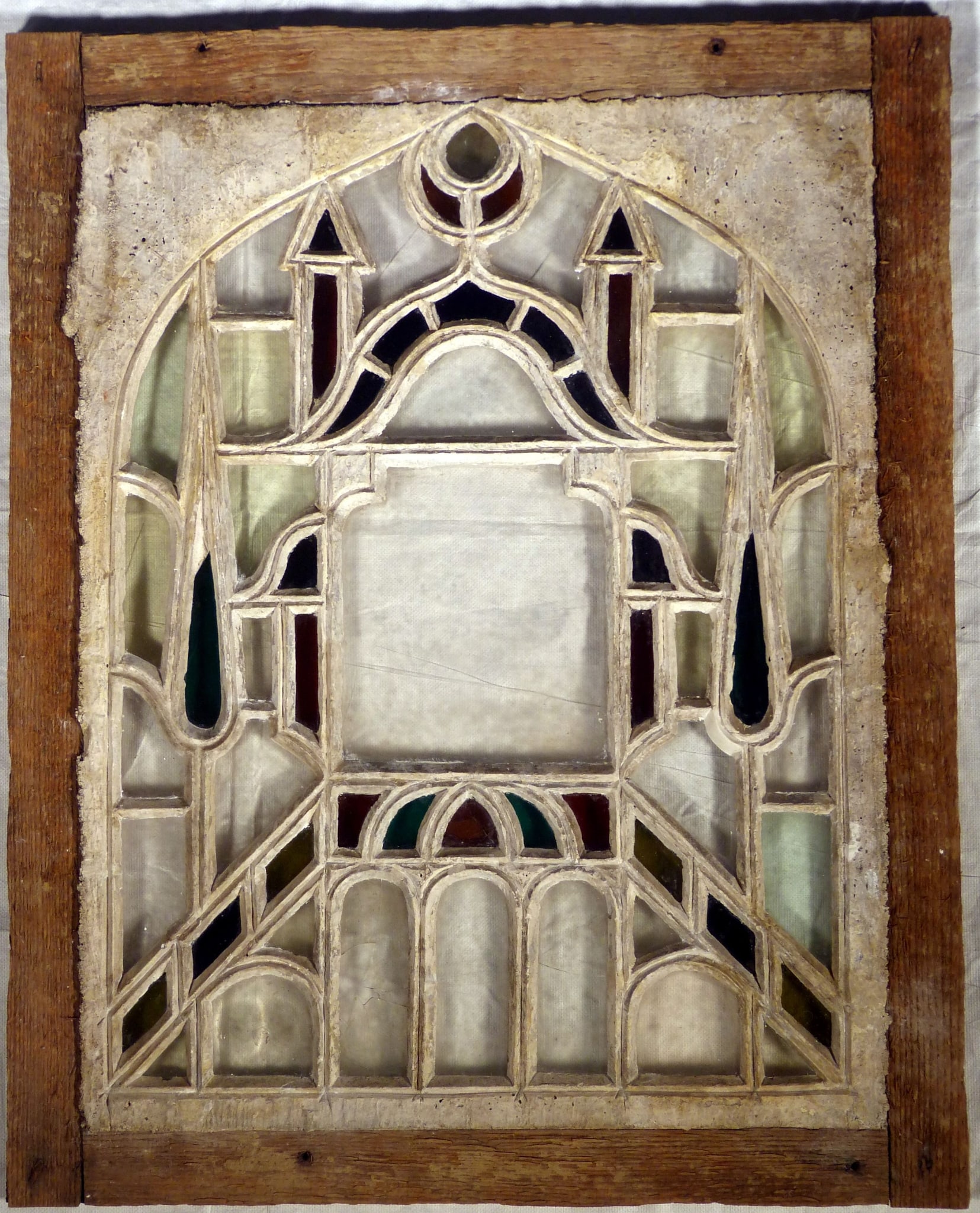
IG_386: Stucco glass window with representation of a mosque
(DEU_Berlin_MIK_IG_386)

Kontaktdaten

Bitte geben Sie Ihren Vornamen ein.
Bitte geben Sie Ihren Namen ein.
Bitte geben Sie Ihre E-Mail-Adresse ein.
Die E-Mail-Adresse ist ungültig.

Bitte machen Sie so viele Angaben wie möglich (Titel der Publikation, Datenbank, Herausgeber, Auflage, Erscheinungsjahr, usw.)

Das Vitrocentre Romont kann Ihnen nur eigene Bilder zur Verfügung stellen. Bilder von Dritten können wir Ihnen leider nicht überlassen. Betrifft Ihre Bestellung Fotografien von Drittparteien, senden wir Ihnen die Kontaktadresse, über welche die Bilder bezogen werden können.

Die von Ihnen in diesem Formular angegebenen Personendaten werden vom Vitrocentre Romont ausschliesslich für die Bearbeitung Ihrer Bildbestellung verwendet. Die Korrespondenz zur Bestellung wird zur internen Nachvollziehbarkeit archiviert. Die Daten werden weder für andere als die hier aufgelisteten Zwecke verwendet noch an Dritte weitergegeben. Durch das Absenden des Bestellformulars erklären Sie sich mit dieser Nutzung Ihrer Personendaten einverstanden.

Bei Fragen können Sie gerne eine E-Mail an info@vitrosearch.ch senden.

Titel

Stucco and glass window with representation of a mosque

Art des Objekts
Masse
72.5 x 58.8 cm (with frame); 63 x 49.5 cm (without frame)
Künstler:in / Hersteller:in
Herstellungsort
Datierung
first half 12th century AH / first half of 19th century CE
Standort
Inventarnummer
I. 10464
Forschungsprojekt
Autor:in und Datum des Eintrags
Francine Giese, Sophie Wolf 2025

Ikonografie

Beschreibung

Rectangular stucco and glass window showing an Ottoman mosque flanked by two cypress trees. The building is depicted in a reduced way, highlighting the shrine’s main features: three courtyard galleries (bottom of the panel) and a prayer hall (in the centre). The prayer hall has a domed roof and is flanked by two semi-domed structures. To each side of the central dome is a thin minaret with a pointed roof. The dome is crowned with a crescent moon.

The mosque is depicted from two perspectives: the prayer hall and dome are shown from the front, while the courtyard galleries are shown from a bird’s-eye view.

The whole motif is set in an undecorated arched field.

Iconclass Code
12I61 · Tempel und Heiligtümer im Islam
25G3(CYPRESS) · Bäume: Zypresse
48C14 · Architekturdarstellungen (generell)
Iconclass Stichworte

Materialien, Technik und Erhaltungszustand

Materialien

Gypsum plaster; colourless glass (partly with a greenish, yellowish or purplish tint); coloured glass; wood

Technik

The ornamental latticework – consisting of a delicate stucco structure holding large pieces of colourless as well as smaller pieces of coloured sheet glass – was entirely made by casting. The technique involves the use of clay or wood forms shaped to match the openings in the stucco lattice. The plaster is poured into the spaces between the forms, and the pieces of glass are directly embedded in the latticework in the moulding process (see Arseven, 1939, pp. 207–211; Arseven, [c.1952], pp. 182–189; Özakın, 2007, pp. 95–97). The latticework is held in a wood frame, which served as a moulding frame during casting.

The openings in the stucco lattice narrow slightly towards the back. The latticework on the front is profiled. The stucco bars show incisions that were made into the plaster with a sharp tool. The depth of the stucco bars (up to the glass) is 6–9mm. The stucco bars at the rear are flat at the top and undecorated. The depth of the latticework is 9–10mm (up to the glass). The latticework shows traces of a light-brown paint.

Many of the colourless pieces of glass have a bluish-green or yellowish-green tint; two of the pieces of glass have a purplish tint. The glass is relatively thin (c.1mm) and has small, spindle-shaped as well as round bubbles. The glass surface is uneven in places; some pieces of glass have concentric structures on the glass surface. A pontil mark is visible on one piece of glass. The coloured glass is slightly thicker (c.2mm) than the colourless glass, and the glass surface is smoother. Several pieces of glass show small, round and spindle-shaped bubbles.

The frame measures c.46 × 21cm and consists of four wooden strips connected at the corners in a simple lap joint. The wood may have been stained traces of run-off are visible on the upper edge of the outside of the stucco panel.

Erhaltungszustand und Restaurierungen

The window is preserved in its original wood frame and largely intact. It was restored in 2024. Small cracks and superficial losses in the latticework were closed, and a few damaged pieces of glass were replaced.

Entstehungsgeschichte

Forschung

From an iconographic point of view, this stucco and glass window corresponds to one of the standard types of qamariyya widespread in the Middle East during the Ottoman period. The representation of a mosque can also be found in other media, most notably architectural ceramics of the Ottoman period (see for instance Musée du Louvre, OA 3919/556, OA 3919/558, OA 3919/559; Metropolitan Museum of Art, 2012.337; Victoria and Albert Museum, 427-1900). While in these examples specific shrines such as the Kaaba in Mecca are depicted, the mosques represented in stucco and glass windows are reduced to their main features, such as courtyard, prayer hall, dome(s), and minarets, and cannot usually be identified.

Among the stucco and glass windows from the collections analysed, the mosque motif is far less common than other motifs, such as flowers in a vase or a cypress tree. Windows with the mosque motif are held, for example, at The Metropolitan Museum of Art in New York (IG_184, IG_185) and the Benaki Museum of Islamic Art in Athens (IG_354). However, these stucco and glass windows, which most likely all come from Egypt, were produced using a different manufacturing technique than the window discussed here. The latticework of this window is cast and not carved out of a solid stucco panel, as is usually the case with stucco and glass windows produced in Egypt and the Maghreb (see Technique). The casting technique was very common in Turkey from the 18th century onwards (Arseven, 1939, pp. 207–211; Arseven, [c.1952], pp. 182–189; Özakın, 2007, pp. 95–97). The delicate structure of the cast latticework and the use of large, colourless pieces of glass document the ongoing transformation of Ottoman art and architecture, initiated in the capital in the late 16th century (Bakırer, 2001, 8–15), and reflect the ongoing process of Westernisation which culminated during the so-called Ottoman Baroque period (see for instance Rüstem, 2019). The stylistic and technical features make it likely that the window discussed here was made in a Turkish workshop.

The presumed Turkish origin of the window is also confirmed by archival information concerning its acquisition: according to the documents, the window was acquired in Turkey between 1933 and 1936 by Paul Erich Kirmse (d.1940), together with the stucco and glass window IG_385. Both windows remained within the family until 2022, when they were purchased by the Friends of the Museum of Islamic Art at the Pergamon Museum (Freunde des Museums für Islamische Kunst im Pergamonmuseum e.V.). The following year, the objects were donated to the museum (see Provenance). IG_385 and IG_386 appear to be a pair: they show the same motif, were manufactured in the same way, and probably in the same workshop.

Datierung
first half 12th century AH / first half of 19th century CE
Zeitraum
1800 – 1850
Frühere Standorte
Herstellungsort

Provenienz

Eigentümer:in
Seit 2023: Museum für Islamische Kunst, Inventar-Nr.: I. 10464, Berlin (Berlin, Stadt), Schenkung
Vorbesitzer:in

1940-2010: Familie von Paul Erich Kirmse

Von 2010 bis 2022: Spuhler, Friedrich
Von 1940 bis 2010: Privatperson
Von 1933 (ca.) bis 1940: Kirmse, Paul Erich. acquisition between 1933–1936

Bibliografie und Quellen

Literatur

Arseven, C. E. (1939). L’art turc depuis son origine jusqu’à nos jours. Istanbul.

Arseven, C. E. [c. 1952]. Les arts decoratifs turcs. Istanbul.

Bakırer, Ö. (2001): Window Glass in Ottoman Vernacular Architecture. EJOS, 4/9, 1–29.

Özakın, R. (2007). Traditional Turkish Gypsum Plaster Windows. Manufacture and Conservation. In: L. Pilosi (ed.). Glass and ceramics conservation 2007. Interim meeting of the ICOM-CC Working Group. Nova Gorica.

Rüstem, Ü. (2019). Ottoman Baroque. The Architectural Refashioning of Eighteenth-Century Istanbul. Princeton.

Bildinformationen

Name des Bildes
DEU_Berlin_MIK_IG_386
Fotonachweise
Museum für Islamische Kunst – Staatliche Museen zu Berlin, Foto: Katrin Aue
Copyright
Public Domain

Zitiervorschlag

Giese, F., & Wolf, S. (2025). Stucco and glass window with representation of a mosque. In Vitrosearch. Aufgerufen am 5. Dezember 2025 von https://www.vitrosearch.ch/objects/2713230.

Informationen zum Datensatz

Referenznummer
IG_386