Bestelltes Bild

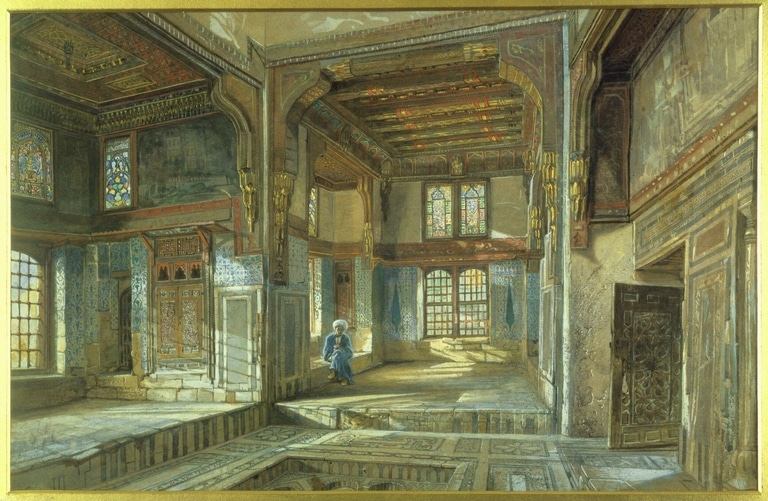
IG_98: Interior of the House of the Mufti Sheikh El Mahadi, Cairo
(GBR_London_VAM_IG_98)

Kontaktdaten

Bitte geben Sie Ihren Vornamen ein.
Bitte geben Sie Ihren Namen ein.
Bitte geben Sie Ihre E-Mail-Adresse ein.
Die E-Mail-Adresse ist ungültig.

Bitte machen Sie so viele Angaben wie möglich (Titel der Publikation, Datenbank, Herausgeber, Auflage, Erscheinungsjahr, usw.)

Das Vitrocentre Romont kann Ihnen nur eigene Bilder zur Verfügung stellen. Bilder von Dritten können wir Ihnen leider nicht überlassen. Betrifft Ihre Bestellung Fotografien von Drittparteien, senden wir Ihnen die Kontaktadresse, über welche die Bilder bezogen werden können.

Die von Ihnen in diesem Formular angegebenen Personendaten werden vom Vitrocentre Romont ausschliesslich für die Bearbeitung Ihrer Bildbestellung verwendet. Die Korrespondenz zur Bestellung wird zur internen Nachvollziehbarkeit archiviert. Die Daten werden weder für andere als die hier aufgelisteten Zwecke verwendet noch an Dritte weitergegeben. Durch das Absenden des Bestellformulars erklären Sie sich mit dieser Nutzung Ihrer Personendaten einverstanden.

Bei Fragen können Sie gerne eine E-Mail an info@vitrosearch.ch senden.

Titel

Interior of the House of the Mufti Sheikh El Mahadi, Cairo

Art des Objekts
Masse
30.5 x 47 cm
Künstler:in / Hersteller:in
Datierung
c. 1873
Standort
Inventarnummer
853-1900
Forschungsprojekt
Autor:in und Datum des Eintrags
Sarah Tabbal 2024

Ikonografie

Beschreibung

Several multi-coloured stucco and glass windows can be seen in the watercolour by Frank Dillon (1832–1908) Interior of the House of the Mufti Sheikh El Mahadi, Cairo, which was finished around 1872 (Anonymous 1872, p. 183). The British Orientalist painter Dillon depicted this private interior with a man wearing a white turban and a blue robe, sitting in one of the more elevated side recesses (Thomas, 2013, pp. 59–60). The domestic room is divided into several sections: there is a central square basin in the foreground, adjacent to which two more elevated side recesses are shown. The interior is richly decorated, with a marble floor with manifold intarsia patterns, white-blue ceramic tiles on the walls, and a wood-panelled ceiling with painted ornamentation. On the right side of the watercolour, there is an open wooden door decorated with geometric star ornament. Several stucco and glass windows can be seen in the painting: on the left, there is a window with the motif of a vase of flowers and another with geometric ornament next to a mural painting, as well as two further windows in the central recess with geometric ornamentation. The windows allow plenty of daylight to enter the interior, creating a play of light, shadow, and colour.

Iconclass Code
41A2 · Hausinneres
41A33 · Fenster
48C1412 · Darstellung des Inneren eines Gebäudes
Iconclass Stichworte

Materialien, Technik und Erhaltungszustand

Technik

Watercolour on paper.

Entstehungsgeschichte

Forschung

This interior depicted by Frank Dillon represents the mandarah in the ‘House of the Mufti’ in Cairo – so named because it was owned by the supreme mufti of Egypt, Sheikh Muhammad al-ʿAbbasi al-Mahdi (1827–1897) between 1847 and 1886 (Llewellyn, 1998, p. 154). During the 19th century, Europeans had become familiar with the term mandarah through Edward William Lane: ‘In general, there is, on the ground-floor, an apartment called a mun’dar’ah, in which male visitors are received’ (Lane, 1836, p. 11). According to Mercedes Volait, the ‘House of the Mufti’ was built at the beginning of the 18th century, between 1704 and 1705 (a date that can be found on a column in the residence) and had been given to Sheikh al-ʿAbbasi when he became Grand Mufti in 1848 (Volait, 2021, p. 119). Dillon travelled to Egypt several times in the 1850s to the 1870s and visited the house while he was in Cairo (Thomas, 2013, pp. 59–60). One of his drawings of the house is dated 26 December 1873 (Victoria and Albert Museum, 856-1900).
Dillon’s watercolour was reviewed by numerous contemporary art critics: the London-based The Art Journal reported on the authenticity of Dillon’s work: ‘The picture represents the liwan or daïs of a Cairo house; and every minutest detail is worked out by the painter with the strictest fidelity, which does not, however, exclude artistic management of brilliant hues of colour.’ (Anonymous, 1873, p. 239). In the London-based literary magazine The Athenaeum, Dillon’s watercolour was lauded by the Anglo-Indian official and writer Sir George Christopher Molesworth Birdwood (1832–1917): ‘Mr. F. Dillon has not before represented Oriental interiors so successfully as in House of the Mufti Sheikh el Mahadi, Cairo (37), a sunlit interior, with latticed windows, tiled walls, carpet-laden floors, couches, and the like. This is brilliantly and delicately painted, with unusual clearness and breadth of light and colour. The figures are unworthy of the rest of the work, for they are incorrectly drawn and rather clumsily painted.’ (Birdwood, 1874, p. 582). The windows in the Sheikh’s house received the attention of Dillon’s contemporary, Richard Phené Spiers (1838–1916), who described them as follows: ‘In the House of the Mufti the mandarah is lighted by windows on three sides of the principal decision, and also, in the upper portion of the durka’ah, by windows known as ‘kamareeyehs,’ which are formed of pieces of coloured glass sunk in an arabesque pattern, in which gypsum takes the place of lead, as in our leaded lights or windows.’ (Spiers, 1890, p. 236).
The watercolour was widely disseminated at the end of the 19th century: it was reproduced in 1880 with the title Mandara des Mufti (Schech el-Mahdi) as a wood engraving in Aegypten in Bild und Wort (Stuttgart and Leipzig: Hallberger 1880, vol. 2, p. 89) (IG_152) by the German Egyptologist and novelist Georg Ebers (1837–1898).
In a broader context, the ‘House of the Mufti’ became a popular painting subject for artists travelling to Egypt during the 19th century. It was painted, for example, by Theodor Zeerleder (IG_471, IG_473), František Schmoranz (IG_415), and Franz von Lehnbach (Palastinterieur in Kairo, 1876, oil on board, 88 × 70cm, Lenbach-Nachlass im Familienbesitz, reproduced in Baranow 1986, p. 130). The Sheikh’s house was also documented in a contemporary photograph by an anonymous artist, in which a stucco and glass window is partially visible on the right side of the picture (IG_476). Dillon also depicted the Sheikh’s house in another watercolour (IG_99).‬‬‬‬

Datierung
c. 1873
Zeitraum
1873 – 1874
Verknüpfte Standorte
Herstellungsort

Provenienz

Bibliografie und Quellen

Literatur

Anonymous (1872). The Royal Academy. The One Hundred and Fourth Exhibition. The Art Journal, new series, volume XI, 181–186.

Anonymous (1873). Exhibition of the Royal Academy. The Art Journal 12, 236–241.

Baranow, S. von (1986). ‪Franz von Lenbach: Leben und Werk. Köln: DuMont.‬‬‬

Birdwood, G. (1874). Fine Arts. The Athenaeum, October 31, 582–584.

Ebers, G. (1880). Aegypten in Bild und Wort. Dargestellt von unseren ersten Künstlern. Vol. 2. Stuttgart: Eduard Hallberger.

Lane, E. W. (1836). An Account of the Manners and Customs of the Modern Egyptians. London: Charles Knight & Co.

Llewellyn, B. (1998). Two Interpretations of Islamic Domestic Interiors in Cairo: J. F. Lewis and Frank Dillon. In Travellers in Egypt, ed. Paul Starkey and Janet Starkey. London and New York: Tauris, 148–56.

Spiers, R. P. (1890). Notes by R. Phené Spiers, F.S.A., Member of Council. Transactions of the Royal Institute of British Architects, vol. VI., London: Published at the Royal Institute of British Architects, 221–242.

Thomas, A. (2013). James Wild, Cairo and the South Kensington Museum. In M. Volait (ed.), Le Caire dessiné et photographié au XIXe* *siècle (pp. 41–68). Paris: Picard.

Tromans, N. (ed.) (2008). The Lure of the East: British Orientalist Painting. London: Tate Publishing.

Volait, M. (2021). Antique Dealing and Creative Reuse in Cairo and Damascus 1850–1890. Leiden: Brill.

Bildinformationen

Name des Bildes
GBR_London_VAM_IG_98
Fotonachweise
© Victoria and Albert Museum, London
Link zum Originalfoto

Zitiervorschlag

Tabbal, S. (2024). Interior of the House of the Mufti Sheikh El Mahadi, Cairo. In Vitrosearch. Aufgerufen am 5. Dezember 2025 von https://www.vitrosearch.ch/objects/2712942.

Informationen zum Datensatz

Referenznummer
IG_98