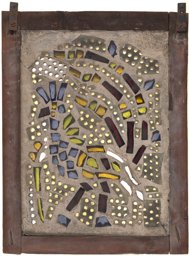
Image commandée

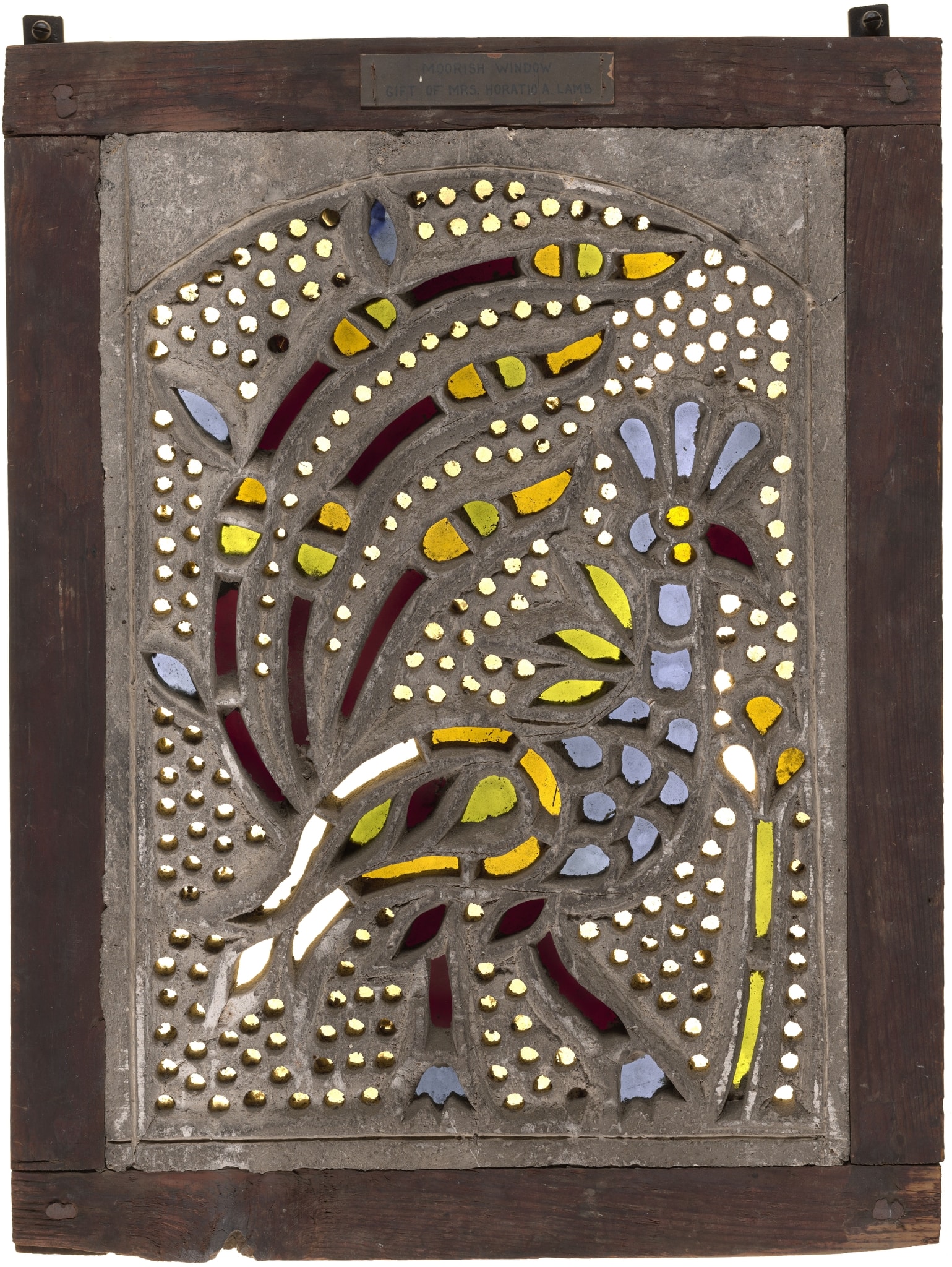
IG_259: Stucco glass window with a peacock, recto
(USA_Cambridge_MITLibraries_IG_259_1)

Coordonnées

Prière de compléter le champ "Prénom".
Prière de compléter le champ "Nom".
Prière de compléter le champ "E-Mail".
Votre adresse e-mail n'est pas valide.

Veuillez s’il vous plaît indiquer autant d’informations que possible (titre de la publication, base de données, éditeur, nombre d’exemplaires, année de parution, etc.)

Le Vitrocentre Romont ne peut mettre à votre disposition que ses propres images. Nous ne pouvons malheureusement pas vous fournir des images de tiers. Si votre commande concerne des photographies de tiers, nous vous enverrons volontiers l'adresse de contact où vous pourrez obtenir les images.

Les données personnelles que vous avez indiquées dans ce formulaire sont utilisées par le Vitrocentre Romont exclusivement pour le traitement de votre commande d'images. La correspondance relative à la commande est archivée à des fins de traçabilité interne. Les données ne seront utilisées à aucune autre fin que celles énumérées ici, ni transmises à des tiers. En envoyant un formulaire de commande, vous acceptez tacitement cette utilisation de vos données personnelles.

Pour toute question complémentaire, veuillez contacter info@vitrosearch.ch.

Titre

Stucco and glass window with a peacock

Type d'objet
Dimensions
53.5 x 41 x 2.7 cm (with frame); 45.5 x 32.5 x 2.2 cm (without frame)
Artiste
Lieu de production
Datation
Early 12th–early 14th century AH / 18th–19th century CE (?)
Lieu
Numéro d'inventaire
Rotch Art Collection 8
Projet de recherche
Auteur·e et date de la notice
Francine Giese, Sophie Wolf 2025

Iconographie

Description

Rectangular stucco and glass window with a peacock turned towards the viewer’s right, with the tail feathers spread. A flower stem with a three-petalled yellow blossom is placed in the bottom right corner. The motif is surrounded by a segmental arch, which is indicated by a thin incised line. The spandrels above the arch are undecorated. The representation of the bird and the flower stem are worked out in relief against a perforated background, which lies approximately 6–11mm below the stucco surface.

Code Iconclass
25F35(PEACOCK) · oiseaux décoratifs : paon
25G41 · fleurs
Mot-clés Iconclass
fleur · paon
Inscription

Moorish window / Gift of Mrs. Horatio A. Lamb (metallic label fixed to the upper side of the wooden frame)

Matériaux, technique et état de conservation

Matériaux

Gypsum plaster; colourless glass (with a greenish or greyish tint); coloured glass (green, blue, yellow, purple, red flashed glass); wood

Technique

The window consists of a latticework carved into a rectangular stucco panel and inlaid with colourless and coloured sheet glass. It was made according to the traditional technique used in the manufacture of qamarīyāt in North Africa up to this day. The rectangular stucco panel is produced by pouring gypsum plaster into a wooden frame. Once the stucco has set, the latticework is carved out using sharp, knife-like tools and following a template incised in the surface of the panel. The openings in the stucco lattice are then covered with the pieces of glass cut according to the design. The pieces of glass are fixed onto the back of the panel by embedding them in a thin layer of gypsum plaster.

The average thickness of the stucco panel is 22mm. The layer of gypsum plaster on the back of the panels is 2mm thick; the plaster is relatively coarse-grained. There are traces of a shiny, brown glue-like substance, which suggest that the pieces of glass were stuck onto the latticework with an adhesive before pouring the embedding plaster. The window is preserved in its original wooden frame. The dimensions of the frame are c.40 x 40 x 27mm.

The design of the latticework has two levels. The main motif (level 0) is worked out in relief against the perforated background (level –1), which lies 6–11mm below level 0. The incised lines of the preliminary drawing are visible in some places. The irregularly spaced, slightly conical perforations were pierced with a metal or wooden pin in the stucco before it was fully set. They vary 7 and 10mm in diameter and are slightly tapered towards the back. The distance between the holes is 3–5mm. All the holes are backed with colourless glass. The main design and the perforations have been worked in such a way that the incident light is directed slightly downwards into the room. The oblique cut is more pronounced in the upper half of the window.

The coloured glass is 1.5mm thick and the colourless glass c.1mm. The glass sheets from which the pieces were cut were probably mouth-blown. Elongated, parallel bubbles in the coloured glass indicate that the coloured glass sheets were possibly made using the broad-sheet method. Some pieces of glass have straight edges with a round profile, which correspond to the edges of the rectangular glass sheets. The surface of the coloured glass is very smooth and shiny; those of the colourless glass are less even and some of the pieces have a wavy surface. Several pieces of glass show scratch marks along the edges, which testify to the use of a glass-cutter.

Etat de conservation et restaurations

This stucco and glass window is preserved in its original frame. The front of the stucco lattice is dusty and shows small superficial losses. Only a few pieces of glass are missing. There are no signs of repair.

Historique de l'oeuvre

Recherche

This stucco and glass window is one of the few examples conserved in Western museum collections representing a peacock. The bird’s colourful plumage and its association to royalty and paradise make it one of the most popular motifs of art across time and cultures (Dittrich, 2005, pp. 348–360; Riese, 2007, pp. 328–329). The peacock is also a recurring motif in Islamic art (Daneshvari, 1994; Viré/Bear, 2012).

The enthusiasm for the bird’s exotic beauty and colourful plumage reached a peak in the Western arts of the 19th and early 20th centuries, where the peacock became one of the main motifs of Art Nouveau stained glass (Michel, 1986, p. 84).

This interest in the peacock motif is also manifest when it comes to stucco and glass windows. This is attested by sketches and paintings of qamariyyāt representing a peacock by John Frederick Lewis (1805–1876) and James William Wild (1814–1892). As in the window discussed here, they show the bird from the side (IG_118, IG_119, IG_122, IG_125, IG_447, IG_449). The peacock motif was also reinterpreted in stucco and glass windows designed in the late 19th and early 20th centuries in the Ottoman empire (IG_334) and in Europe (VMR_1387).

Although qamariyyāt depicting peacocks are rare today, the window discussed here finds a close counterpart in a specimen acquired in Cairo in 1890 and held today at The Metropolitan Museum of Art (IG_183). Both windows show the peacock in profile. The depiction of its head and tail, as well as the flower stem placed in front of the bird, show surprising similarities. However, due to differences in the way in which the design was conceived, the two windows were not necessarily made in the same workshop.

From a technical and iconographic point of view, it can be assumed that this window was made in an Egyptian workshop during the late Ottoman period. This hypothesis is supported by the results of the analysis of several stucco fragments from this window: both the stucco lattice and the top layer in which the pieces of glass are embedded (see Technique) are made of a relatively coarse-grained gypsum plaster with many inclusions, including charcoal and brick particles. The properties of the plaster suggest artisanal production in smaller workshops like those that still exist in Egypt and the Maghreb today. The assumption of an Egyptian provenance is further confirmed by the results of the chemical analysis of one piece of coloured glass from this window. The olive-green piece of glass analysed showed relatively high concentrations of magnesium and potassium, suggesting that plant ash was used as a fluxing agent. The use of plant in glass production was particularly common in the Islamic world. In Europe, industrial soda ash was the usual flux in the production of sheet glass from the 18th century onwards. Somewhat contradictory, however, is the fact that several coloured pieces of glass show the characteristics of cylinder-blown sheet glass, a technique that was unusual in artisanal glass production in Egypt, but widely used by the European glass industry. It is therefore possible that some of the coloured sheet glass used in this window was produced in a European glass-house. Interestingly, the Hungarian architect Max Herz (1856–1819) states in 1902 that sheet glass was imported to Egypt from Europe from the 19th century, because local sheet glass production had come to a standstill (Herz, 1902, p. 53).

According to the MIT Libraries’ records, this window was acquired by the Boston architect Arthur Rotch (1850–1894) together with three other qamariyyāt (IG_258, IG_260, IG_261) in the 1860s or 1870s. However, since he was still of a young age in the 1860s, we assume that he bought the windows at a later date. All four windows show the incised segmental arch and undecorated spandrels. These similarities support the assumption that they once formed a group of windows that were probably made in the same workshop. Traces of weathering on the surface of the latticework suggests that the window was exposed to the elements.

Arthur Rotch studied at the Massachusetts Institute of Technology (MIT) from 1872 to 1873, when the American architect William Robert Ware (1832–1915) was head of the newly created Architectural School. Just as other MIT students, Rotch was a trainee at his teacher’s architectural firm, and he continued working at Ware & Van Brunt as a draftsman after completion of his studies in 1874 (Chewning, 1979, p. 26). Interestingly, William Robert Ware also had a collection of stucco and glass windows. He had purchased them in 1890 on the art market in Cairo. In 1893, he donated 17 qamariyyāt to the Metropolitan Museum of Art (see IG_169, IG_171IG_186). Due to the lack of documentation, it can only be assumed that the one knew about the other’s collection. It also remains unclear where Arthur Rotch’s enthusiasm for stucco and glass windows came from. After Rotch’s death, his sister Annie Lawrence Rotch (1850–1926), wife of Horatio Appleton Lamb, donated all four windows to the Department of Architecture at MIT as part of the Rotch Art Collection.

Datation
Early 12th–early 14th century AH / 18th–19th century CE (?)
Période
1700 – 1899
Sites antérieures
Lieu de production

Provenance

Propriétaire
Dès 1899 (ca.): MIT Libraries, Numéro d'inventaire: Rotch Art Collection 8, Cambridge (États Unis)
Donateur·trice / Vendeur·euse

?–Arthur Rotch, 1860s–MIT (gifted shortly after the opening of the MIT Architecture School in the 1860s)

Propriétaire précédent·e

1860s-1870s (?)– Death Arthur Rotch – Death–E 19th century (?), Horatio A. Lamb, E 19th century–MIT, Department of Architecture

De 1894 jusque 1899 (ca.): Rotch, Annie Lawrence
De [année de réception inconnue] jusque 1894: Rotch, Arthur

Bibliographie et sources

Bibliographie

Chewning, J. A. (1979). William Robert Ware at MIT and Columbia. Journal of Architectural Education, 33(2), pp. 25–29.

Daneshvari, A. (1994). A preliminary study of the iconography of the peacock in Medieval Islam. In: R. Hillenbrand (ed.), The Art of the Saljūqs in Iran and Anatolia (pp. 192–200). Costa Mesa: Mazda Publishers.

Herz, M. (1902). Le musée national du Caire. Gazette des Beaux-Arts, 3. Pér. 28, 45–59, 497–505.

Viré, F., & Bear, E. (2012). Tāwūs. In: P. Bearman et al. (eds.), Encyclopaedia of Islam. Second Edition, Leiden 2012, http://dx.doi.org/10.1163/1573-3912_islam_COM_1204.

Informations sur l'image

Nom de l'image
USA_Cambridge_MITLibraries_IG_259_1
Crédits photographiques
Rotch Art Collection, Department of Distinctive Collections, MIT Libraries

Objets et images liés

Photographies complémentaires
Stucco glass window with a peacock, verso

Proposition de citation

Giese, F., & Wolf, S. (2025). Stucco and glass window with a peacock. Dans Vitrosearch. Consulté le 5 décembre 2025 de https://www.vitrosearch.ch/objects/2713103.

Informations sur l’enregistrement

Numéro de référence
IG_259