
Image commandée

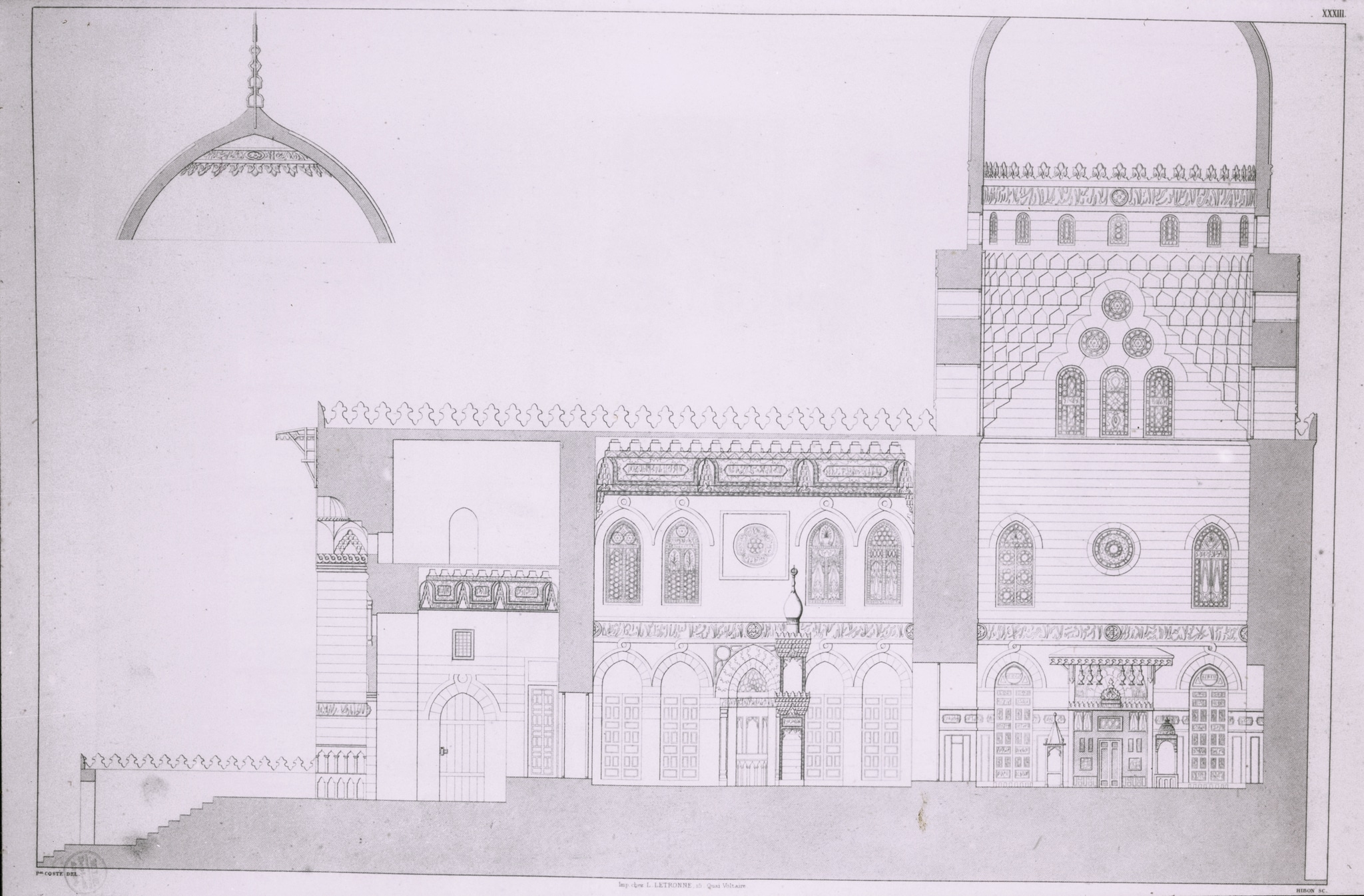
IG_188: Book illustration: Coupe sur la ligne A.B. du plan de la mosquée Kaid-Bey
(MISC_IG_Coste_1837_IG_188)

Coordonnées

Prière de compléter le champ "Prénom".
Prière de compléter le champ "Nom".
Prière de compléter le champ "E-Mail".
Votre adresse e-mail n'est pas valide.

Veuillez s’il vous plaît indiquer autant d’informations que possible (titre de la publication, base de données, éditeur, nombre d’exemplaires, année de parution, etc.)

Le Vitrocentre Romont ne peut mettre à votre disposition que ses propres images. Nous ne pouvons malheureusement pas vous fournir des images de tiers. Si votre commande concerne des photographies de tiers, nous vous enverrons volontiers l'adresse de contact où vous pourrez obtenir les images.

Les données personnelles que vous avez indiquées dans ce formulaire sont utilisées par le Vitrocentre Romont exclusivement pour le traitement de votre commande d'images. La correspondance relative à la commande est archivée à des fins de traçabilité interne. Les données ne seront utilisées à aucune autre fin que celles énumérées ici, ni transmises à des tiers. En envoyant un formulaire de commande, vous acceptez tacitement cette utilisation de vos données personnelles.

Pour toute question complémentaire, veuillez contacter info@vitrosearch.ch.

Titre

‘Coupe sur la ligne A.B. du plan de la mosquée Kaid-Bey’

Type d'objet
Dimensions
38.5 x 52.5 cm (platemark)
Artiste
Datation
1837
Projet de recherche
Auteur·e et date de la notice
Sarah Keller 2025

Iconographie

Description

Pl. XXXIII in Pascal Coste, Architecture arabe ou Monuments du Kaire, mesurés et dessinés, de 1818 à 1826, 1837. The plate shows the elevation of the qibla wall and the Mausoleum of Sultan Qaytbay. Above the mihrab a round window is flanked by two large, mullioned, pointed-arch windows. The first one on the left side has two star motifs inscribed in circles above whole panes of crown glass. The second one shows the star motif at the top of the arch, above an inscription, and in the lower part two flower motifs over the crown-glass pattern. The round window has four inscriptions framing circular ornament of crown glass. The third window shows a flower-vase motif above two plants. The fourth window has a crown-glass pattern at the top and two cypresses below.
The wall of the domed mausoleum has a round window flanked by two large pointed-arch windows in the lower part of the wall, three round-arch windows surmounted by three round windows in the dome wall, as well as six identical smaller round-arch windows in the drum.
The mullioned windows in the lower part show circle motifs with whole panes of crown glass and a flower at the top on the left side, and on the right two cypresses, probably an inscription, and a flower motif at the top. The round window has a geometrical design. The round-arch windows above also show geometrical designs as well as inscriptions. The three identical round windows above them have a star ornament inscribed in a circle. The drum windows are composed of crown glass.
Code Iconclass
25G41 · fleurs
Mot-clés Iconclass

Historique de l'oeuvre

Recherche

Pascal Coste’s plates are based on the extensive documentation he made in Cairo between 1818 and 1827. The French architect was able to study the funerary complex of Sultan Qaytbay (877–79 AH / 1472–74 CE) in 1822 (Volait, 1998, p. [3]). His coloured plate XXXV shows the qibla wall from a distant view-point.

The mosque and mausoleum were in a ruinous state in 1883 and were restored over the following years by the Comité de Conservation des Monuments de l’Art Arabe. In the protocol of 1886, Julius Franz states that during these works the Comité had some windows replaced and others repaired (Zéki et al., 1887, p. 22). In 1887, a large sum was again reserved for making and installing windows in the mosque (Ghaleb et al., 1889, p. 21).
Flood assumed (1993, p. 141) that the windows commissioned by the Comité followed the design of the earlier windows. Coste’s illustration shows, however, that this is only approximately true. The windows of the qibla wall made by the Comité exist to this day and are also documented in photographs by Beniamino Facchinelli (1839–95; InVisu, 2023) and the Maison Bonfils (between 1867 and 1899; Library of Congress, 2023).
Although the round-star motifs, the flower motif, and the crown-glass patterns have been reproduced, the arrangement has been changed and, unlike the old windows, is strictly symmetrical. Only the round window has the same disposition of inscriptions arranged around a central circle. However, since in contrast to Coste’s elevation the four inscriptions are not set in cartouches, this cannot be the original window either.

Since the time of Facchinelli and the Maison Bonfils, there have been further changes to the windows (e.g., today there are no more inscriptions in the round window above the mihrab).
The extensive use of whole panes of crown glass in the windows suggests that the windows depicted in Coste’s work date back, at least in part, to the period of construction under the Burji Mamluks. A still extant example of windows consisting mainly of whole panes of crown glass is the Qasr al-Amir Bashtak in Cairo, built in 740 AH / 1339 CE (see Flood, 1993, p. 122).
The varying, asymmetrical design of the windows indicates that they were repaired on various occasions. When damaged, the windows were not replaced in their entirety, but the intact parts were preserved and complemented.

Datation
1837
Période
1818 – 1837
Sites liées

Bibliographie et sources

Bibliographie

Flood, F. B. (1993). Palaces of crystal, sanctuaries of light: windows, jewels and glass in medieval islamic architecture [PhD thesis, University of Edinburg]. Edinburgh College of Art thesis and dissertation collection. Retrieved from https://era.ed.ac.uk/handle/1842/19754.

Ghaleb, O., Artin, Y., Franz, J., Ezzat, Grand Pierre (1889). Procès-verbal n° 28. In Comité de Conservation des Monuments de l'Art Arabe. Fascicule 5, exercice 1887–1888. pp. 19–23. Retrieved from www.persee.fr/doc/ccmaa_1110-6824_1889_num_1887_5_4241.

InVisu, CNRS (2023). “Mur de qibla du complexe funéraire du sultan al-Ashraf Qaytbay”. Genève, Musée d'art et d'histoire, A 2006-0030-061-04. In Le Caire photographié par Facchinelli. Retrieved from http://facchinelli.huma-num.fr/items/show/632.

Library of Congress Prints and Photographs Division Washington (2023). Interieur de la mosqée Kaı̈t-Bey / Bonfils. Retrieved from https://www.loc.gov/pictures/item/2004668125/.

Volait, M. (1998). “Les monuments de l’architecture arabe” vus par Pascal Coste (pp. 97–131). Jacobi, D. (dir.), Pascal Coste, toutes les Egypte. Marseille: Parenthèses/Bibliothèque municipale de Marseille. https://shs.hal.science/halshs-00957011

Zéki, M., Ismaïl, Ezzat, Artin, Y. (1887). Procès-verbal n° 23. In Comité de Conservation des Monuments de l'Art Arabe. Fascicule 4, exercice 1886, pp. 19–23. Retrieved from www.persee.fr/doc/ccmaa_1110-6824_1887_num_1886_4_4211.

Informations sur l'image

Nom de l'image
MISC_IG_Coste_1837_IG_188
Crédits photographiques
Coste, 1937, pl. XXX. Retrieved from https://dome.mit.edu/handle/1721.3/117529
Copyright
Public Domain

Proposition de citation

Keller, S. (2025). ‘Coupe sur la ligne A.B. du plan de la mosquée Kaid-Bey’. Dans Vitrosearch. Consulté le 5 décembre 2025 de https://www.vitrosearch.ch/objects/2713032.

Informations sur l’enregistrement

Numéro de référence
IG_188