Image commandée

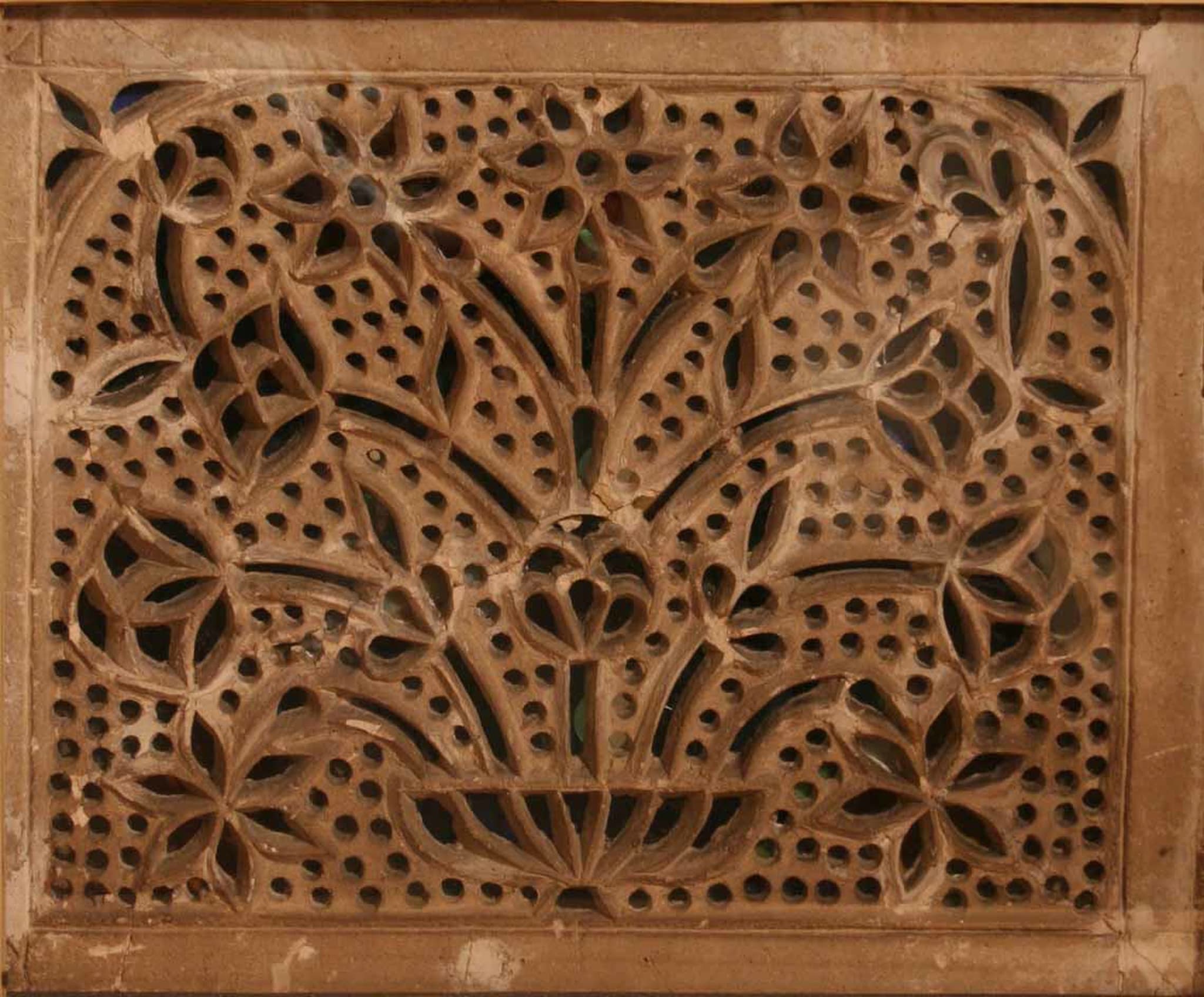
IG_177: Stucco glass window with flowers in a vase
(USA_NewYork_MetropolitanMuseumOfArt_IG_177)

Coordonnées

Prière de compléter le champ "Prénom".
Prière de compléter le champ "Nom".
Prière de compléter le champ "E-Mail".
Votre adresse e-mail n'est pas valide.

Veuillez s’il vous plaît indiquer autant d’informations que possible (titre de la publication, base de données, éditeur, nombre d’exemplaires, année de parution, etc.)

Le Vitrocentre Romont ne peut mettre à votre disposition que ses propres images. Nous ne pouvons malheureusement pas vous fournir des images de tiers. Si votre commande concerne des photographies de tiers, nous vous enverrons volontiers l'adresse de contact où vous pourrez obtenir les images.

Les données personnelles que vous avez indiquées dans ce formulaire sont utilisées par le Vitrocentre Romont exclusivement pour le traitement de votre commande d'images. La correspondance relative à la commande est archivée à des fins de traçabilité interne. Les données ne seront utilisées à aucune autre fin que celles énumérées ici, ni transmises à des tiers. En envoyant un formulaire de commande, vous acceptez tacitement cette utilisation de vos données personnelles.

Pour toute question complémentaire, veuillez contacter info@vitrosearch.ch.

Titre

Stucco glass window with flowers in a vase

Type d'objet
Dimensions
45.7 x 56.5 x 2 cm (with frame, approximate depth)
Artiste
Lieu de production
Datation
early 13th–early 14th centuries AH / 19th century CE
Lieu
Numéro d'inventaire
93.26.14
Projet de recherche
Auteur·e et date de la notice
Francine Giese, Sophie Wolf 2025

Iconographie

Description

Rectangular stucco and glass window in landscape format representing flowers in a vase. The flowers are arranged symmetrically along the central axis. Among the stylized flowers roses can be recognized. The vase is wide and shallow. The motif is set against a slightly recessed, perforated background, and framed by a wide round arch. Each of the spandrels above the arch is adorned with three leaves.

The stucco and glass window is preserved in its original wooden frame.

Code Iconclass
25G41(ROSE) · fleurs : rose
41A6711 · fleurs dans un vase
48A9854 · vase ~ ornement
Mot-clés Iconclass
bouquet · rose · vase

Matériaux, technique et état de conservation

Matériaux

Coarse-grained, slightly porous gypsum plaster; colourless glass (some showing a greyish, greenish or yellowish tint); coloured glass (three shades of green, two shades of blue, orange-colour; red flashed glass; transparent glass painted red (later replacement)

Technique

The latticework was carved into a rectangular stucco panel with a porous surface and inlaid with colourless and coloured sheet glass. The pieces of glass are fixed onto the back of the lattice with a thin layer (c.1mm) of gypsum plaster. To prevent the pieces of glass from being displaced while pouring the embedding stucco, some of the pieces seem to have been fixed to the latticework with an adhesive. In some places, traces of this animal or vegetable glue are visible in the area around the openings. The thickness of the stucco panel is c.20mm. The stucco panel has been cast into a wooden frame. The dimensions of the frame are c.40 × 40 × 30mm.

The design of the latticework has two levels. The main motif (level 0) has been carved out of the stucco panel with sharp, knife-like tools following a template incised in the surface of the panel. Traces of the incisions are still visible in some places on the front. The second level (level –1), which lies 6–10mm below level 0, consists of regularly spaced perforations. The holes were pierced with a metal or wooden pin in the stucco before it was fully set. They are c.12mm in diameter and are slightly tapered towards the back. The distance between the holes is 4–9mm. All holes are backed with colourless glass. The main design and the perforations have been worked in such a way that the incident light is directed downwards into the room.

The pieces of glass were cut according to the design of the latticework using a glass-cutter. The glass sheets from which the pieces were cut are mouth-blown. A few pieces of glass show uneven surfaces and elongated, parallel bubbles; one piece has a straight edge with a round profile, which probably corresponds to the edge of the original glass sheet from which the piece was cut. These features suggest that the sheet glass was produced using the broad-sheet method. The thickness of the glass varies between 1.5 and 3mm. The colourless replacement glass (float) is somewhat thicker (4mm).

Etat de conservation et restaurations

The stucco latticework is intact. Several pieces of glass are missing. There are signs of earlier restorations. These repairs involved filling losses on the front of the latticework with plaster, refixing loose pieces of glass, and supplementing the thin plaster layer in which the pieces of glass are embedded with various materials. Missing pieces of glass have been replaced with pieces of cylinder-blown sheet glass as well as float glass; some of the red pieces of glass were replaced with red-painted transparent glass.

Historique de l'oeuvre

Recherche

This stucco and glass window was produced according to the traditional method used in the manufacture of qamariyyāt in North Africa to this day (see Technique) and represents a motif that was widespread in Egypt during the Ottoman period. Similar windows have survived in several of the museum collections studied (see for instance IG_7, IG_166, IG_178, IG_255, IG_356).

The representation of flowers in a vase is a widespread motif in Islamic arts. It can be found across numerous media, such as ceramics, wood panelling, wall paintings, textiles as well as stucco and glass windows, over a long period in both sacred and profane contexts. Among the most sophisticated examples are the stucco and glass windows from the apartments of the Crown Prince at the Topkapı Serail (early 17th century, date of the windows uncertain) and the Sultan’s Lodge (Hünkâr Kasrı) of the Yeni Cami (1661–1663, date of the windows uncertain), both in Istanbul.

In the 19th century, windows with this motif were very popular with Western architects and artists. The growing interest in such windows is evidenced by numerous book illustrations, sketches, and paintings (see for instance IG_43, IG_118, IG_149, IG_153, IG_437, IG_443, IG_461), as well as by the replicas of such windows installed in Arab-style interiors across Europe (IG_54IG_59, IG_64, IG_91, IG_431).

The window discussed here shows a traditional composition of flowers arranged in a vase along a central axis, but it differs from other qamariyyāt of the same type on account of its unusual (landscape) format, the bowl-shaped form of the shallow vase, and the comparatively compact representation of the flower bouquet, which in other examples develops more vertically. The design is of comparatively high quality, as individual flowers can be recognized.

According to the museum records, the window dates to the 17th century. There are, however, some indications that point to a later production date: firstly, the good state of preservation of the stucco lattice, which would have shown clearer signs of weathering if it had been installed and exposed to the elements for a longer period of time, and secondly, the use of cylinder-blown flat glass (also called broad-sheet). In the Islamic world, sheet glass was usually produced using the crown-glass process, while in Europe, the broad sheet-method was the dominant technique to manufacture flat glass. The Hungarian architect Max Herz (1856–1819) states that sheet glass was imported to Egypt from Europe from the 19th century, because local production had come to a standstill (Herz, 1902, p. 53).

A hand-written letter dated 22 May 1893 to Luigi Palma di Cesnola (1832–1904), the then director of The Metropolitan Museum of Art in New York provides information on the provenance of the window. The author of this letter, the American architect William Robert Ware (1832–1915), writes that he had acquired this and various other windows in the spring of 1890 from several well-known art and antiquity dealers in Cairo. He mentions [Gaspare] Giuliana, [E. M.] Malluk, [Nicolas?] Tano, and [Panayotis] Kyticas (on their commercial activities see Volait, 2021, pp. 60–64). In his letter, Ware further states that he was told that the windows ‘had been taken from old houses’ and ‘from old mosques, that had been dismantled’, but that he was not able to get ‘any precise information as to their original places’ (Ware, 1893).

In 1893, Ware donated this window as part of a lot of 17 qamariyyāt (IG_169, IG_171–186) to The Metropolitan Museum of Art (Ware, 1893).

Datation
early 13th–early 14th centuries AH / 19th century CE
Période
1800 – 1899
Sites antérieures
Lieu de production

Provenance

Propriétaire
Dès 1893: The Metropolitan Museum of Art, Numéro d'inventaire: 93.26.14, collection (date d'accès: 6.12.2024), New York (États Unis), Donation
Propriétaire précédent·e
De 1890 jusque 1893: Ware, William Robert

Bibliographie et sources

Bibliographie

Herz, M. (1902). Le musée national du Caire. Gazette des Beaux-Arts, 3. Pér. 28, 45–59, 497–505.

Volait, M. (2021). Antique Dealing and Creative Reuse in Cairo and Damascus 1850–1890. Leiden: Brill.

Ware, W. R. (1893, May 22). [Letter to Luigi Palma di Cesnola]. MET Archives (W 229), New York City, NY, United States.

Informations sur l'image

Nom de l'image
USA_NewYork_MetropolitanMuseumOfArt_IG_177
Crédits photographiques
The Metropolitan Museum of Art
Date de la photographie
2023
Copyright
Public Domain

Proposition de citation

Giese, F., & Wolf, S. (2025). Stucco glass window with flowers in a vase. Dans Vitrosearch. Consulté le 5 décembre 2025 de https://www.vitrosearch.ch/objects/2713021.

Informations sur l’enregistrement

Numéro de référence
IG_177