Research
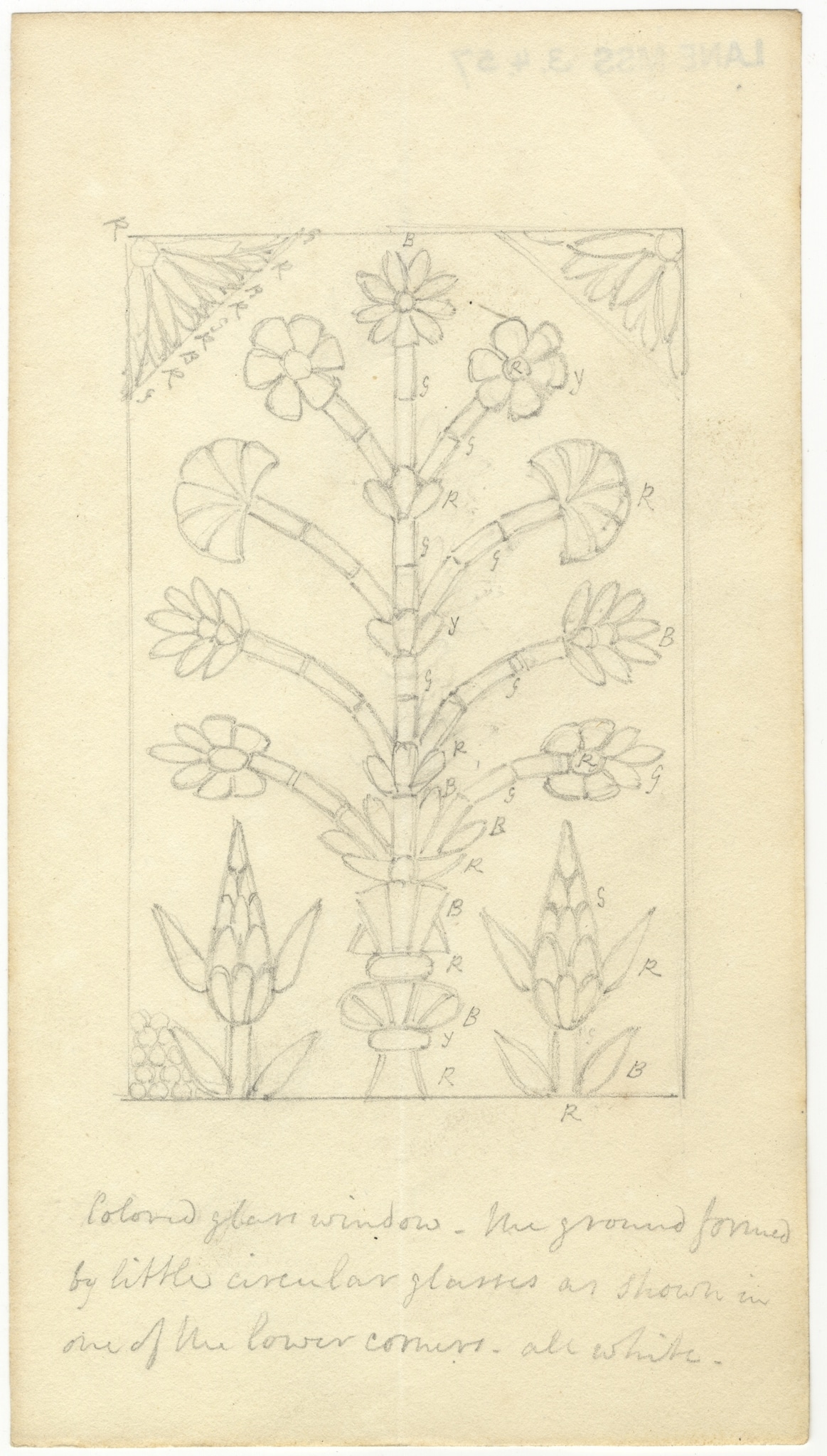
The British Orientalist Edward William Lane (1801–1876) was part of a group of young British artists and architects who had begun to look at Islamic architecture in a deliberately analytical way. In two journeys to Egypt, in 1525–28 and in 1833–35, he made numerous accurate drawings of monuments. One drawing is showing a detailed view of a stucco and glass window. Whether it was made during the first or the second stay in Cairo, is not documented.
Lane noted in the inscription that the ground of the window is formed by ‘little circular glasses’, as shown in the lower left corner of his drawing. From a technical point of view, the circles are the perforations of the stucco panel, and pieces of glass were inserted on the back of the window. In the inscription, Lane also specifies that his drawing depicts a coloured window. By adding the abbreviated colour information to his pencil drawing, which he may have made on site in Cairo, Lane ensured that the knowledge of the window colours was not lost. The information also gave him the opportunity to colour the drawing at a later point in time. Other European artists also added written information about the colour of stucco and glass windows to their drawings, such as the Bernese architect and draughtsman Theodor Zeerleder (1820–1868) (IG_471, IG_473) and the French architect Jules Bourgoin (1838–1908) (IG_462).
Dating
1825–28 or 1833–35
Period
1825 – 1835
Place of Manufacture