Image Ordered

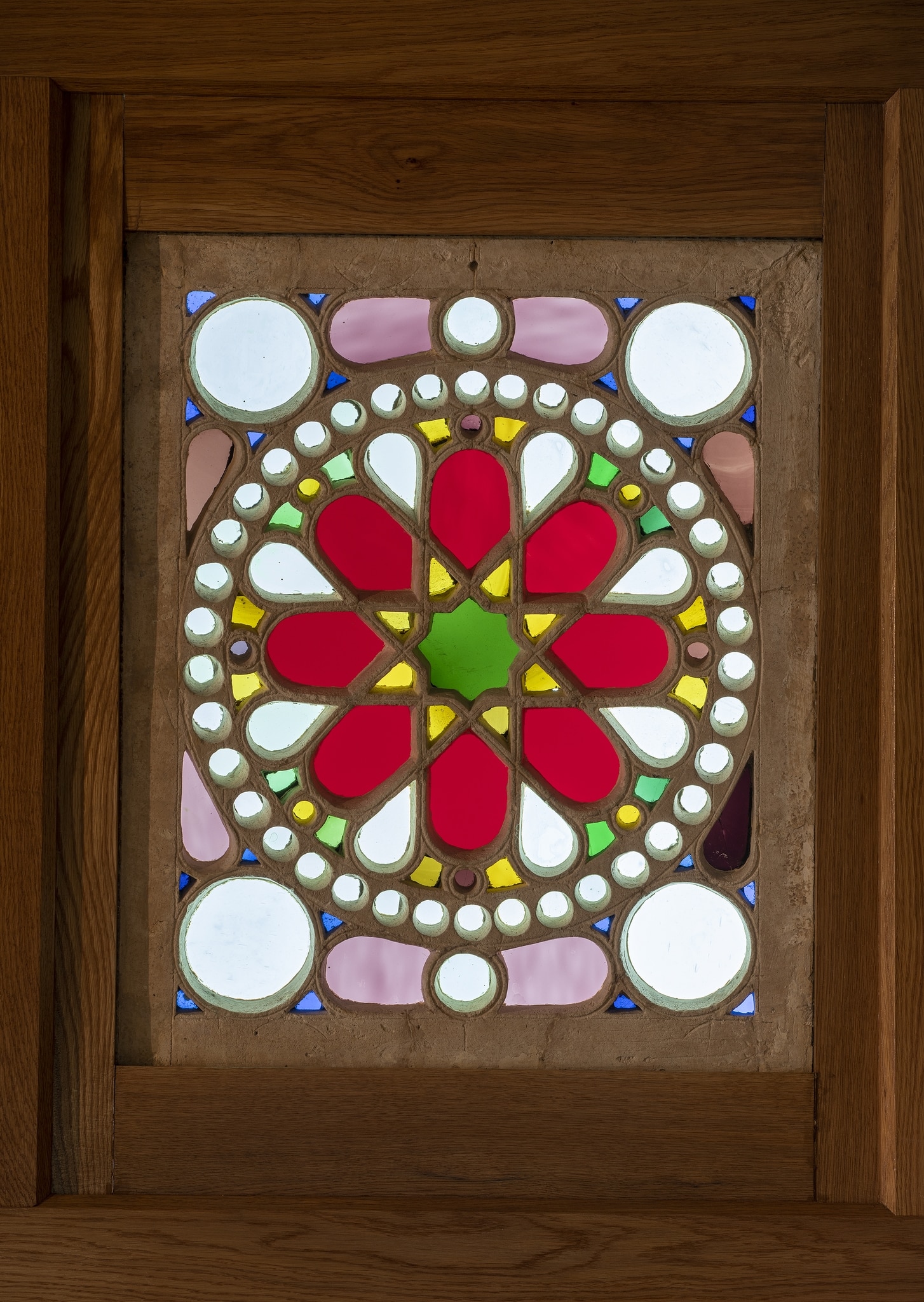
IG_353: square qamarīya with a geometrical decor with starornament and surrounding circle
(GRC_Athens_BenakiMuseumOfIslamicArt_IG_353)

Contact Details

Please specify your first name.
Please specify your name.
Please specify your e-mail address.
The e-mail address is invalid.

Please provide as much information as possible (publication title, database, publisher, edition, year of publication, etc.).

The Vitrocentre Romont can only provide you with its own photographs. We regret that we cannot supply images from third parties to you. If your order concerns photographs from third parties, we will send you the contact address from which the images can be obtained.

The personal data you provide in this form will be used by Vitrocentre Romont exclusively for the processing of your image order. Correspondence regarding the order will be archived for internal reference. The data will not be used for purposes other than those listed here, nor will it be passed on to third parties. By sending the order form, you agree to this use of your personal data.

Should you have any questions, please send us an e-mail: info@vitrosearch.ch.

Title

Stucco glass window with star motif

Type of Object
Dimensions
62 x 51.5 cm (without frame); 72.7 x 61.7 x 4.7 cm (with frame)
Artist / Producer
Place of Manufacture
Dating
early 13th–early 14th centuries AH / 19th century CE
Location
Inventory Number
11055
Research Project
Author and Date of Entry
Francine Giese, Sophie Wolf 2025

Iconography

Description

Rectangular stucco and glass window showing geometric ornamentation composed of a yellow eight-pointed star that encloses an eight-pointed green flower in its centre. Red, arcuate elements are placed between the points of the star. They are in turn separated by white drops. The motif is enclosed in a dotted circular frame. White circles, pink drop-shaped forms as well as small blue triangles fill the area between the circular inner frame and the surrounding rectangular frame of the stucco panel.

Iconclass Code
48A981 · ornament ~ geometric motifs
48A9815 · ornament ~ starforms
Iconclass Keywords

Materials, Technique and State of Preservation

Materials

Coarse-grained gypsum plaster; colourless glass (with a greenish tint); coloured glass (two shades of green, two shades of blue, two shades of yellow, two shades of purple); red flashed glass. Some of the coloured pieces of glass are streaky.

Technique

Latticework carved into a rectangular stucco panel and inlaid with colourless and coloured sheet glass. The pieces of glass are fixed to the back of the lattice with a thin layer of gypsum plaster. The average thickness of the stucco panel is 18–21mm.

The stucco panel was cast in a wooden frame, which was reinforced by nailing strips of wood to three corners of the frame. The design of the latticework has been carved out of the stucco panel with sharp, knife-like tools following a template incised in the surface of the panel. Traces of the incisions are still visible in some places on the front. The design has been worked in such a way that the incident light is directed downwards into the room.

The glass is either colourless or coloured in the mass. Elongated parallel bubbles indicate that the glass sheets were mouth-blown, possibly using the broad-sheet method.

State of Preservations and Restorations

The window is well preserved and was thoroughly restored in 2003. During this intervention, the remains of earlier repairs were largely removed. The restoration measures included cleaning the dirty and weathered surface of the stucco lattice (laser cleaning, density: 1.5 J/cm2 at 1064nm), bonding cracks with acrylic resin, and filling lacunae in the stucco lattice with acrylic filler. The repairs were retouched with pigmented acrylic emulsion. In addition, fragile areas were strengthened with gauze and acrylic resin. The original wooden frame was cleaned with solvent and reinforced by adding an aluminium frame.

At the time of restoration, only around 15% of the original pieces of glass were preserved. Missing pieces were replaced with new ones, which were attached with cellulose nitrate.

History

Research

This stucco and glass window is a standard type of qamariyya widespread in Egypt during the Ottoman period. Windows showing comparable designs are held at The Metropolitan Museum of Art in New York (IG_186) and the Medelhavsmuseet (Museum of Mediterranean and Near Eastern Antiquities) in Stockholm (IG_166). This latter example, however, shows an eight-petalled flower in its centre, instead of an eight-pointed star. Windows of this type are also illustrated in Gustave le Bon’s La civilisation des Arabes of 1884 (IG_192) and depicted in several sketches and paintings (see for instance IG_104, IG_118, IG_444).

From a technical point of view, it can be assumed that the window was made in an Egyptian workshop. Although the rear of the window was not accessible during our examination, it can be concluded from the restoration report of 2004 that the window was made according to the traditional technique used in the manufacture of qamariyyāt in North Africa to this day (see Technique).

According to the museum records, the window dates to the 16th or 17th century. However, there are some indications suggesting that the window was produced in the 19th century. On the one hand, the circles, drop-shaped forms and triangles filling the area between the circular inner frame and the rectangular outer frame of the stucco panel reflect a typical design of the late Ottoman period. On the other hand, the window was in a relatively good state of preservation before the restoration in 2003, despite the poor weather resistance of the stucco lattice. The pieces of glass show the characteristics of cylinder-blown sheet glass, a technique that was uncommon in the Islamic world and more commonly used in Europe. Interestingly, the Hungarian architect Max Herz (1856–1819) states in 1902 that sheet glass was imported to Egypt from Europe from the 19th century, because local sheet-glass production had come to a standstill (Herz, 1902, p. 53).

The Cairo-based, Cypriot art and antique dealer Phokion Tanos (1898–1972) donated this window – along with 12 other qamariyyāt (11049–11059, 20969, 20960, see IG_336–359) – to the Benaki Museum in Athens, probably in the 1940s.

In 2003, four replicas of this window were made. They are now on display in Room III of the Benaki Museum of Islamic Art, next to the window discussed here.

Dating
early 13th–early 14th centuries AH / 19th century CE
Period
1800 – 1899
Previous Locations
Place of Manufacture

Provenance

Owner
Since 1940 (ca.): Benaki Museum of Islamic Art, Inventory Number: 11055, Athens (Greece), Donation
Previous Owner
From [year of reception unknown] until 1940 (ca.): Tanos, Phokion J.

Bibliography and Sources

Literature

Ballian, Anna (ed.) (2006): Benaki Museum. A Guide to the Museum of Islamic Art, Athens, Benaki Museum, pp. 136–137.

Herz, M. (1902). Le musée national du Caire. Gazette des Beaux-Arts, 3. Pér. 28, 45–59, 497–505.

Exhibitions

since 2004: Room III of the premanent exhibition of the Benaki Museum of Islamic Art, Athens

Image Information

Name of Image
GRC_Athens_BenakiMuseumOfIslamicArt_IG_353
Credits
© 2023 by Benaki Museum Athens

Citation suggestion

Giese, F., & Wolf, S. (2025). Stucco glass window with star motif. In Vitrosearch. Retrieved December 5, 2025 from https://www.vitrosearch.ch/objects/2713197.

Record Information

Reference Number
IG_353