Image Ordered

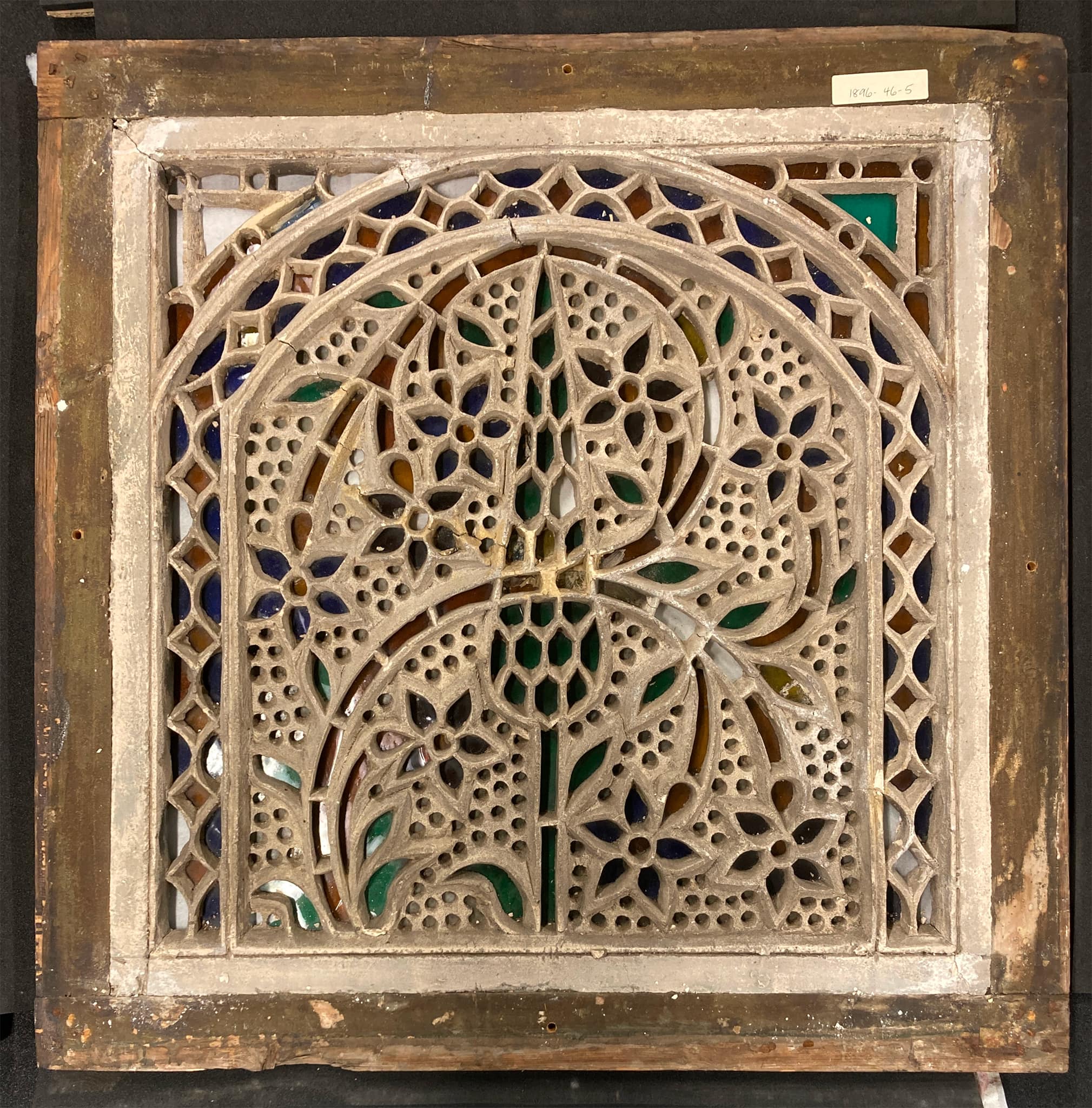
IG_288: Stucco glass window with a cypress tree surrounded by a flower tendril
(GBR_Glasgow_GlasgowMuseumsCollection_IG_288)

Contact Details

Please specify your first name.
Please specify your name.
Please specify your e-mail address.
The e-mail address is invalid.

Please provide as much information as possible (publication title, database, publisher, edition, year of publication, etc.).

The Vitrocentre Romont can only provide you with its own photographs. We regret that we cannot supply images from third parties to you. If your order concerns photographs from third parties, we will send you the contact address from which the images can be obtained.

The personal data you provide in this form will be used by Vitrocentre Romont exclusively for the processing of your image order. Correspondence regarding the order will be archived for internal reference. The data will not be used for purposes other than those listed here, nor will it be passed on to third parties. By sending the order form, you agree to this use of your personal data.

Should you have any questions, please send us an e-mail: info@vitrosearch.ch.

Title

Stucco and glass window with a cypress tree surrounded by a flower tendril

Type of Object
Dimensions
68 x 68 x 4 cm (with frame); 58 x 58 x 3 cm (without frame)
Artist / Producer
Place of Manufacture
Dating
early 13th–early 14th centuries AH / 19th century CE
Location
Place
storage
Inventory Number
1896.46.5
Research Project
Author and Date of Entry
Francine Giese, Sophie Wolf 2025

Iconography

Description

The design of this stucco and glass window consists of a green cypress tree surrounded by a curving flower tendril. A segmental arch with diamond pattern frames the motif. Triangles are set in the spandrels above the arch. The cypress tree and the tendril are worked out in relief against a perforated background that lies 10–15mm below the surface.

Iconclass Code
25G3(CYPRESS) · trees: cypress
48A98783 · floral interlace ~ ornament
Iconclass Keywords

Materials, Technique and State of Preservation

Materials

Gypsum plaster; colourless glass; coloured glass (green, turquoise green, blue, several shades of yellow, including orange colour)

Technique

Latticework carved into a rectangular stucco panel and inlaid with colourless and coloured sheet glass. The pieces of glass are fixed on the back of the lattice with a thin layer of gypsum plaster. The average thickness of the stucco panel is 30mm. The stucco panel was cast in a wooden frame measuring 50 × 50 × 40mm.

The design of the latticework has two levels: the main motif (level 0) has been carved out of the stucco panel with sharp, knife-like tools following a template incised in the surface of the panel. Traces of the incisions are still visible in some places on the front. The second level (level –1), which lies 10–12mm below level 0, shows irregularly spaced perforations. The holes were pierced with a metal or wooden pin in the stucco before it was fully set. They are approximately 10mm in diameter. The distance between the holes is 4–5mm. All holes are backed with colourless glass. The main design and the perforations have been worked in such a way that the incident light is directed slightly downwards into the room.

The glass is either colourless or coloured in the mass. Some of the pieces of glass show elongated, parallel bubbles. The glass was cut according to the design of the latticework using a glass cutter, leaving scratch marks on some pieces.

State of Preservations and Restorations

The front of the latticework shows cracks and losses. Some missing areas have been filled with a yellowish repair material. Several of the pieces of glass are missing. The surface shows signs of weathering.

At an unspecified date, the frame has been painted with a greenish paint, traces of which are still visible on the frame’s front.

History

Research

From a technical and iconographic point of view, this stucco and glass window corresponds to one of the standard types of qamariyya widespread in Egypt during the Ottoman period. Similar windows can be found in several of the collections studied (see for instance IG_2, IG_173, IG_355). The representation of a cypress tree surrounded by a flower tendril is a widespread motif in Islamic arts. It can be found in numerous other media, such as ceramics, wood panelling, wall paintings, and textiles, over a long period of time, and in both sacred and profane contexts.

Stucco and glass windows of this type are illustrated in several 19th- and early 20th-century publications (see for instance IG_42, IG_47). The growing interest of architects and artists in windows with this motif is also reflected in a significant number of drawings and paintings (IG_118, IG_136, IG_150, IG_153, IG_438, IG_439, IG_468), as well as by numerous replicas of such windows installed in Arab-style interiors across Europe (IG_50, IG_59, IG_64, IG_427–430).

The window discussed here forms part of a lot of six qamariyyāt (IG_288–293) acquired by the Glasgow Museums in London in 1896 from the Pre-Raphaelite painter, writer, and collector Henry Wallis (1830–1916). Wallis was an expert in Islamic art and especially ceramics, as several of his publications attest (see for instance Wallis 1885, Wallis 1893, Wallis 1894; Wallis 1899). Due to the lack of documentation, it is not possible to clarify where Wallis acquired the windows. However, several formal and technical similarities suggest that at least four of the six windows were produced in the same workshop and possibly came from the same architectural context: IG_288 and IG_289 as well as IG_290 and IG_293 form a pair, with the same motif and almost identical dimensions. The window here shows the same, but mirror-inverted motif as IG_289. Moreover, the two pairs share the same spandrel decoration above the arch. Stylistic features and the manufacturing technique suggest that the windows were made in Egypt.

According to the museum records, the stucco and glass window dates to the 19th century. The structure of the glass and a statement by the Hungarian architect Max Herz (1856–1819) provide clues that indirectly support this dating: the glass shows the characteristics of cylinder-blown sheet glass, commonly known as broad sheet. This technique was uncommon in the Islamic world, but widely used in Europe to produce window glass. European glassworks were among the largest producers of broad sheet in the 19th century. According to Herz, European flat glass was exported to Egypt from the 19th century onwards, as the glass industry there had come to a standstill (Herz, 1902, p. 53).

The poor condition and the weathered surface of the stucco latticework (see Restoration) may be an indication that the window was installed in a building and exposed to the elements. This would mean that it was not produced directly for the art market.

Dating
early 13th–early 14th centuries AH / 19th century CE
Period
1800 – 1899
Previous Locations
Place of Manufacture

Provenance

Owner
Since 1896: Glasgow Museums, Inventory Number: 1896.46.5, collection (access date: 21.11.2024), Glasgow (United Kingdom)
Previous Owner
From [year of reception unknown] until 1896: Henry Wallis, London (United Kingdom)

Bibliography and Sources

Literature

Herz, M. (1902). Le musée national du Caire. Gazette des Beaux-Arts, 3. Pér. 28, 45–59, 497–505.

Wallis, H. (1885). Catalogue of specimens illustrative of Persian and Arab art exhibited in 1885 (Burlington Fine Arts Club), London.

Wallis, H. (1893). Typical examples of Persian and Oriental ceramic art, London.

Wallis, H. (1894). The Godman collection. Persian ceramic art belonging to Mr. F. DuCane Godman, F.R.S.; with examples from other collections. The thirteenth century lustred wall-tiles, London.

Wallis, H. (1899). Persian lustre vases, London.

Image Information

Name of Image
GBR_Glasgow_GlasgowMuseumsCollection_IG_288
Credits
© CSG CIC Glasgow Museums Collection

Citation suggestion

Giese, F., & Wolf, S. (2025). Stucco and glass window with a cypress tree surrounded by a flower tendril. In Vitrosearch. Retrieved December 5, 2025 from https://www.vitrosearch.ch/objects/2713132.

Record Information

Reference Number
IG_288