Image Ordered

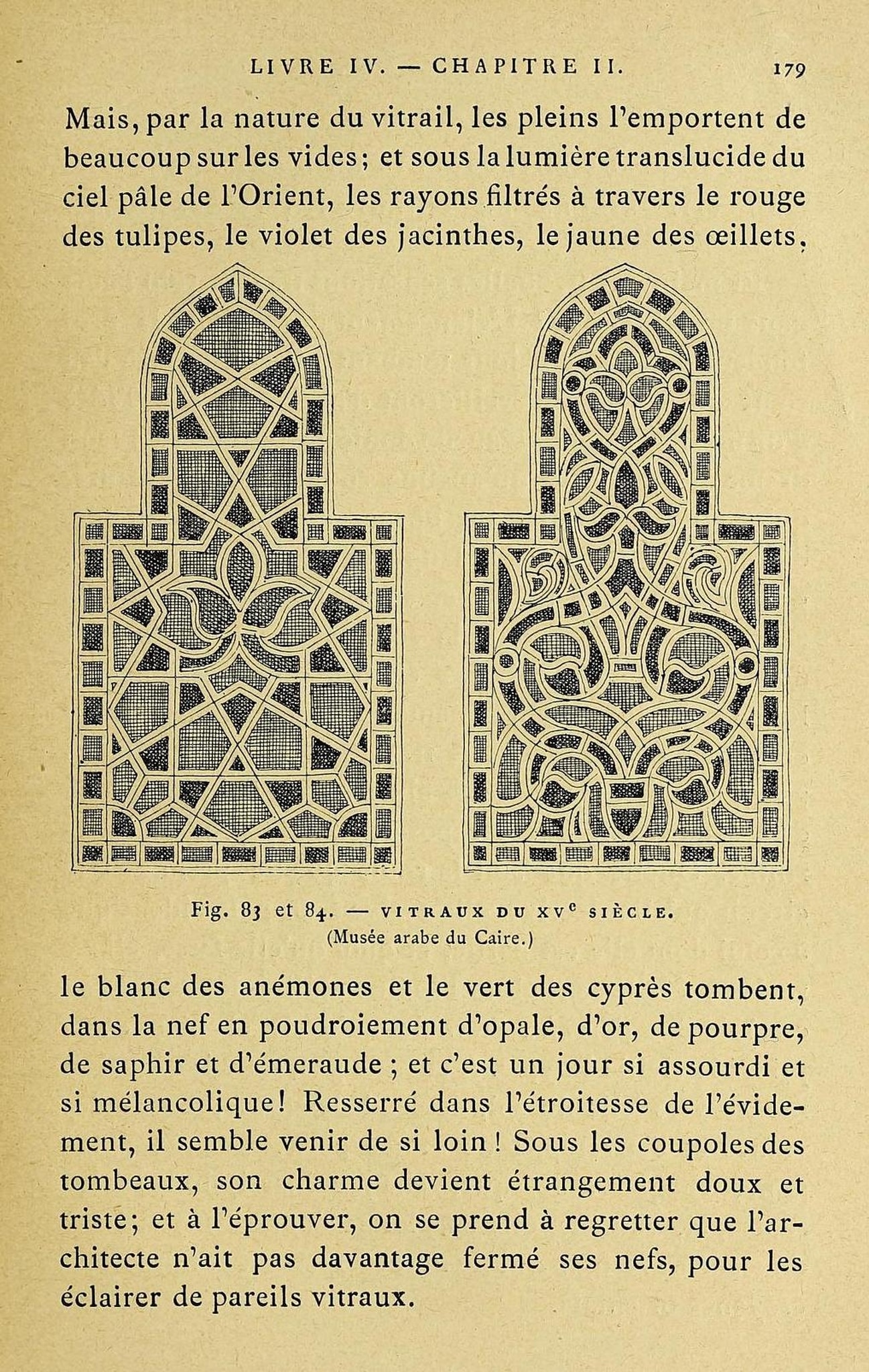
IG_283: Book illustration: Vitraux du XVe siècle (Musée arabe du Caire)
(MISC_IG_Gayet_IG_283)

Contact Details

Please specify your first name.
Please specify your name.
Please specify your e-mail address.
The e-mail address is invalid.

Please provide as much information as possible (publication title, database, publisher, edition, year of publication, etc.).

The Vitrocentre Romont can only provide you with its own photographs. We regret that we cannot supply images from third parties to you. If your order concerns photographs from third parties, we will send you the contact address from which the images can be obtained.

The personal data you provide in this form will be used by Vitrocentre Romont exclusively for the processing of your image order. Correspondence regarding the order will be archived for internal reference. The data will not be used for purposes other than those listed here, nor will it be passed on to third parties. By sending the order form, you agree to this use of your personal data.

Should you have any questions, please send us an e-mail: info@vitrosearch.ch.

Title

‘Vitraux du XVe siècle (Musée arabe du Caire)’

Type of Object
Dimensions
21 x 12 cm (page)
Artist / Producer
Dating
1893
Research Project
Author and Date of Entry
Sarah Keller 2025

Iconography

Description

Figs 83 and 84 in Albert Gayet, L’Art arabe, published in 1893 by Ancienne Maison Quantin, Librairies-imprimeries reìunies, May & Motteroz, Paris.
These two stucco and glass windows have a floral design. The left one shows a three-petal flower surrounded by a twelve-pointed star. The right one has a more complex design, consisting of interlacing tendrils that culminate in two three-petal flowers. Both windows have a border of small rectangles.

Iconclass Code
25G41 · flowers
48A98783 · floral interlace ~ ornament
Iconclass Keywords

History

Research

In 1893, the French architect and archaeologist Albert Gayet (1856–1916) published a book on Islamic Art, L’Art arabe. Previously, he had been in Cairo as attaché to the Permanent Mission there (now the French Institute of Oriental Archaeology), and he remained for three years. His extensively illustrated publication deals with art and architecture of the Islamic lands from the beginnings until the end of the Mamluk period.
In the chapter ‘Le décor de la mosquée baharite [Bahri Mamluks]’, he discusses the use of stucco and glass windows in mosques in detail and reproduces three of them. He briefly details their manufacture and compares their motifs – bouquets of flowers, cypresses – with those found on faïence. As early examples, he names the stucco and glass windows in the Mosque-Madrasa of Sultan al-Ashraf Barsbay (826 AH / 1424 CE) and of Sultan Qaytbay (877–79 AH / 1472–74 CE). He states further that the Sayyida Zaynab Mosque until recently had windows that were in no way inferior to those in the mosque. Gayet also opines that the windows from the end of the period of the Bahri Mamluks were the most beautiful (pp. 226–227) and highlights that the light effect is that of precious stones: ‘[... ] sous la lumière translucide du ciel pâle de l’Orient, les rayons filtrés à travers le rouge des tulipes, le violet des jacinthes, le jaune des œillets, le blanc des anémones et le vert des cyprès tombent, dans la nef en poudroiement d’opale, d’or, de pourpre, de saphir et d’émeraude.’ (p. 179).
One of the illustrations (fig. 82) depicts the window from the Sayyida Zaynab Mosque in Cairo published by Prisse d’Avennes in 1877 (IG_42). There is no comment on the illustration, but Gayet cites Prisse d’Avennes’ ‘grand ouvrage’ several times. The other two illustrations show two stucco and glass windows of a particular shape. They are not rectangular, round-arched, or hexagonal as usual, but their arch line is recessed. Trifoliate flowers appear among their vegetal ornamentation. Gayet notes that they are preserved in the Museum of Arab Art in Cairo and date to the 15th CE century. While no comparative examples for this particular form are known, their floral design is similar to that of the oldest windows in Cairo, such as those in the Mausoleum of Al-Salih Najm al-Din Ayyub (built 640–48 AH / 1242–50 CE) and the Mausoleum of the ʿAbbasid Caliphs (built before 640 AH / 1242 CE), and of the type previously found in Damascus (see Flood, 1993, pp. 86, 89, figs 84, 87, ills 32, 34, 35).

Dating
1893
Related Locations
Place of Manufacture

Bibliography and Sources

Literature

Flood, F. B. (1993). Palaces of crystal, sanctuaries of light: windows, jewels and glass in medieval islamic architecture [PhD thesis, University of Edinburg]. Edinburgh College of Art thesis and dissertation collection. Retrieved from https://era.ed.ac.uk/handle/1842/19754.

Gayet, A. (1893). L'art arabe. Paris: Ancienne Maison Quantin, Librairies-imprimeries réunies, May & Motteroz.

Image Information

Name of Image
MISC_IG_Gayet_IG_283

Citation suggestion

Keller, S. (2025). ‘Vitraux du XVe siècle (Musée arabe du Caire)’. In Vitrosearch. Retrieved December 5, 2025 from https://www.vitrosearch.ch/objects/2713127.

Record Information

Reference Number
IG_283