Image Ordered

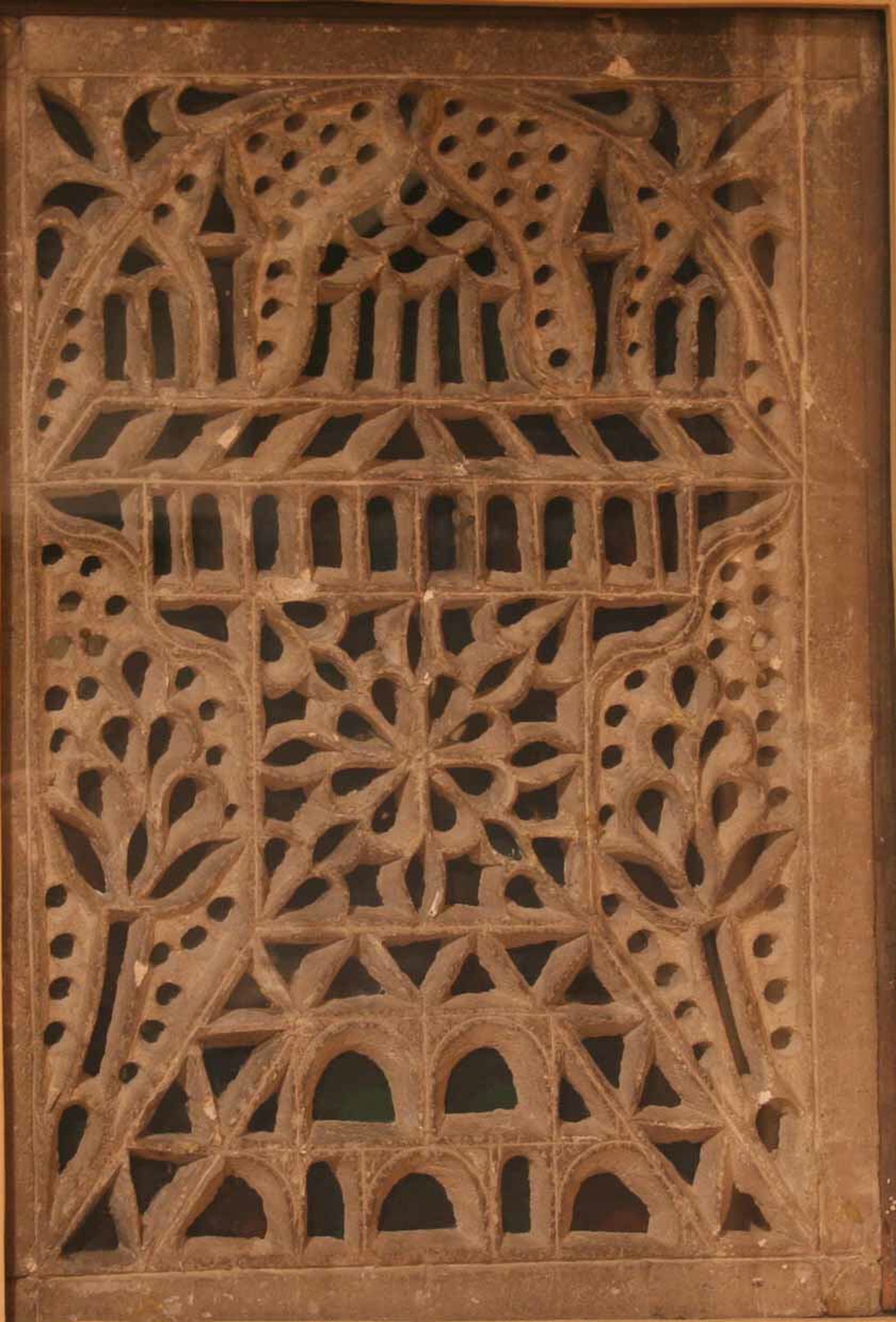
IG_185: Stucco glass window with representation of a mosque
(USA_NewYork_MetropolitanMuseumOfArt_IG_185)

Contact Details

Please specify your first name.
Please specify your name.
Please specify your e-mail address.
The e-mail address is invalid.

Please provide as much information as possible (publication title, database, publisher, edition, year of publication, etc.).

The Vitrocentre Romont can only provide you with its own photographs. We regret that we cannot supply images from third parties to you. If your order concerns photographs from third parties, we will send you the contact address from which the images can be obtained.

The personal data you provide in this form will be used by Vitrocentre Romont exclusively for the processing of your image order. Correspondence regarding the order will be archived for internal reference. The data will not be used for purposes other than those listed here, nor will it be passed on to third parties. By sending the order form, you agree to this use of your personal data.

Should you have any questions, please send us an e-mail: info@vitrosearch.ch.

Title

Stucco glass window with representation of a mosque

Type of Object
Dimensions
64.5 x 47.6 x 2.9 cm (with frame); 55.9 x 39.1 x 2.9 cm (without frame)
Artist / Producer
Place of Manufacture
Dating
early 13th–early 14th centuries AH / 19th century CE
Location
Inventory Number
93.26.8
Research Project
Author and Date of Entry
Francine Giese, Sophie Wolf 2025

Iconography

Description

Rectangular stucco and glass window with the representation of an Ottoman mosque. The building is depicted in a reduced way, highlighting the shrine’s main features: a courtyard with an eight-petalled flower at its centre, the prayer hall with a central dome crowned by a half-dome, and two thin minarets with pointed roofs. As in comparable representations in other media such as ceramics, the mosque is shown both from the front (prayer hall) and from a bird’s eye view (courtyard). The mosque is flanked by two flowers. The motif is worked out in relief against a perforated, slightly recessed (8–10mm) background and framed by semicircular arch. The spandrels above the arch are decorated with floral ornament.

Iconclass Code
12I61 · temple, shrine ~ Islam, Mohammedanism
48C14 · architectural representations in general
Iconclass Keywords

Materials, Technique and State of Preservation

Materials

Coarse-grained gypsum plaster; colourless glass with a green tint; coloured glass (two shades of green, two shades of blue, one shade of yellow and one of orange, two shades of red flashed glass

Technique

The latticework was carved into a rectangular stucco panel and inlaid with colourless and coloured sheet glass. The pieces of glass are fixed onto the back of the lattice with a thin layer (1.5–2mm) of gypsum plaster. The thickness of the stucco panel is c.22mm. The stucco panel was cast in a wooden frame measuring c.50 × 50 × 30mm.

The design of the latticework has two levels. The main motif (level 0) has been carved out of the stucco panel with sharp, knife-like tools following a template incised in the surface of the panel. Traces of the incisions are still visible in some places on the front. The second level (level –1), which lies 8–10mm below level 0, shows regularly spaced, conical perforations. The holes were pierced with a metal or wooden pin in the stucco before it was fully set. They vary between 12 and 15mm in diameter and are slightly tapered towards the back. The distance between the holes is 5–7mm. All holes are backed with colourless glass. The main design and the perforations have been worked in such a way that the incident light is directed downwards into the room.

The pieces of glass were cut using a glass-cutter; scratch marks along the edges of some of the pieces testify to this process. Some of the pieces of glass show uneven surfaces and elongated, parallel bubbles. These features suggest that the glass sheets from which the pieces were cut are mouth-blown, probably produced using the broad-sheet method. The glass is 1–1.5mm thick, the colourless replacement glass up to 3.5mm thick.

State of Preservations and Restorations

The stucco latticework shows cracks and minor losses, but seems generally intact. On the back of the window, the damage is more extensive: in the centre as well as near the corners of the panel, several pieces of glass are missing, and the thin layer of plaster in which the pieces of glass were embedded is detached in these areas.

There are signs of earlier restorations, in particular along a narrow zone running diagonally across the panel from the lower right to the upper left edge. The repairs involved refixing loose pieces of glass with adhesive and supplementing the thin plaster layer in which the pieces of glass are embedded with various materials (plaster, putty?).

Three corners of the frame have been reinforced with wooden strips; two of the strips are curved.

History

Research

From an iconographic point of view, this stucco and glass window corresponds to one of the standard types of qamariyya widespread in the Middle East during the Ottoman period. A window with the same motif was documented by the British architect James William Wild (1814–1892) during his stay in Cairo in the years 1844–1847, in the mandarah of Beyt Sheikh al-ʿAbbasi al-Mahdi (IG_446).

Representations of mosques and other holy sites can also be found in other media. Most noteworthy are architectural ceramics of the Ottoman period (see for instance Musée du Louvre, OA 3919/556, OA 3919/558, OA 3919/559; The Metropolitan Museum of Art, 2012.337; Victoria and Albert Museum, 427-1900). While in these examples specific shrines such as the Kaʿbah in Mecca are depicted, the mosques shown in stucco and glass windows most likely do not represent any existing mosque. They are often depicted in a schematic way and reduced to their main features, such as the entrance facade, the courtyard, dome(s), and minarets.

In the museum collections studied, representations of a mosque are much less common than other motifs. Other examples of stucco and glass windows with the mosque motif are held at The Metropolitan Museum of Art in New York (IG_184), the Benaki Museum of Islamic Art in Athens (IG_354), and the Museum für Islamische Kunst in Berlin (IG_385, IG_386). Whereas the design of all four windows is very similar, notable differences in the manufacturing technique can be observed: the latticework of the first two windows is carved out of a stucco panel and the pieces of glass were fixed onto the back of the grille by means of a thin layer of plaster; the latticework of the two latter windows is cast, and the pieces of glass were fixed onto the grille during the casting process (Arseven, [c.1952], pp. 207–214; Özakın, 2007, pp. 95–97). These differences point to different regions of origin: the first manufacturing technique is typical for windows produced in Egypt, Greater Syria, and North Africa, while the second technique is common in Turkey. According to our examination of the MET and Benaki windows (see IG_184 and IG_354), these two windows must have been made in Egypt, while the Berlin windows originate from Turkey (see IG_385, IG_386). On the basis of these observations, the window discussed here can be attributed to the first group.

According to the museum records, the window dates to the 18th century. We assume however that the window was made at a later date, possibly around the time it was acquired by Robert Ware (see below). One reason for this hypothesis is the good state of preservation of the stucco lattice, which would have shown clearer signs of weathering if it had been installed and exposed to the elements for a longer period before purchase. Another reason for a later dating is the use of cylinder-blown flat glass (also called broad-sheet). In the Islamic world, sheet glass was usually produced using the crown-glass process, while in Europe, the broad sheet-method was the dominant technique to manufacture flat glass. The Hungarian architect Max Herz (1856–1819) states that sheet glass was imported to Egypt from Europe from the 19th century, because local production had come to a standstill (Herz, 1902, p. 53).

A hand-written letter dated 22 May 1893 to Luigi Palma di Cesnola (1832–1904), the then director of The Metropolitan Museum of Art in New York provides information on the provenance of the window. The author of this letter, the American architect William Robert Ware (1832–1915), writes that he had acquired this and various other windows in the spring of 1890 from several well-known art and antiquity dealers in Cairo. He mentions [Gaspare] Giuliana, [E. M.] Malluk, [Nicolas?] Tano, and [Panayotis] Kyticas (on their commercial activities see Volait, 2021, pp. 60–64). In his letter, Ware further states that he was told that the windows ‘had been taken from old houses’ and ‘from old mosques, that had been dismantled’, but that he was not able to get ‘any precise information as to their original places’ (Ware, 1893).

In 1893, Ware donated this window as part of a lot of 17 qamariyyāt (IG_169, IG_171–186) to The Metropolitan Museum of Art (Ware, 1893).

Dating
early 13th–early 14th centuries AH / 19th century CE
Period
1800 – 1899
Previous Locations
Place of Manufacture

Provenance

Owner
Since 1893: The Metropolitan Museum of Art, Inventory Number: 93.26.8, collection (access date: 6.12.2024), New York (United States of America), Donation
Previous Owner
From 1890 until 1893: Ware, William Robert

Bibliography and Sources

Literature

Celal Esad Arseven, Les arts decoratifs turcs, Istanbul: Milli eğitim basım evi, [c. 1952].

Herz, M. (1902). Le musée national du Caire. Gazette des Beaux-Arts, 3. Pér. 28, 45–59, 497–505.

Özakın, Rabia: Traditional Turkish Gypsum Plaster Windows. Manufacture and Conservation. In: Pilosi, Lisa (Hrsg.): Glass and ceramics conservation 2007.

Volait, M. (2021). Antique Dealing and Creative Reuse in Cairo and Damascus 1850–1890. Leiden: Brill.

Ware, W. R. (1893, May 22). [Letter to Luigi Palma di Cesnola]. MET Archives (W 229), New York City, NY, United States.

Image Information

Name of Image
USA_NewYork_MetropolitanMuseumOfArt_IG_185
Credits
The Metropolitan Museum of Art
Date
2023
Copyright
Public Domain

Citation suggestion

Giese, F., & Wolf, S. (2025). Stucco glass window with representation of a mosque. In Vitrosearch. Retrieved December 5, 2025 from https://www.vitrosearch.ch/objects/2713029.

Record Information

Reference Number
IG_185