Description
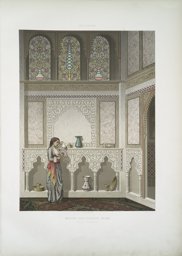
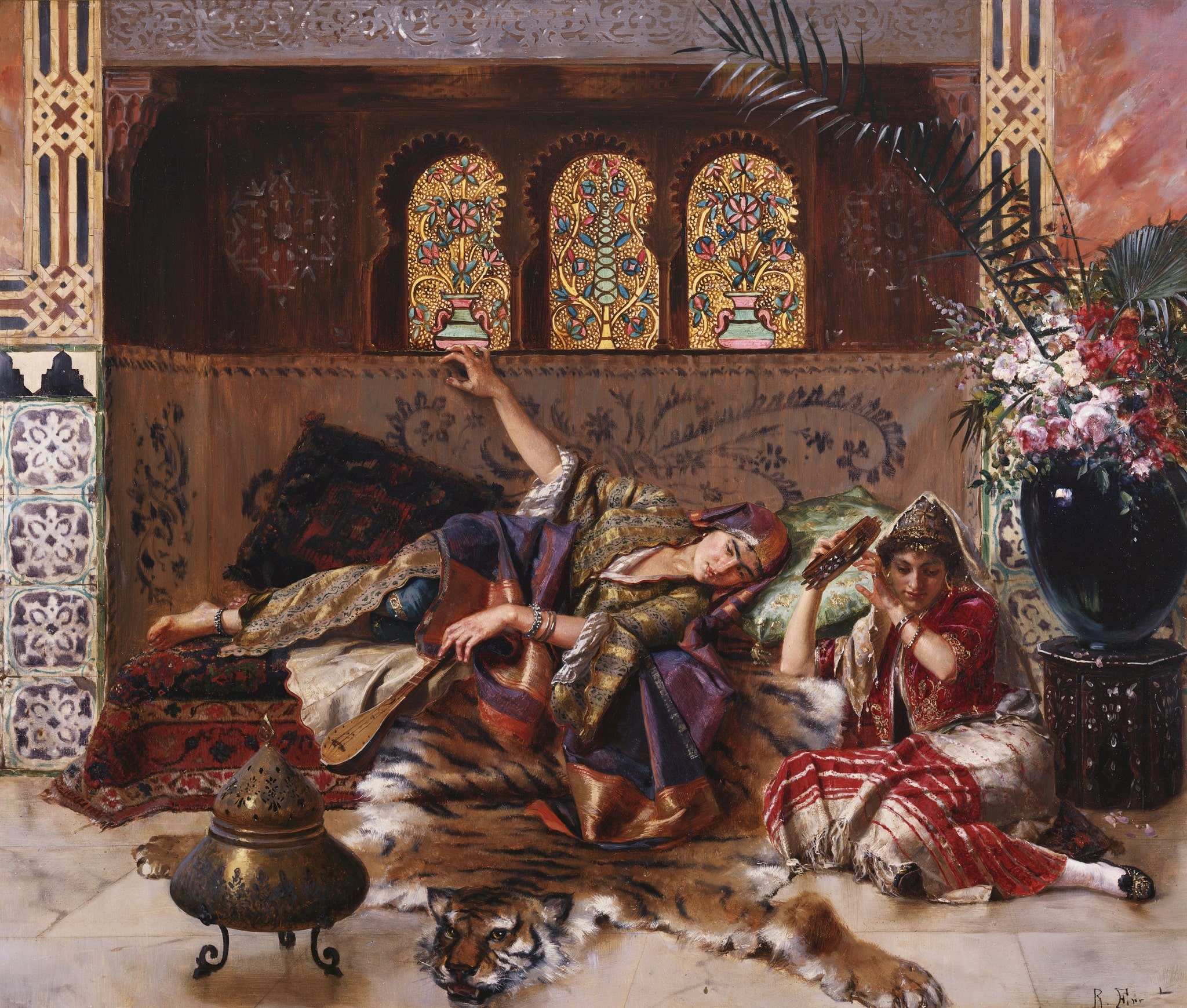
The undated painting Au harem by the Vienna-born Orientalist painter Rudolf Ernst (1854–1932) depicts two young women in an interior with three coloured stucco and glass windows in the upper part of a recess: the central window, showing the motif of a stylized cypress tree, is flanked by two windows with the motif of stylized flowers in a vase with a red and green body, red handles, and a red and green neck.
Iconclass Code
25G3(CYPRESS) · trees: cypress
41A2 · interior of the house
41A33 · window
41A6711 · flowers in a vase
42Z11 · harem
41A2 · interior of the house
41A33 · window
41A6711 · flowers in a vase
42Z11 · harem
Iconclass Keywords
bunch of flowers ·
cypress ·
feigned window ·
harem ·
house ·
interior ·
optical illusion ·
sham-window ·
vase ·
window